Quick questions? Email Us
Gauri Kund – The Sacred Lake of Compassion Near Mount Kailash

Gauri Kund – The Sacred Lake of Compassion Near Mount Kailash

Damodar Dhakal
Mission Nepal May 27. 2026 • 6 min read

Nestled high in the majestic Himalayas near the sacred Mount Kailash, Gauri Kund is one of the holiest lakes in Hinduism and a deeply revered stop during the Kailash Mansarovar Yatra. Known as the “Lake of Compassion” and “Parvati Sarovar,” this emerald-colored glacial lake is associated with Goddess Parvati and the divine story of Lord Ganesha’s birth.

Situated at an elevation of around 5,608 meters near Dolma La Pass on the Kailash Parikrama route, Gauri Kund attracts thousands of pilgrims each year seeking spiritual purification, blessings, and divine peace.
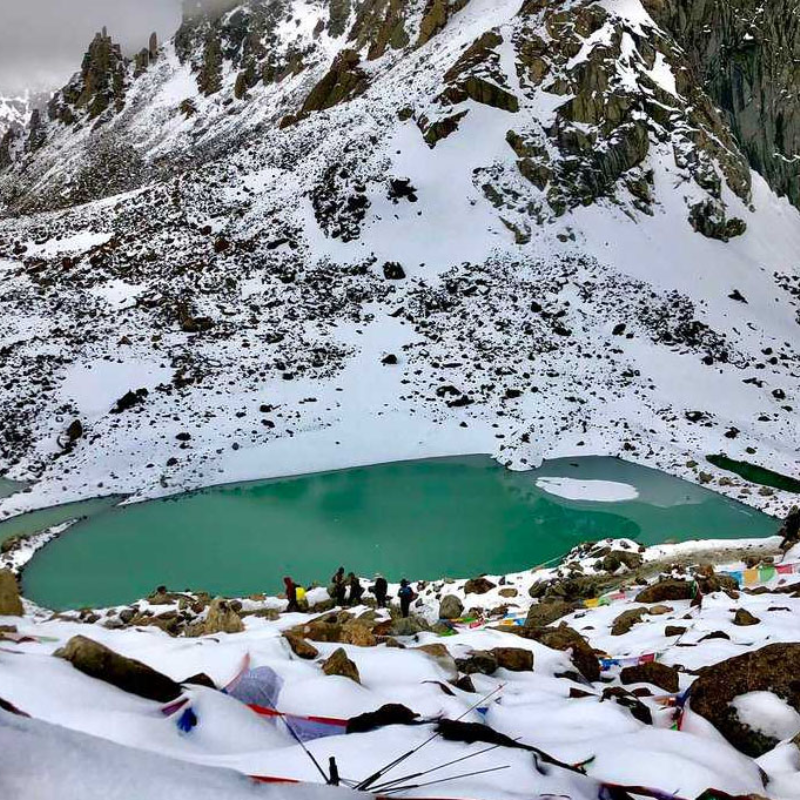
Snow-covered Gauri Kunda lake below Dolma La Pass during winter on the Mount Kailash Kora route.
Frozen winter scenery at sacred Gauri Kunda near Dolma La Pass on the Mount Kailash pilgrimage trail.

The Spiritual Significance of Gauri Kund

Gauri Kund holds immense religious importance in Hindu mythology and is considered one of the most sacred places near Mount Kailash.

The lake derives its name from “Gauri,” another name for Goddess Parvati, the divine consort of Lord Shiva. Pilgrims believe that the sacred waters of the lake possess the power to cleanse sins, purify karma, and bless devotees with spiritual awakening.

For pilgrims undertaking the Kailash Mansarovar Yatra, visiting Gauri Kund is regarded as an essential spiritual experience.

The Divine Story of Lord Ganesha’s Birth associated with Gauri Kund

One of the most fascinating legends associated with Gauri Kund is the birth of Lord Ganesha, beautifully described in the Shiva Purana.

According to Hindu mythology, Goddess Parvati created Lord Ganesha while bathing at Gauri Kund. Using soap lather or turmeric paste from her body, she formed a young boy and breathed life into him. She then instructed him to guard the entrance while she bathed.

When Lord Shiva arrived, Ganesha refused to let him enter, unaware that Shiva was his father. Angered by the boy’s defiance, Lord Shiva severed Ganesha’s head with his trident.

Upon witnessing this tragic event, Goddess Parvati became overwhelmed with grief and rage. To calm her, Lord Shiva promised to bring Ganesha back to life. He instructed his followers to bring the head of the first living creature facing north — which happened to be an elephant. Shiva placed the elephant’s head on Ganesha’s body, restoring him to life and blessing him as one of the most worshipped deities in Hinduism.

This sacred legend makes Gauri Kund one of the most spiritually powerful places in the Kailash region.

Location of Gauri Kund

Gauri Kund is located on the southeastern side of Mount Kailash in the Ngari region of western Tibet, close to the Nepal-Tibet border.

The lake lies just below the famous Dolma La Pass (5,630 m), one of the highest and most challenging points of the Kailash Kora. Pilgrims generally encounter Gauri Kund on the second day of the Kailash Parikrama while descending from the pass.

Surrounded by snow-covered mountains, rocky terrain, glaciers, and Himalayan wilderness, the lake creates a mesmerizing spiritual atmosphere.

Why Gauri Kund Is Called the “Lake of Compassion”

Gauri Kund symbolizes:

  • Compassion
  • Devotion
  • Purity
  • Spiritual rebirth

Pilgrims believe that even sprinkling a few drops of water from the lake can cleanse the soul and remove negative karma. Many devotees carry holy water back home for purification rituals and blessings.

The calm turquoise waters amidst the harsh Himalayan terrain create a feeling of serenity, reflection, and divine presence.

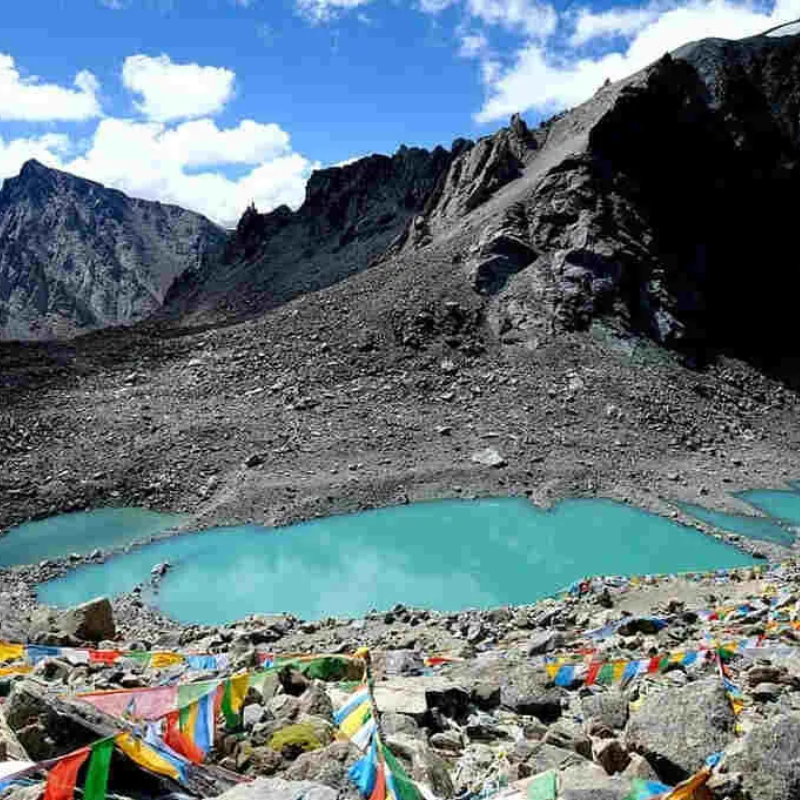
Turquoise Gauri Kunda lake with prayer flags near Dolma La Pass during spring in Tibet.
Sacred Gauri Kunda glowing turquoise during spring on the Mount Kailash pilgrimage route.

Spiritual Practices at Gauri Kund

Pilgrims visiting Gauri Kund participate in several sacred rituals:

Holy Water Rituals: Many devotees sprinkle the sacred water on themselves instead of bathing fully due to the freezing temperatures and difficult conditions.

Prayer and Meditation: The peaceful atmosphere makes Gauri Kund a perfect place for meditation, chanting mantras, and offering prayers to Lord Shiva and Goddess Parvati.

Offerings: Pilgrims often offer flowers, incense, milk, prayer flags, and sacred chants to seek blessings and protection during the Kailash Yatra.

Parikrama and Reflection: Many pilgrims pause here to reflect spiritually before continuing the demanding Kailash Kora.

Why Bathing in Gauri Kund Is Not Recommended?

Although the lake is sacred, full bathing is generally discouraged for several important reasons:

1. Extremely Cold Water: As a high-altitude glacial lake, the water temperature is dangerously cold and can lead to shock or hypothermia.

2. Risk of Altitude Sickness: The high elevation and freezing water can weaken the body and increase the risk of Acute Mountain Sickness (AMS).

3. Sacred Importance: Many devotees consider the lake too holy for casual bathing because it is associated with the birth of Lord Ganesha.

4. Environmental Preservation: Bathing can pollute the fragile Himalayan ecosystem and disturb the purity of the sacred lake.

Instead, pilgrims respectfully sprinkle the holy water on themselves as a symbolic act of purification.

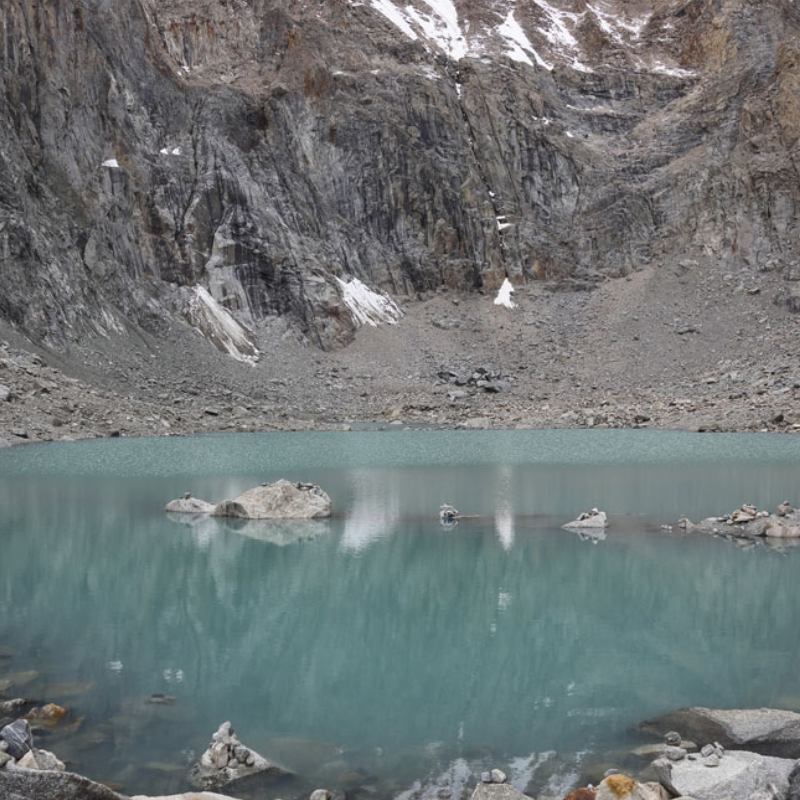
Close view of turquoise Gauri Kund lake surrounded by rocky cliffs near Dolma La Pass.
Sacred Gauri Kund lake beneath rocky Himalayan cliffs on the Mount Kailash pilgrimage route.

Natural Beauty Around Gauri Kund

Apart from its spiritual importance, Gauri Kund is surrounded by some of the most breathtaking landscapes in Tibet.

Mount Kailash: Towering above the region, Mount Kailash is believed to be the abode of Lord Shiva and remains one of the world’s most sacred mountains.

Lake Mansarovar: One of the highest freshwater lakes in the world, Lake Mansarovar symbolizes purity and spiritual enlightenment.

Rakshas Tal: Located near Mansarovar, Rakshas Tal is known as the “Lake of Demons” and is associated with Ravana in Hindu mythology.

Dolma La Pass: The nearby Dolma La Pass represents spiritual rebirth and transformation during the Kailash Parikrama.

Festivals Celebrated Near Gauri Kund

Mahashivaratri

Devotees gather to honor Lord Shiva through prayers, fasting, and chanting “Om Namah Shivaya.”

Sawa Dawa Festival

Saga Dawa is the important Tibetan Buddhist festival celebrates enlightenment and spiritual purification around Mount Kailash and sacred sites including Gauri Kund.

Best Time to Visit Gauri Kund

The ideal time to visit Gauri Kund is between May and September when:

  • Weather conditions are relatively stable
  • Trails are accessible
  • The skies are clear
  • Pilgrimage routes remain open

Temperatures during the day usually range between 5°C and 15°C.

How to Reach Gauri Kund

Most Kailash Mansarovar pilgrims begin their journey from Kathmandu, Nepal.

Common Route:

  • Kathmandu → Nepalgunj/Simikot
  • Hilsa or Kerung border crossing
  • Drive to Darchen (base of Mount Kailash)
  • Trek along Kailash Parikrama route
  • Cross Dolma La Pass
  • Reach Gauri Kund

Because of the remote terrain and high altitude, pilgrims are advised to join organized pilgrimage tours with proper acclimatization and logistical support.

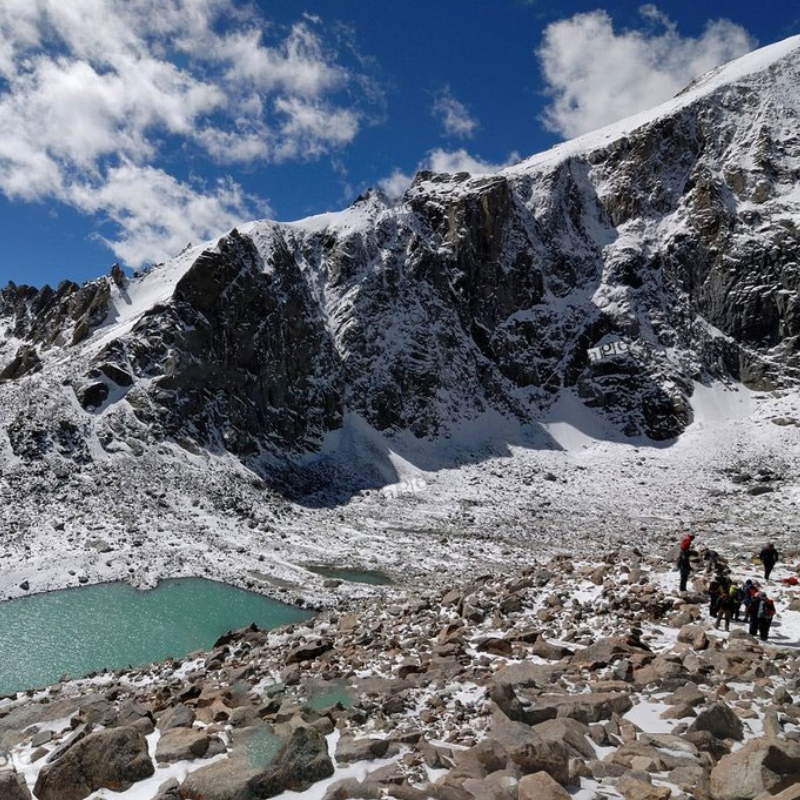
Pilgrims trekking along the snowy Kora path near Dolma La Pass and turquoise lakes in Tibet.
Trekkers crossing the rugged Kora trail near Dolma La Pass on the Mount Kailash pilgrimage route.

Final Thoughts

Gauri Kund is far more than just a beautiful Himalayan lake — it is a sacred symbol of devotion, purity, compassion, and spiritual rebirth. Deeply connected to Goddess Parvati and Lord Ganesha, the lake continues to inspire pilgrims from around the world.

Whether you seek divine blessings, spiritual peace, or the awe-inspiring beauty of the Himalayas, Gauri Kund offers an unforgettable experience on the sacred Kailash Mansarovar Yatra.