
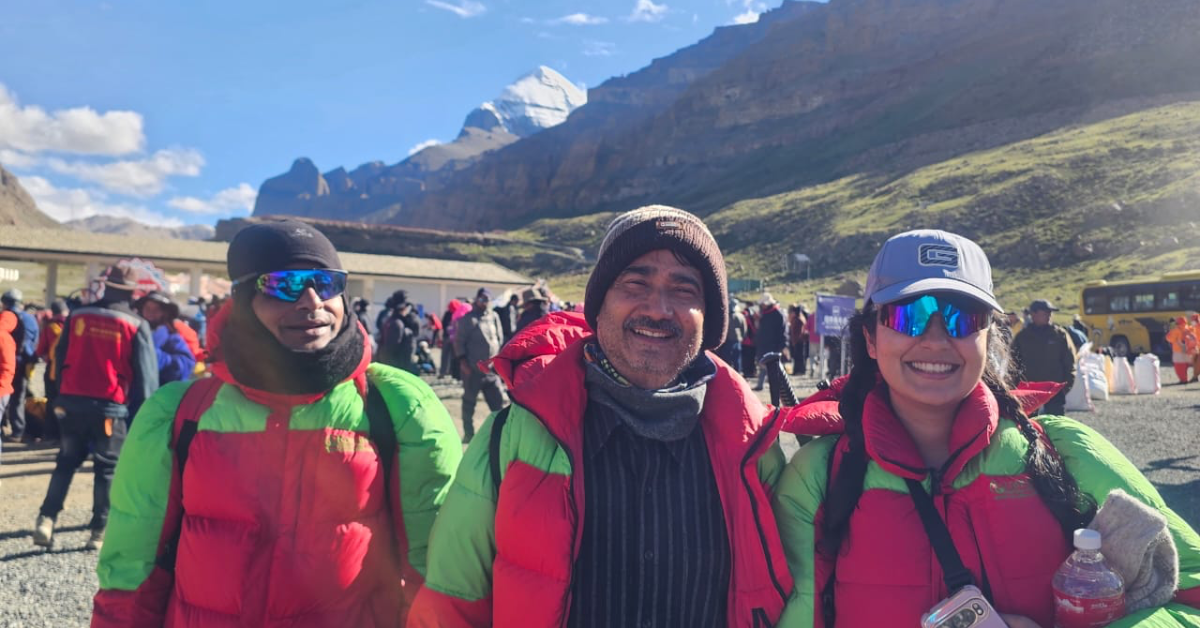
Kailash in Tibet: Guide to the Sacred Mountain

Activities Highlights
Key takeaways
- Mount Kailash rises 6,638 meters in western Tibet and is held sacred by Hindus, Buddhists, Jains, and followers of Bon.
- The kora is a 52 kilometer walking circuit around the mountain, usually done over three days and crossing the Dolma La at about 5,630 meters.
- Most travelers reach Kailash overland from Kathmandu across roughly 850 kilometers of Tibetan plateau, a route that builds acclimatization gradually.
- The best window runs from May to early October, with the kora demanding patience and steady altitude preparation more than athletic fitness.
Mount Kailash is a 6,638 meter peak in the far west of Tibet that four religions hold sacred, and reaching it means an overland journey across the plateau followed by a walking circuit around its base rather than any climb to the top. If you are reading this while trying to decide whether the trip is realistic for you, the short answer is that it usually is, provided you give your body time to adjust to the altitude and travel with people who know the route.
This guide answers the two questions most travelers arrive with. What makes Kailash different from every other mountain, and what does actually getting there involve. Below you will find why the peak matters to Hindus, Buddhists, Jains, and Bon practitioners, where it sits on the map, how the kora pilgrimage works, the overland route from Kathmandu, when to go, and how a guided trip is typically put together.
Why Mount Kailash Is Sacred to Four Religions
Few places on Earth carry spiritual weight for so many traditions at once. Kailash is revered by Hindus, Buddhists, Jains, and followers of the older Tibetan Bon religion, and each reads the mountain in its own way while sharing the same reverence for it.
For Hindus, Kailash is the abode of Lord Shiva, who is believed to sit in eternal meditation at its summit alongside Parvati. The mountain appears again and again in Hindu texts as the center of the world, and the pilgrimage to it, often called the Kailash Mansarovar Yatra, is among the most demanding acts of devotion a Hindu can undertake.
For Tibetan Buddhists, the peak is Kang Rinpoche, meaning "Precious Snow Mountain." It is associated with the meditational deity Demchok and with the great yogi Milarepa, whose legendary contest with a Bon priest is tied to the mountain in local storytelling.
For Jains, Kailash is Ashtapada, the site where Rishabhanatha, the first of their twenty-four tirthankaras, is said to have achieved liberation.
For followers of Bon, the indigenous religion of Tibet that predates Buddhism, the wider region is the seat of their spiritual universe, and the mountain is central to their cosmology.
There is a practical detail worth knowing before you go. Hindus and Buddhists walk the circuit clockwise, while Bon practitioners and Jains walk it counter-clockwise. If you pass someone coming the other way, you are simply seeing a different tradition honoring the same peak.
Where Kailash Sits on the Tibetan Plateau
Kailash stands in the remote southwest of the Tibet Autonomous Region, in Ngari Prefecture, far from Lhasa and closer as the crow flies to the borders of India and Nepal. It is part of the Kailash Range, a system that runs parallel to the main Himalaya to the south, and it rises from a high desert plateau that already sits above 4,500 meters before you gain a single step of the mountain itself.
The setting matters because it shapes the whole journey. This is not a peak you glimpse from a lush valley. The land around it is stark, wind-scoured, and thin on oxygen, a landscape of ochre hills, salt flats, and enormous skies. The distinctive shape of Kailash, a near-symmetrical dome with a vertical striation down its south face, stands out sharply against that emptiness, which is part of why so many traditions singled it out.
The mountain also sits at an extraordinary hydrological crossroads. The area near Kailash gives rise to the headwaters of four of Asia's great rivers, which flow out toward India, Pakistan, Bangladesh, and beyond. For pilgrims, this made the mountain the literal source of life for the subcontinent, and it is one reason the region was mapped in myth long before it was mapped by surveyors.
Close by lies Lake Manasarovar, a vast freshwater lake at 4,588 meters that is itself a pilgrimage site, its still surface mirroring the peak on calm days. Many itineraries pair a visit to the lake with the mountain circuit, since the two are bound together in both Hindu and Buddhist practice.
The Kora Pilgrimage Circuit Explained
The heart of a Kailash journey is the kora, the Tibetan word for a circumambulation of a sacred site. Hindus use the term parikrama for the same act. Rather than climbing the mountain, which no one does, you walk a complete loop around its base, and the walking itself is the devotion.
The circuit is 52 kilometers long and is usually completed over three days, moving in a clockwise direction for Hindus and Buddhists. A single hard day is possible for pilgrims who are already well acclimatized and moving fast, but three days is the standard pace and the sensible one for most visitors. Here is how those days typically break down.
- Day one: Darchen to Dirapuk. The walk begins in the small settlement of Darchen at around 4,560 meters and follows the Lha Chu valley, with the first close views of the mountain's dramatic west and north faces opening up as you go. This day is the gentlest, roughly six to seven hours of walking on a broad trail.
- Day two: Dirapuk over the Dolma La to Zutulpuk. This is the demanding day. The trail climbs to the Dolma La Pass at approximately 5,630 meters, the highest point of the entire circuit, before dropping steeply on the far side. Expect a long day, often eight or nine hours, with the pass itself festooned in prayer flags left by generations of pilgrims.
- Day three: Zutulpuk back to Darchen. A shorter, easier descent through a river gorge brings you back to the starting point and closes the loop.
For a full traditional circuit, that adds up to a walk of roughly 52 kilometers over terrain that never dips below the height of many Alpine summits. Support ponies and porters are available at Darchen, and plenty of pilgrims hire a pony for the second day rather than attempt the pass entirely on foot. There is no shame in this. The point is to complete the circuit, and patience matters more than athletic ability here.
One tradition you may witness is the full-body prostration kora, in which the most devout pilgrims measure the entire 52 kilometers with their own bodies, lying flat, marking the ground, rising, and repeating. A prostration circuit can take weeks. Most travelers walk, and walking is entirely within tradition.
How Difficult Is the Kora, Really?
The honest answer is that the difficulty comes almost entirely from altitude, not from the trail. There is no climbing, no rope, no exposure to speak of. What there is instead is thin air. At the Dolma La you are breathing air with roughly half the oxygen you would find at sea level, and even walking slowly feels harder than a steep hike at home.
This is why acclimatization is the single most important factor in whether the trip goes well. Every reputable itinerary builds in days of gradual ascent across the plateau before you reach Darchen, so your body has time to produce the extra red blood cells it needs. Rushing this is the most common reason people struggle or have to turn back.
Fitness helps, but it is not the whole story. A steady, unhurried walker who acclimatizes well will fare better than a very fit person who ascends too fast. If you can comfortably walk for six to seven hours over hilly ground at home, and you follow the acclimatization schedule, you are in a reasonable position to attempt the kora. Older travelers complete it regularly, as do first-timers, when the trip is properly supported.
How to Reach Kailash Overland
Kailash has no nearby airport that ordinary travelers can use, so the journey is an overland one, and that drive is part of the experience rather than an obstacle to it. There are two main approaches.
The most popular route for international travelers starts in Kathmandu and crosses into Tibet at the Gyirong border, then follows the plateau highways west toward Kailash. The full overland distance from Kathmandu to the mountain is roughly 850 kilometers, typically spread over three to four days of driving with overnight stops at towns such as Gyirong, Saga, and Lake Manasarovar. This staged drive doubles as your acclimatization, since each stop is a little higher than the last.
The alternative begins in Lhasa, the Tibetan capital, and runs west along the plateau for around 1,500 kilometers. This is a longer journey but lets you combine Kailash with Lhasa's monasteries and, for some, a stretch of the classic Kathmandu to Lhasa overland route. Either way, the driving is done in sturdy vehicles on a mix of good highway and rougher stretches, with a Tibetan guide and driver throughout.
Whichever start point you choose, the paperwork is the same and it is not optional. Foreign travelers cannot enter Tibet independently. You need a Chinese visa or a Tibet Group Visa, a Tibet Travel Permit, and an Alien Travel Permit for the restricted Ngari region, and Indian nationals traveling for the Yatra face their own specific arrangements. All of these must be organized in advance through a registered agency, since individuals cannot apply for them directly. It is worth confirming the current requirements when you book, because border and permit rules in this region change from year to year.
Best Time and Preparation for the Journey
The pilgrimage season runs from May to early October, the months when the passes are clear of heavy snow and the plateau is at its most travelable. Weather is generally most settled from late May through September. Outside this window the Dolma La can be blocked by snow, and the deep cold makes the high camps punishing.
A few timing details are worth weighing. The Saga Dawa festival, usually falling in late May or June, marks the Buddha's enlightenment and draws large numbers of pilgrims to Kailash. It is a remarkable time to witness the mountain's living devotion, but it is also the busiest. If you prefer quieter trails, aim for September, when the light is clear and crowds have thinned. It is also worth noting that 2026 is a Tibetan Year of the Horse, traditionally considered especially auspicious for a Kailash kora, so expect heavier demand and book well ahead if you are traveling then.
Preparation falls into two parts, your body and your kit. For the body, arrive with a base of regular walking or hiking in the weeks beforehand, and treat the acclimatization schedule as non-negotiable rather than a delay. For your kit, the plateau demands proper layering against wind and cold even in summer, since nights fall well below freezing at these heights. A warm sleeping bag, a windproof outer layer, sturdy broken-in boots, sun protection for intense high-altitude glare, and a personal supply of any medication are all essentials. Our Nepal trekking packing list covers the layering system in detail and translates directly to the plateau.
A word on altitude sickness, since it is the real hazard here. Learn the early signs, headache, nausea, poor sleep, breathlessness at rest, and tell your guide immediately if you feel them. The standard advice, verified by mountain medicine bodies such as the UIAA's mountaineering commission, is that the only reliable treatment for worsening symptoms is to descend. A good operator carries a medical kit, monitors the group daily, and will make the call to turn someone back when needed. That willingness to prioritize safety over completion is a sign of a trip run properly.
Etiquette and Respect on the Mountain
Kailash is an active place of worship, not a scenic attraction, and a little awareness goes a long way. A handful of habits will keep you on the right side of local custom.
- Walk the circuit in the correct direction. Clockwise for the general visitor, following Hindu and Buddhist practice. Only Bon and Jain pilgrims walk counter-clockwise.
- Do not climb the mountain or leave the trail onto its slopes. The peak is sacred and untouched, and climbing it is neither permitted nor culturally acceptable.
- Ask before photographing pilgrims. Many are in the middle of a deeply personal act of devotion. A quiet gesture and a smile usually settle the question.
- Walk clockwise around mani stones, chortens, and prayer wheels. Pass sacred objects with them on your right, and spin prayer wheels clockwise if you turn them at all.
- Carry out everything you carry in. The plateau is fragile and slow to recover, and responsible waste practice keeps these trails clean for the pilgrims who follow.
These are the same principles of responsible travel that guide any journey through the Himalaya, and they matter more, not less, in a place this revered.
Common Mistakes to Avoid
A few missteps come up again and again on Kailash trips, and all of them are avoidable.
- Underestimating the altitude. People who train hard for months but skip the acclimatization days are the ones who most often struggle. Give the plateau its due.
- Booking too tight a schedule. A trip that races to Darchen in the fewest possible days saves time and costs you your best chance of finishing the kora comfortably.
- Packing for the season you expect, not the one you get. Summer daytime warmth on the plateau turns to hard frost after dark. Pack for cold nights regardless of the month.
- Leaving permits to the last minute. The Tibet permits take time and cannot be rushed at the border. Confirm the paperwork timeline with your operator early.
- Treating a pony as a failure. Hiring a pony for the Dolma La day is common, sensible, and fully in keeping with tradition. The completed circuit is what counts.
Kailash Tours Offered by Mission Nepal Holidays
Because Tibet's permit system rules out independent travel, a Kailash journey is almost always a guided one, and this is where a specialist operator earns its place. Mission Nepal Holidays has organized Kailash Mansarovar journeys from Kathmandu for years, handling the permits, the overland logistics, the acclimatization schedule, and the multilingual guides who make the difference at altitude.
A typical Mission Nepal itinerary begins in Kathmandu, where you can spend a day among the temples and stupas before flying out. From there the trip follows the overland route into Tibet, staging the ascent across several days, pairing a visit to Lake Manasarovar with the three-day kora, and building in the rest days that keep the group safe. Group departures are available for travelers who prefer the company and lower cost of a small-group journey, and private itineraries suit families or pilgrims with specific dates in mind.
The details, exact duration, inclusions, and pricing, vary by season and by how you combine the mountain with Lhasa or Manasarovar, so it is best to confirm the current options when you book. You can see routes and current pricing on our Kailash Mansarovar Yatra packages page, which lays out the group and private options in full.
Planning Your Own Journey to Kailash
If Kailash has been sitting at the edge of your travel plans, the sensible next step is to pick your season first and work backward from there. Decide whether you want the intensity of the Saga Dawa festival or the quieter clarity of September, check whether your chosen year carries any special significance like the Horse Year, and then give yourself enough lead time to arrange permits and build proper acclimatization into the itinerary. Talk to an operator who runs this specific route often, ask them directly how many acclimatization days they schedule before Darchen, and confirm what happens if someone in the group needs to descend. When you have those answers, you will know the trip is being planned the way this mountain deserves.
Frequently asked questions
Can you climb to the summit of Mount Kailash?
No. The mountain has never been climbed and is closed to mountaineering out of respect for its sacred status. Pilgrims and trekkers walk the kora circuit around its base instead.
How high is the Dolma La Pass on the Kailash kora?
The Dolma La sits at roughly 5,630 meters, the highest point of the 52 kilometer circuit and usually crossed on the second day of the walk.
Do you need permits to visit Kailash in Tibet?
Yes. Foreign travelers need a Chinese visa or Tibet Group Visa, a Tibet Travel Permit, and an Alien Travel Permit, all of which must be arranged through a registered agency before you arrive.
How difficult is the Kailash kora for a first-timer?
It is demanding because of altitude rather than technical terrain. With proper acclimatization and a steady pace, many reasonably fit first-time travelers complete it, and support ponies and porters are available.
When is the best time to do the Kailash pilgrimage?
May to early October, when the passes are clear of heavy snow. Weather is most settled from late May through September, though nights stay cold at these elevations.