
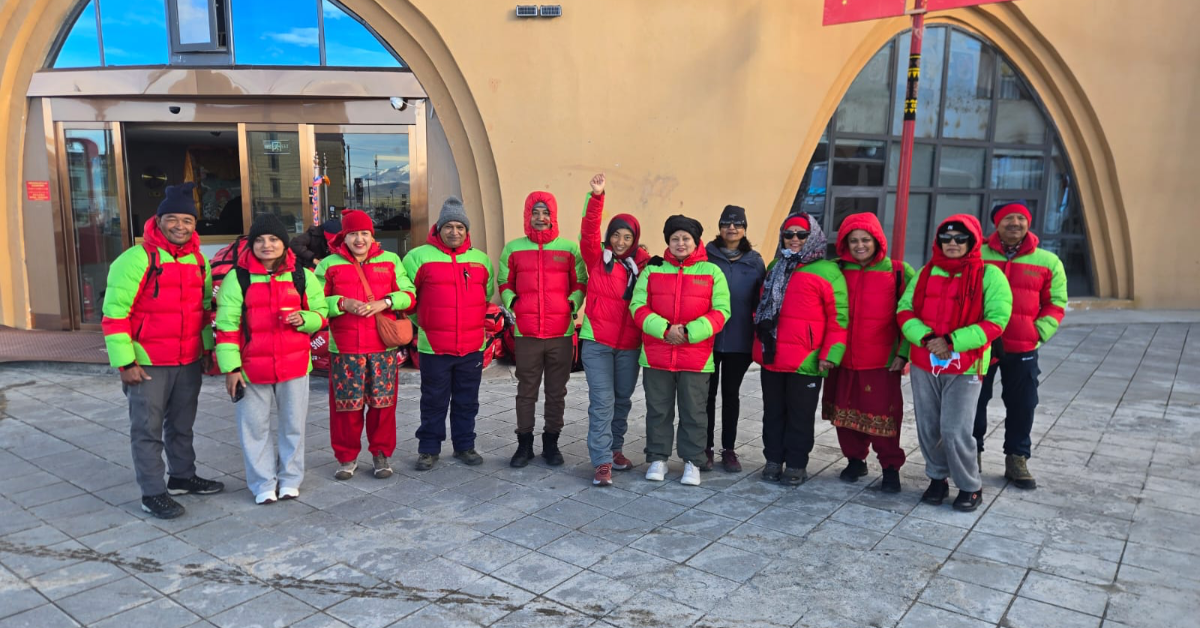
Kailash Mansarovar in Tibet: Complete Yatra Guide

Activities Highlights
Key takeaways
- Kailash Mansarovar in Tibet pairs the 6,638-metre sacred mountain with the 4,590-metre freshwater lake, held holy by Hindus, Buddhists, Jains and followers of Bon.
- The pilgrimage runs overland from Kathmandu through the Kyirong border and takes most travellers 14 to 16 days, built around a three-day kora on foot.
- Foreign pilgrims need a Chinese visa, a Tibet Travel Permit, an Alien's Travel Permit and a military permit, all arranged through a licensed agency, not individually.
- The hardest single day crosses Dolma La pass at 5,630 metres, where patience and slow acclimatisation matter far more than athletic fitness.
- May to September is the open season, with the clearest, most stable weather falling outside the heaviest monsoon weeks of July and August.
If you are reading this, you are probably weighing two questions at once: what the Kailash Mansarovar journey actually involves, and whether it is something you could realistically do. The short answers are that it is an overland pilgrimage to a sacred mountain and a sacred lake deep in western Tibet, and that most reasonably healthy adults can complete it with the right support and a patient approach to altitude.
Kailash Mansarovar in Tibet is not a destination people stumble into. It sits roughly a thousand kilometres from Kathmandu, across high plateau where the air thins and the weather turns quickly. This guide answers both of your questions. Here is what the yatra genuinely involves, from the sacred meaning of the place to the permits, the daily driving and walking plan, the altitude, and how to prepare your body and your bags.
What the Kailash Mansarovar Journey Actually Is
The yatra combines two sacred sites that pilgrims visit as one journey. The first is Mount Kailash, a striking four-sided peak that rises to 6,638 metres on the remote western edge of the Tibetan plateau. The second is Lake Manasarovar, a vast freshwater lake sitting at roughly 4,590 metres, one of the highest large freshwater lakes in the world, a short drive south of the mountain.
You do not climb Kailash. The mountain has never been summited, and by long tradition it is left untouched. What pilgrims do instead is walk a loop around its base, a ritual circuit known as the kora in Tibetan and parikrama in Sanskrit. The walking loop is about 52 kilometres and takes three days. Around the lake, most travellers spend their time more quietly: visiting a lakeside monastery, sitting with the water, and taking part in simple rituals at the shore.
Put together, the mountain supplies the physical and emotional high point of the trip, and the lake supplies the stillness. Most people describe the two halves as feeling very different, and that contrast is part of why the combined yatra holds such a strong pull.
Why Kailash and Manasarovar Are Sacred
Few places on earth are holy to as many traditions at once. Mount Kailash is sacred to four faiths, and each reads the mountain through its own story.
- Hinduism. Kailash is understood as the abode of Lord Shiva, who is said to sit there in eternal meditation. For many Hindu pilgrims, reaching the mountain is a devotion they have carried for much of their lives.
- Buddhism. The mountain is identified with Mount Meru, the axis at the centre of the universe, and associated with the deity Demchok. Tibetan Buddhists have walked the kora here for centuries.
- Jainism. Jains know the peak as Ashtapada, the place where Rishabhadeva, the first tirthankara, is said to have attained liberation.
- Bon. The pre-Buddhist Bon tradition of Tibet holds Kailash as its spiritual heart. Where other pilgrims walk the kora clockwise, Bon practitioners walk it counterclockwise.
Lake Manasarovar carries its own weight. In several traditions it is a lake of the mind, a place where the water is said to cleanse not the body but the thoughts a pilgrim brings to it. Bathing or simply touching the water is, for many, the quiet centre of the whole journey.
You do not need to share any of these beliefs to travel respectfully here. Much of what makes the yatra moving is the sense that you are walking a path countless people have walked before you, for reasons that run very deep.
The Full Route From Nepal Into Tibet
Most international travellers reach Kailash overland from Nepal rather than flying into central Tibet. The route is long, but the slow gain in altitude is part of what keeps people safe.
The journey usually begins in Kathmandu with a day or two for final briefings, permit paperwork and a little acclimatisation. From there you drive north to the Nepal-Tibet frontier at Rasuwagadhi and cross into Tibet at Kyirong, sometimes written Kerung. This is the modern gateway most groups use.
Once across the border, the road climbs onto the plateau and runs west. A typical sequence looks like this:
- Kathmandu to Kyirong. A long driving day to the border, then across into Tibet.
- Kyirong to Saga. A full day on the plateau, usually with a rest stop to let bodies adjust to the altitude.
- Saga to Lake Manasarovar. Another long drive west, often with your first clear sight of the sacred lake and, if the weather cooperates, of Kailash itself in the distance.
- Manasarovar to Darchen. A short transfer to Darchen, the small town at about 4,670 metres that serves as the trailhead for the kora.
The return follows the same corridor back to Kathmandu. The driving days are genuinely long, often six to nine hours, on roads that range from smooth tarmac to rough plateau track. Patience helps here as much as on the trail.
If you are still deciding between Himalayan journeys, it is worth weighing how the Kailash yatra differs from a Nepal trek or a Bhutan cultural tour in effort, cost and feel before you commit to the plateau.
The Three-Day Kora Around Mount Kailash
The kora is the heart of the trip, and it is worth understanding before you commit. It is a circuit on foot of roughly 52 kilometres, split across three days, walked clockwise by Hindu, Buddhist and Jain pilgrims.
- Day one: Darchen to Dirapuk. A long but mostly gentle valley walk of around 20 kilometres, with the dramatic north face of Kailash opening up ahead of you. You overnight near Dirapuk monastery at about 5,210 metres.
- Day two: Dirapuk over Dolma La to Zuthulpuk. This is the hardest day by a wide margin. The trail climbs to the Dolma La pass at 5,630 metres, where the air holds roughly half the oxygen of sea level, then drops steeply to Zuthulpuk. Expect a slow, breath-by-breath ascent.
- Day three: Zuthulpuk to Darchen. A shorter, easier walk of around 14 kilometres back to the trailhead, following a river valley out.
Some pilgrims hire a porter or a pony for parts of the route, and that is entirely normal rather than a failure of nerve. The walking is not technical. There is no climbing, no ropes, no exposure of the kind mountaineering demands. What the kora asks of you is steady effort at thin-air altitude, which is a different thing entirely.
Patience matters more than athletic ability here. Our dedicated Mt Kailash in Tibet: Kora Trek and Pilgrimage Guide breaks the three days down stage by stage if you want to picture the walking in detail.
Permits and the Paperwork You Cannot Skip
Travel to the Kailash region is tightly controlled, and no foreign traveller can do it independently. You cannot simply book a flight and show up. Everything runs through a licensed agency, and the paperwork comes in layers.
- Chinese tourist visa. You apply for this before anything else, typically a standard tourist visa.
- Tibet Travel Permit. Issued by the Tibet Tourism Bureau, this is mandatory for all foreigners entering Tibet and must be arranged through an authorised operator.
- Alien's Travel Permit. This covers restricted areas. In June 2025 China eased the rules for several popular routes, including Lhasa and Everest Base Camp, but the Kailash-Manasarovar region remains a restricted zone that still requires this permit.
- Military permit. The Ngari region where Kailash sits is a border-sensitive military zone, so a separate military permit is required and is organised by your operator.
The practical takeaway is that you hand this entire process to a ground operator who does it for you. You supply your passport details and photos; they assemble the permits as a package. The Wikipedia overview of the Kailash Mansarovar Yatra is a useful independent reference on the pilgrimage and its regulated nature if you want to read around the subject.
Timelines for these permits shift, so confirm the current requirements with your operator when you book rather than relying on an older itinerary you found online.
When to Go: Season and Weather
The yatra has a clear open season. Travel runs from roughly May to September, when the high passes are free of winter snow and the roads across the plateau are drivable.
Within that window, the shoulder months tend to be kindest. June and September often bring the most settled skies and the best odds of a clear view of the mountain. The deep monsoon weeks of July and August can be greener but also wetter, with cloud that hides Kailash for days and roads that turn to mud. Outside May to September the region effectively closes, with snow on Dolma La and bitter cold making the kora impractical and unsafe.
One date to know is Saga Dawa, the Tibetan Buddhist festival that usually falls in late spring or early summer and draws large numbers of pilgrims to Kailash. It is a remarkable time to be there, but it also means crowds and stretched logistics, so it is worth deciding in advance whether you want to be part of that or to travel more quietly.
Altitude and Staying Healthy on the Plateau
Altitude is the single biggest factor in whether your yatra goes well. Everything on this trip happens high. Lake Manasarovar sits near 4,590 metres, Darchen is above 4,600, and Dolma La tops out at 5,630. For most travellers this is far higher than anywhere they have been.
A few principles do most of the work:
- Gain height slowly. The overland route exists partly to give your body time. Resist the urge to rush ahead of the schedule.
- Hydrate and eat. Thin air dehydrates you faster than you notice. Drink more than feels necessary and keep eating even when appetite fades.
- Know the warning signs. A mild headache is common. Worsening headache, nausea, breathlessness at rest, confusion or poor coordination are not, and they mean you tell your guide immediately rather than pushing on.
- Ask about medication. Many travellers use acetazolamide to help acclimatise. Talk to your own doctor about this well before you leave, along with any heart or lung conditions.
Patience, again, is the real skill. The travellers who struggle most are usually the fittest ones who try to power through instead of letting their bodies adjust. If you have done a high Himalayan trek before, such as an Everest Base Camp trek in Nepal, you will already have a sense of how your body handles altitude, which is genuinely useful preparation.
What to Pack for Kailash Mansarovar
Packing for the yatra means preparing for strong sun, hard cold and long hours in a vehicle, sometimes all in one day. Layers are everything.
- Insulated jacket and warm layers. Nights are cold even in summer, and Dolma La can be freezing at dawn. A down or synthetic jacket, fleece, and thermal base layers earn their place.
- Waterproof shell. A wind and rain layer for the top and bottom. Plateau weather changes fast.
- Sturdy, broken-in footwear. Walking boots you have already worn in, plus comfortable shoes for driving days.
- Sun protection. High-factor sunscreen, lip balm, a wide-brimmed hat and proper sunglasses. The high-altitude sun is fierce.
- Personal medical kit. Any prescription medicines, altitude medication discussed with your doctor, painkillers, and basics for blisters and stomach upsets.
- Reusable water bottle or hydration system. You will drink a lot, and reducing plastic matters in a place this fragile.
- Warm sleeping bag. Accommodation on the kora is basic, and a good bag makes the difference between resting and shivering.
A standard Nepal trekking packing list transfers almost entirely to the Kailash region, with the one addition that you should pack warmer than for a lower Nepal trek. Work through your gear item by item rather than from memory.
Local Etiquette and Responsible Travel
Kailash is a living sacred site, not a scenic backdrop, and how you behave there matters. A little awareness goes a long way.
- Walk the kora clockwise if you are following the Hindu, Buddhist or Jain tradition, keeping sacred sites on your right. Only Bon pilgrims walk the other way.
- Ask before photographing people. Pilgrims are often in deep prayer. A quiet gesture asking permission is respectful, and many will decline, which is their right.
- Leave nothing behind. Carry out every scrap of rubbish. Do not use soap in Lake Manasarovar, and do not disturb the shoreline.
- Follow your guide on restricted zones. This is a sensitive border region. Drones and photography are prohibited in places, and the rules are not negotiable.
Travelling well here is partly about pace and partly about humility. The communities and monasteries along the route host pilgrims year after year, and responsible tourism keeps that welcome intact.
Booking the Yatra With Mission Nepal Holidays
Because the Kailash region cannot be visited independently, the operator you choose shapes the whole experience, from how the permits are handled to how carefully the acclimatisation is paced. Mission Nepal Holidays runs the yatra overland from Kathmandu with the full permit package, Tibet Travel Permit, Alien's Travel Permit and military permit arranged on your behalf, so you are not left navigating the paperwork alone.
What tends to matter most to first-time pilgrims is support at altitude: an itinerary that builds height slowly rather than racing to Darchen, guides who know the warning signs, and a kora schedule with room to go at your own pace over Dolma La. Those are the quiet details that decide whether people finish the circuit feeling well or unwell. Exact duration, inclusions and current permit costs vary, so confirm the specifics when you enquire.
If you are at the stage of comparing itineraries and prices, our breakdown of Kailash Mansarovar Yatra Packages: Routes and Prices lays out the options side by side so you can see what a realistic plan looks like before you commit.
The sensible next step, whether or not you book with us, is to pick your travel month first, since May to September fills up and the Saga Dawa dates in particular go early. Decide when you want to stand at the lake, then build the rest of the plan around it.
Frequently asked questions
Can a first-timer with no trekking background do the Kailash Mansarovar yatra?
Yes, for most reasonably healthy adults. The walking itself is moderate, and the real challenge is altitude. A sensible acclimatisation schedule and a supported group matter more than athletic ability.
How many days does the full yatra take from Kathmandu?
Most overland itineraries run 14 to 16 days round trip from Kathmandu, including driving days across the plateau and the three-day kora around Mount Kailash. Exact duration varies by operator, so confirm when you book.
Do I need to climb Mount Kailash?
No. No one climbs Mount Kailash. The pilgrimage is a circuit, the kora, walked around the base of the mountain, not an ascent to the summit, which is left untouched out of respect.
What permits do foreign travellers need?
You need a Chinese tourist visa plus three Tibet permits: the Tibet Travel Permit, an Alien's Travel Permit for the restricted Kailash region, and a military permit. A licensed agency arranges all three on your behalf.
When is the best time to go?
May through September. June and September often bring the most settled skies, while mid-monsoon weeks in July and August can muddy the roads and cloud the mountain.