
Nepal vs Tibet vs Bhutan: Which Himalayan Trip?

Activities Highlights
Key takeaways
- Nepal is the most accessible and flexible Himalayan destination, with visa on arrival for most nationalities and a huge range of trek lengths and difficulties.
- Tibet is the most controlled: foreigners cannot travel independently and must book through a licensed agency with a guide, which makes the sacred Mount Kailash kora a fully supported journey.
- Bhutan charges a Sustainable Development Fee of roughly USD 100 per night on top of the trip cost, which keeps numbers low and funds conservation and free healthcare.
- Altitude is the real difficulty across all three regions, so patience and acclimatization matter far more than raw fitness.
If you want the widest choice of treks and the easiest entry, go to Nepal. If you are drawn to a sacred mountain circuit and do not mind strict rules, Tibet fits. If you want a quiet, carefully protected kingdom and can absorb a nightly fee, Bhutan is the answer.
This guide compares the three on the things that actually shape your trip: the landscapes and trekking styles, the culture and festivals, the costs and permits, the altitude and difficulty, and finally which one suits your goals. Each region sits along the same Himalaya, yet they feel genuinely different on the ground. Here is how to tell them apart before you book.
How Do the Landscapes and Trekking Styles Compare?
Nepal gives you the most varied trekking terrain and the densest trail network of the three, from subtropical foothills to glacier moraine above 5,000 meters. Tibet is a high, dry plateau of open horizons and pilgrim paths. Bhutan is a forested, monsoon-green kingdom where trails stay quiet because visitor numbers are deliberately low.
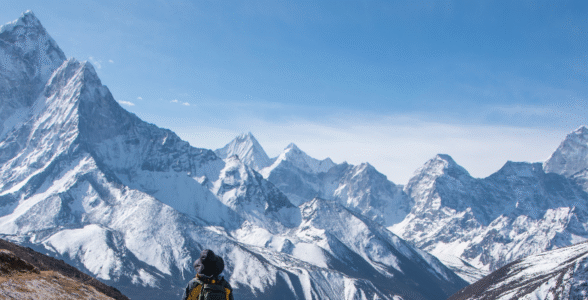
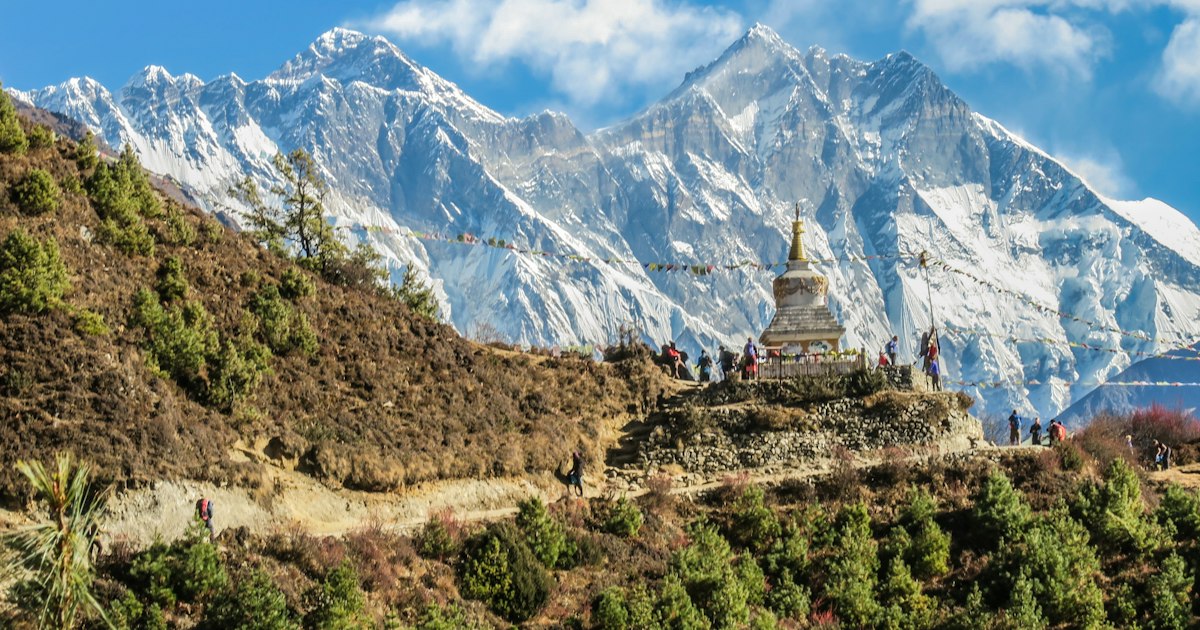
In Nepal you walk through a vertical country. A single route can start in rice terraces and rhododendron forest, then climb past yak pastures to the foot of an 8,000-meter peak. The main trails use teahouses, so you sleep and eat in villages rather than carrying full camp. That makes trekking here flexible: you can do a gentle four-day loop or a demanding three-week circuit.
Tibet trekking is different in character. The plateau averages well over 3,500 meters, so even a short walk begins high. Trails are often ancient pilgrimage routes rather than tourist circuits, and the scenery leans toward vast valleys, prayer-flag passes and distant snow peaks instead of enclosed forest.
Bhutan sits between the two. Its treks pass through blue-pine and fir forest, terraced farmland and clusters of fortress-monasteries, with fewer walkers around you. The famous short climb to Taktsang, the Tiger's Nest, clings to a cliff above the Paro valley and gives you the country in miniature: steep, green and layered with devotion.
Which Region Has the Most Iconic Treks and Sites?
Each region has one or two signature experiences that most travelers build a trip around. Nepal has Everest Base Camp and the Annapurna Circuit. Tibet has the Mount Kailash kora. Bhutan has the Tiger's Nest and its great valley dzongs.
In Nepal, Everest Base Camp sits at roughly 5,364 meters, and the classic approach takes around twelve days round trip from Lukla. The Annapurna Circuit is the other headline route, crossing the Thorong La pass at about 5,416 meters, its highest point. Both are well supported, which is part of why Nepal draws so many first-timers. For a full breakdown of the route, costs and acclimatization days, our Everest Base Camp guide walks through the trek day by day.
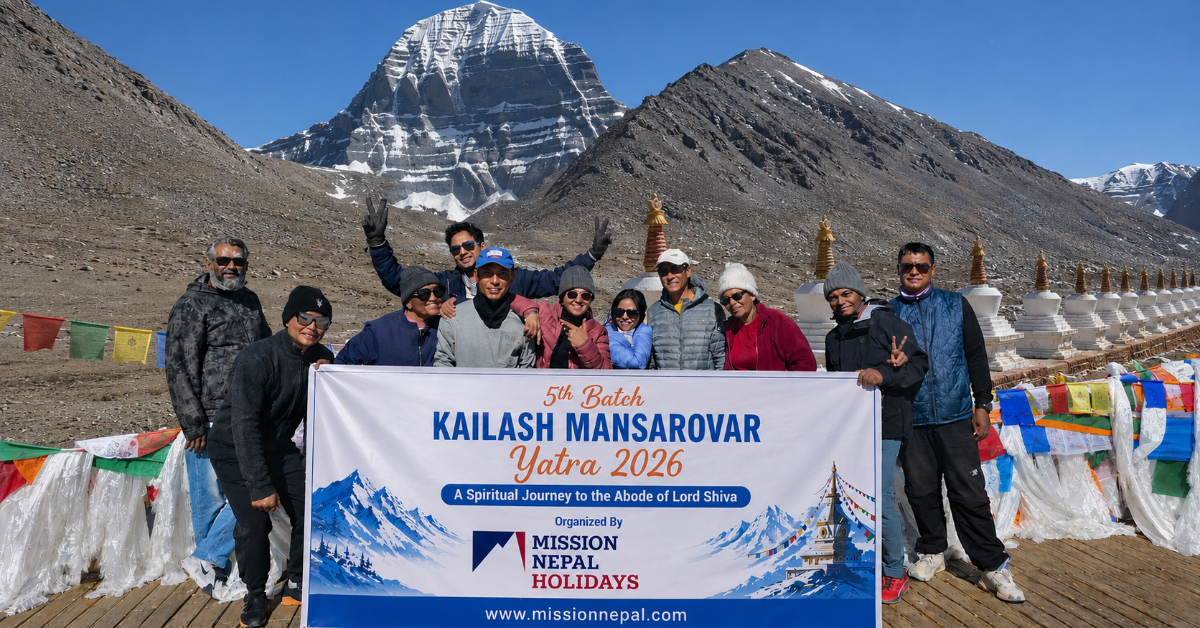
In Tibet, the defining journey is the circuit of Mount Kailash, a 6,638-meter peak that Hindus, Buddhists, Jains and followers of the Bon tradition all regard as sacred. The kora, or ritual circuit, runs roughly 52 kilometers around the mountain and crosses the Dolma La pass at about 5,630 meters, usually over three days. You do not summit Kailash; no one climbs it, by long tradition. You walk around it, in a circuit known as the parikrama.
In Bhutan, the short but steep ascent to Taktsang Monastery is the image most people carry home. Add the Punakha and Paro dzongs, which are working administrative and religious centers, and you have a cultural core rather than a high-altitude objective.
How Do the Cultures, Monasteries and Festivals Differ?
All three regions share Tibetan Buddhist roots, but they express them differently. Nepal blends Hindu and Buddhist worship in the same cities. Tibet is the historic heart of Tibetan Buddhism. Bhutan is a living Buddhist kingdom where the religion shapes architecture, dress and law.
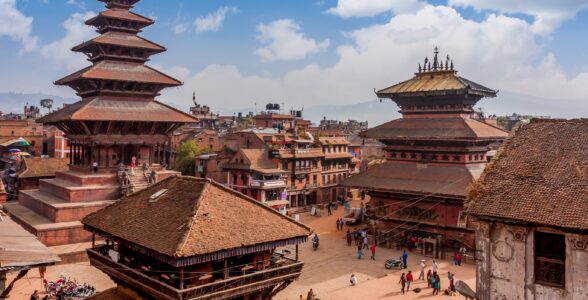
Nepal's Kathmandu Valley stacks Hindu temples and Buddhist stupas within a few streets of each other. You can stand at Boudhanath, one of the largest stupas anywhere, then walk to a Hindu cremation ghat the same afternoon. Festivals run through the calendar, from Dashain and Tihar to Buddhist full-moon days.
Tibet's monasteries carry a heavier historical weight. Places like the Jokhang in Lhasa remain active pilgrimage destinations, with prostrating devotees circling the holy sites. The culture of the plateau, its pastoral life, its language and its devotional rhythm, runs deep, and it rewards a little reading before you go.
Bhutan ties festival life tightly to its dzongs. The tshechu festivals feature masked cham dances performed over several days, and the dates shift each year with the lunar calendar. If a festival matters to your plans, confirm the exact dates when you book, because they vary and seats fill early.
What Will Each Trip Cost, and What Permits Do You Need?
Cost and paperwork separate these three regions more sharply than the trekking does. Nepal is the cheapest and simplest to enter. Tibet carries agency and permit overhead. Bhutan adds a fixed daily fee that no other Himalayan destination charges.
Nepal issues a visa on arrival to most nationalities, and trekking permits are modest. You typically need a trekking permit and, on many routes, a national park or conservation area entry fee, plus a card for the trekker information system. Costs run to a few tens of dollars for most standard treks, though restricted areas like Manaslu or Upper Mustang cost considerably more and require a licensed guide.
Tibet is the most controlled destination of the three. Foreign travelers cannot travel independently: you must book through a licensed agency and keep a licensed guide with you throughout the visit, in addition to holding a Chinese visa and a separate Tibet Travel Permit. That raises the baseline cost, but it also means your logistics, transport and permits are handled end to end.
Bhutan charges a Sustainable Development Fee of roughly USD 100 per night for most international visitors, on top of your trip and visa costs. The fee funds conservation, culture and services such as free healthcare and education for citizens. It is the mechanism behind Bhutan's "high value, low volume" tourism policy, and it is the single biggest reason a Bhutan trip costs more per day than an equivalent one in Nepal.
Nepal's accessibility shows up in the numbers. The country recorded 1,158,459 international visitor arrivals across 2025, close to its pre-pandemic peak (Nepal Tourism Board, 2025). That volume is why its trails, flights and teahouse network are so developed compared with its neighbors.
How Hard Is Each Region, and How High Will You Go?
Altitude is the real difficulty in all three regions, not the walking itself. Nepal lets you choose your ceiling. Tibet starts high and stays high. Bhutan's standard tours stay moderate, though its longer treks climb seriously.
The headline Nepal treks top out between about 5,364 meters at Everest Base Camp and 5,416 meters on the Thorong La. Those are serious elevations, but the routes are designed with acclimatization days built in, and you gain height gradually over many days. Patience matters more than athletic ability here. Most people who struggle are not unfit; they simply climbed too fast.
Tibet is harder to ease into because the plateau itself sits high. Lhasa is already near 3,650 meters, so you feel the thin air on day one rather than day six. The Kailash kora then pushes you over the 5,630-meter Dolma La. There is no gentle foothill approach to soften the start, which is why extra acclimatization time on the plateau is essential, and why the circuit suits travelers who have some high-altitude experience or who build in slow, guided staging.
Bhutan's cultural tours and the Tiger's Nest climb stay comfortably below the danger zone for most fit travelers, with the hike to Taktsang gaining a few hundred meters rather than thousands. Its multi-day treks, such as the high routes toward the northern peaks, are a different matter and can rival anything in Nepal for altitude and remoteness. Match the Bhutan itinerary to your experience rather than assuming the whole country is gentle.
For reference, the tallest objective of all sits in Nepal: Everest stands at 8,848.86 meters, the height jointly confirmed by Nepal and China in late 2020 (Al Jazeera, 2020). You will not climb it on a trek, but you will walk to its feet.
How Do You Handle Altitude Sickness and Safety in Each Region?
Acute mountain sickness, or AMS, is the one risk that behaves the same everywhere above roughly 3,000 meters, but your options when it strikes differ sharply by region. Nepal has the densest rescue and clinic network. Tibet relies on vehicle descent and your guide. Bhutan sits somewhere between the two.
The early signs are consistent: headache, poor sleep, loss of appetite and nausea. The treatment is also consistent, and it is not heroic. You stop climbing, and if symptoms worsen you go down. A few hundred meters of descent often settles mild AMS overnight. The mistake that turns a nuisance into an emergency is pushing upward on a schedule when your body is asking you to wait.
In Nepal, the main trekking valleys have clinics, and helicopter evacuation from the Everest and Annapurna regions is well established, though it depends on weather and insurance. That safety net is a genuine advantage for nervous first-timers. Make sure your travel insurance explicitly covers helicopter rescue at trekking altitude, because a standard policy often does not.
In Tibet, you are usually traveling by vehicle between high points, so the standard response to AMS is to drive down to a lower town rather than wait for an aircraft. Clinics are sparse along the Kailash route. This is one more reason the plateau rewards slow acclimatization and a licensed guide who knows the warning signs.
In Bhutan, the Tiger's Nest and valley tours rarely reach dangerous heights, so AMS is a minor concern on a standard cultural trip. On the high treks, though, you face the same remoteness as Tibet, with limited quick evacuation. Plan those itineraries with built-in rest days rather than a tight timetable.
How Do You Actually Get There and Move Around?
Access and internal transport shape a Himalayan trip as much as the trekking does, and the three regions could hardly be more different. Nepal is the open hub with the busiest airport and the most domestic flights. Tibet is reached overland or by a controlled flight, always with permits. Bhutan has one main international airline and a famously tricky approach.
Nepal's gateway is Kathmandu, with direct connections across Asia and the Gulf and onward domestic flights to mountain airstrips such as Lukla for Everest. Road access reaches most trailheads, and internal flights save days on longer itineraries. The trade-off is that mountain flights are weather-dependent and can be delayed, so a sensible plan leaves buffer days near the start and end.
Tibet is typically entered overland from Nepal or by air from mainland China, and in both cases your permits and guide must be arranged in advance. You cannot simply land and wander. Long drives across the plateau are part of the experience, and they double as slow acclimatization, which is a hidden benefit of the overland route for the Kailash journey.
Bhutan is served chiefly by its national carrier into Paro, whose runway is ringed by steep hills and open to only a small number of trained pilots. Flights can shift with weather, and seats are limited, so book early and keep your onward connections loose. Once inside, your guided itinerary handles ground transport, which removes a lot of the planning headache.
When Is the Best Time to Go to Each One?
The seasons line up broadly across the Himalaya, with two main windows, but each region has its own quirks. Spring and autumn are the safe choices almost everywhere. Winter and the summer monsoon suit only specific trips.
Autumn, roughly October to late November, generally brings the clearest skies and stable weather across Nepal and Tibet, which is why it is the busiest trekking season. Spring, around March to May, is the other prime window, and in Nepal it adds blooming rhododendron forest at mid elevations.
The summer monsoon, broadly June to early September, makes most Nepal trails wet, leech-prone and cloudy, though the rain-shadow regions behind the main range, like Upper Mustang and parts of Tibet, stay relatively dry and trek well in those months. Tibet's Kailash pilgrimage traffic peaks in summer, partly around the Saga Dawa festival.
Bhutan's tshechu festivals fall at varying points through spring and autumn depending on the valley, so the "best" time there can hinge on which festival you want to see. As always, exact dates and conditions vary year to year, so confirm them with your operator when you book rather than relying on a general calendar.
Which Destination Suits Your Travel Goals?
Match the destination to what you actually want from the trip, not to which name sounds most impressive. Nepal suits flexibility and value. Tibet suits pilgrimage and raw plateau scale. Bhutan suits quiet, curated cultural depth.
Choose Nepal if you are a first-time trekker, if you want to pick your own difficulty and duration, or if budget matters. The range runs from a two-day Poon Hill walk to the Everest Three Passes or the remote Manaslu Circuit, and the support network is unmatched in the region.
Choose Tibet if the pull is spiritual or if you want the stark, high-plateau landscape and the Kailash and Mansarovar pilgrimage specifically. Accept that you trade independence for a guided, permitted structure, and that the altitude asks for experience or careful staging.
Choose Bhutan if you want cultural immersion, festivals and near-empty trails, and if the nightly fee fits your budget. It rewards travelers who care more about monasteries, dances and landscape than about ticking off an 8,000-meter base camp.
Traveler type matters too. Families with children often favor Nepal's shorter, lower treks and its city sightseeing, or Bhutan's gentle cultural pace, over Tibet's long high-altitude drives. Solo and older travelers who want a fully supported trip find Tibet and Bhutan easy in one sense, since a guide and vehicle come as standard, while in Nepal you can add a private guide and porter to a budget framework. Budget-conscious travelers almost always land on Nepal, where the daily cost is lowest and you control the trip length.
Many travelers eventually do more than one. Nepal and Tibet pair naturally overland because they share a border and permit system, which is why a Kathmandu-to-Lhasa or Kathmandu-to-Kailash route is such a common combination. Bhutan usually stands alone as its own leg.
How Do These Regions Overlap and Combine?
The three are neighbors on the same mountain chain, so sensible combinations exist, but the paperwork decides what is practical. Nepal functions as the natural hub. Tibet connects to it overland. Bhutan connects by air, usually through Kathmandu or a regional gateway.
Kathmandu is the logistical center for all three. Most Tibet overland trips and most Kailash journeys stage out of Nepal, crossing the border and picking up Tibet permits as part of an organized itinerary. Flights into Bhutan are limited and often route through Kathmandu, which makes a Nepal-then-Bhutan trip straightforward to sequence even though the two have entirely separate entry systems.
If you only have one trip in you for now, start with Nepal. It gives you the broadest taste of Himalayan trekking and culture, the gentlest learning curve for altitude, and an easy springboard to add Tibet or Bhutan on a later visit once you know how your body handles the heights.
What Can Mission Nepal Holidays Arrange in All Three Regions?
Mission Nepal Holidays operates across Nepal, Tibet and Bhutan, which is useful precisely because the three regions have such different logistics. The same team can handle a Nepal visa-on-arrival trek, a permit-heavy Tibet pilgrimage and a fee-based Bhutan cultural tour without you having to coordinate three separate operators.
In Nepal, the company runs the flagship routes: Everest Base Camp, the Annapurna Circuit, Langtang, Gokyo Lakes, the Manaslu Circuit and shorter options like Ghorepani Poon Hill, with multilingual licensed guides and acclimatization built into the itineraries.
In Tibet, where independent travel is not allowed, having a licensed operator is not a convenience but a requirement. Mission Nepal Holidays arranges the Tibet Travel Permit, the licensed guide and the full Kailash Mansarovar Yatra, including the kora staging and plateau acclimatization that the altitude demands.
In Bhutan, the company handles the Sustainable Development Fee, visa and guided arrangements, and can time a trip around the tshechu festivals or the Tiger's Nest climb. Because the itineraries are tailored, from short five-day visits to longer multi-country journeys, you can tell them what you want from the Himalaya and let the structure follow. When you are ready to compare specific dates and routes, that is the single conversation worth having before you commit.
Frequently asked questions
Which is easier for a first-time trekker, Nepal, Tibet or Bhutan?
Nepal, in most cases. It has the widest choice of short, lower-altitude treks like Ghorepani Poon Hill, plus dense teahouse support along the main trails. Tibet and Bhutan involve higher baseline elevations and more rigid logistics.
Do I need a guide in all three countries?
Effectively yes for Tibet and Bhutan. Tibet requires a licensed guide for the whole visit, and Bhutan requires guided arrangements in most areas. Nepal allows independent trekking on many routes, though a licensed guide is now required in several national park and restricted zones.
Can I combine two or three of these regions in one trip?
Yes. A common pairing is Nepal and Tibet overland from Kathmandu toward Lhasa or Kailash, since they share a border and permit system. Bhutan is usually a separate leg because it has its own visa and fee structure.
Which destination is best for a spiritual or pilgrimage journey?
Tibet, for the Mount Kailash and Mansarovar circuit, which is sacred to Hindus, Buddhists, Jains and Bon followers. Nepal's Muktinath and Bhutan's Tiger's Nest are strong pilgrimage draws too, at lower logistical cost.