
Tibet Group Tours: Small-Group Himalayan Journeys

Activities Highlights
Key takeaways
- Foreign travelers cannot tour Tibet independently. You must join an organized, permitted group, which makes a small-group tour the standard way in.
- The three signature routes are Lhasa cultural circuits, Everest North Base Camp at around 5,200 meters, and the Mount Kailash kora, a 52-kilometer walk that crosses Dolma La Pass at 5,630 meters.
- Your Tibet Travel Permit is arranged by your operator, not by you, so booking six to eight weeks ahead matters more than for most trips.
- Altitude is the real difficulty on the plateau, which averages 4,500 meters. Slow, built-in acclimatization days matter more than fitness.
- The dry months from April to October are the practical window, with Kailash journeys clustered around the summer full-moon period.
If you are looking at Tibet group tours, the first thing to know is that a group is not optional. Foreign travelers cannot tour the Tibet Autonomous Region independently, so joining a small, guided departure is simply how you get onto the plateau at all. That single rule shapes everything else, from how permits are arranged to why your operator needs weeks of lead time before you fly.
This guide is written for someone who is comparing providers and close to booking, not someone deciding whether Tibet is worth it. It covers why group travel is the norm here, the three itineraries most travelers choose, what a fair package includes, how permits and acclimatization actually work at these altitudes, when to go, and how to reserve a place on a Mission Nepal Holidays departure from Kathmandu.
Why You Join a Group to Visit Tibet
The honest answer is that the rules leave you little choice, and that turns out to be a good thing. Under current regulations, foreign visitors must travel with an organized tour and a licensed guide, and cannot move around the region on their own. Only authorized agencies can even submit the permit paperwork on your behalf, which means the "independent backpacker" model that works in Nepal does not exist across the border.
Once you accept that, the practical benefits of a well-run small group become clear.
- Permits are handled for you. Your operator applies for the Tibet Travel Permit and any additional restricted-area documents. You supply passport scans and dates; they do the rest.
- A guide who reads altitude. On a plateau that averages around 4,500 meters, having someone who watches for early signs of altitude sickness and adjusts the pace is worth more than any view.
- Shared logistics lower the cost. Vehicles, drivers, guide fees and permit administration are fixed costs. Splitting them across a group is what makes a supported Tibet trip affordable at all.
- Company on a demanding trip. Days can involve six to nine hours on the road or on foot at thin-air elevations. A small group makes the hard stretches easier.
The distinction that matters is small group versus large coach tour. A tightly packed bus tour technically satisfies the rules, but it moves at the pace of its slowest logistics, not your body. A small departure keeps the guide-to-traveler ratio low enough that acclimatization can actually be managed person by person.
Popular Small-Group Itineraries at a Glance
Most Tibet group tours are built around one of three journeys, or a combination of them. They differ sharply in difficulty and in what they ask of you, so it helps to know which one you are actually signing up for.
- Lhasa and central Tibet: the cultural core. Monasteries, the Potala Palace, and gentle days at 3,650 meters. The easiest way in.
- Everest North Base Camp: an overland drive west toward the Tibetan side of the world's highest mountain, reaching roughly 5,200 meters.
- Mount Kailash kora: the pilgrimage circuit in far western Tibet, a 52-kilometer walk around a sacred peak that crosses a 5,630-meter pass.
The sections below cover each in turn. If you are choosing between them, treat Lhasa as the baseline everyone can manage, Everest North as a step up in altitude but not in walking, and Kailash as the one that genuinely requires trekking stamina.
The Lhasa and Central Tibet Cultural Circuit
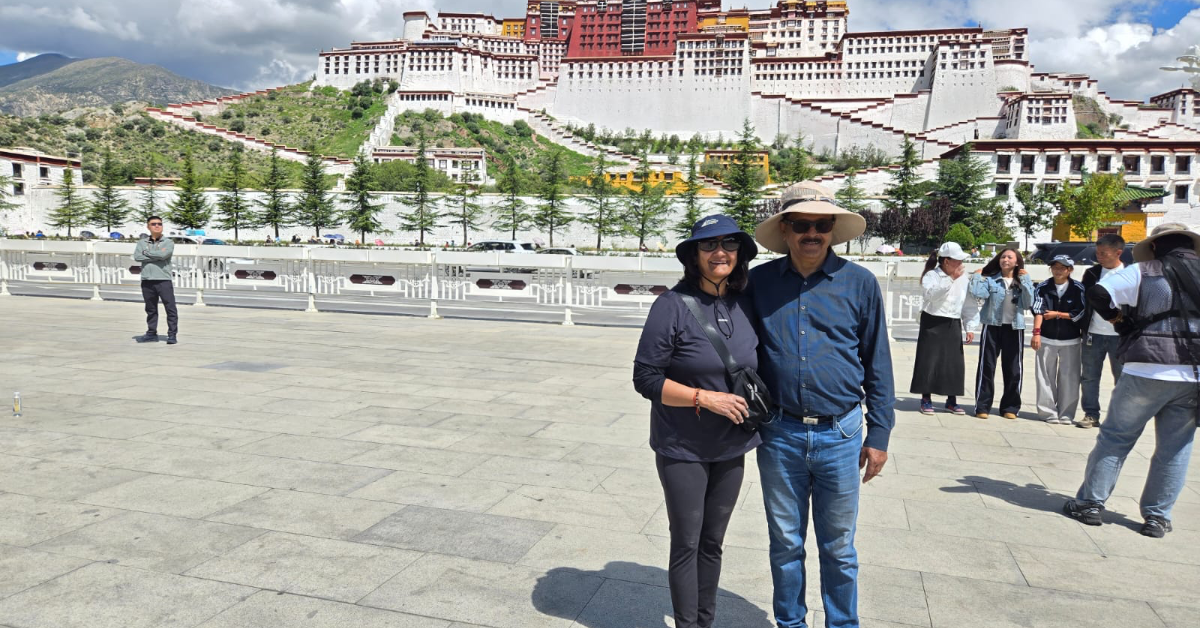
Lhasa sits at 3,650 meters, and almost every Tibet itinerary starts here for a reason: it is the region's spiritual and administrative heart, and it doubles as the place your body first learns to work in thin air. The Potala Palace, perched on Red Hill just above the city at around 3,700 meters, is the landmark most travelers picture when they imagine Tibet.
A typical central-Tibet circuit spends its first two days deliberately slow. You will walk the Barkhor pilgrimage streets, visit the Jokhang Temple, and see the Potala Palace and the great monasteries of Drepung and Sera. Guides usually keep the early schedule light on purpose, because pushing hard in the first 48 hours at this elevation is where trips go wrong.
Many groups then extend west to Gyantse and Shigatse, adding the Kumbum stupa and Tashilhunpo Monastery. This stretch is also the logistical spine of longer trips: the same road carries on toward Everest, so a Lhasa circuit often becomes the opening act of a bigger journey.
If Nepal is your starting point, the same road makes it easy to weave a central-Tibet circuit into a broader Himalayan trip, adding the plateau's culture before or after time in the mountains on the Nepal side.
Everest North Base Camp From the Tibet Side
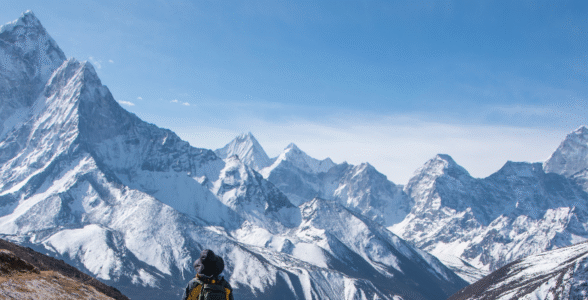
Everest has two base camps, and the northern one sits inside Tibet. It is a different experience from the Nepali trek. Instead of days of walking to reach the mountain, you drive most of the way, arriving at a viewpoint at roughly 5,200 meters where the north face rises almost straight in front of you.
The staging point is Rongbuk Monastery at 4,980 meters, often described as the highest monastery in the world. From here the mountain fills the horizon, and the drama comes from the sheer scale rather than from any summit ambition. This is a viewing journey, not a climb.
Because you gain altitude quickly by vehicle, the North Base Camp leg is where acclimatization discipline earns its keep. A responsible itinerary reaches this point only after several days in Lhasa and the central towns, never as an early highlight. If you want the wider context on the mountain itself, our explainer on where Everest is located and its key facts fills in the geography.
The reward is a face of Everest most trekkers never see. The Nepali side is greener and busier; the Tibetan side is stark, high desert country, and the mountain feels closer to the road.
The Mount Kailash Kora and Pilgrimage Routes
Mount Kailash, at 6,638 meters, is the most demanding of the three and the most meaningful for many travelers. It is sacred to Hindus, Buddhists, Jains and followers of Bon, and the tradition is to walk around it rather than up it, since the peak itself is left unclimbed out of reverence. That circuit is the kora, or parikrama, a 52-kilometer loop usually completed over three days.
The physical crux is Dolma La Pass at 5,630 meters, crossed on the second day. This is real trekking at extreme altitude, typically six to nine hours of walking on the pass day, and it is the section that separates a Kailash journey from the gentler Lhasa and Everest legs. Patience matters more than athletic ability here, but you do need to be able to walk steadily for long days in thin air.
Kailash sits in far western Tibet, a long overland journey from Lhasa or, for many pilgrims, an approach from the Nepal side. The remoteness is part of why these tours need extra lead time and extra permits, a point covered in the logistics section below.
For travelers whose interest is primarily the sacred journey, this is also where the plateau's spiritual character is strongest. The route passes Lake Manasarovar, and the whole circuit is walked by pilgrims for whom it is a devotional act, not a hike. Respecting that context is part of joining the trip.
What's Included and Typical Group Sizes
Packages vary by operator, so read the inclusions line by line before comparing prices. A fair, well-supported Tibet group tour generally covers the following.
- All permits and paperwork: the Tibet Travel Permit and any restricted-area documents, arranged and paid for by the operator.
- Licensed English-speaking guide for the whole route, which is a legal requirement, not an upgrade.
- Private ground transport with a driver, sized to the group.
- Accommodation on a twin-share basis, ranging from city hotels in Lhasa to basic guesthouses near Everest and Kailash.
- Entrance fees to the major monasteries and sites on the itinerary.
Watch for what is often excluded: international flights or the train into Tibet, some meals, Chinese visa fees, travel insurance with high-altitude cover, and tips. These are not hidden costs so much as standard exclusions, but they add up, so confirm them when you book.
On group size, smaller is genuinely better here, and not for comfort alone. A small departure lets the guide monitor each traveler's response to altitude and adjust the day. Mission Nepal Holidays keeps its Tibet group departures small for exactly this reason, typically a handful of travelers up to a mid-teens maximum, so the whole group can move at a shared, sustainable pace rather than at the mercy of a large coach schedule. Exact numbers vary by departure, so confirm the cap for your dates when you reserve.
Permits, Logistics and Getting Onto the Plateau
The permit system is the part of a Tibet trip that most surprises first-timers, so it is worth understanding before you commit to dates.
The core document is the Tibet Travel Permit, issued by the Tibet Tourism Bureau. You cannot apply for it yourself; only an authorized agency can submit the application, and you cannot board a flight or train into Tibet without it. This is why your operator will ask for passport and Chinese visa details well in advance.
Processing takes time. Standard permits for Lhasa, Shigatse and Everest Base Camp typically take around two weeks to process, while journeys into the far-western Ngari region for Mount Kailash can take considerably longer because of the additional military permits required for the restricted border area. Contacting your agency six to eight weeks before arrival is the safe rule.
Getting there usually means one of two routes:
- By air into Lhasa from mainland China cities or, on some itineraries, from Kathmandu.
- Overland from Nepal across the Friendship Highway, which many Kailash and combined Nepal-Tibet trips use.
Each route has permit implications, and the border crossing in particular is tightly controlled, so the itinerary and the paperwork are decided together. The practical takeaway is simple: the permit timeline, not flight availability, is what dictates how early you must book.
Acclimatization and Staying Well at Altitude
Altitude is the single biggest health factor on any Tibet tour, and it is worth treating seriously rather than optimistically. Acute mountain sickness commonly begins around 2,500 meters, according to the CDC Yellow Book guidance on high-altitude travel. Since Lhasa itself sits well above that at 3,650 meters, you are in the risk zone from the moment you arrive.
The same guidance points to a few sensible principles that good itineraries build in:
- Ascend gradually. Spend a few days at a moderate elevation before pushing higher rather than racing to the highest point.
- Give it time. Acute acclimatization typically takes three to five days, which is why reputable Lhasa openings feel unhurried.
- Watch for symptoms. Headache, nausea, poor sleep and dizziness are the early warnings. The safe response is to stop climbing, not to push on.
A few habits help on the ground. Drink more water than feels necessary, avoid alcohol in the first days, and tell your guide the moment you feel off rather than toughing it out. Many travelers discuss altitude medication such as acetazolamide with a doctor before departure; that conversation belongs with a medical professional, not a brochure.
The reason small groups matter again here is that a guide with only a handful of people can actually notice when one traveler is quietly struggling. On the Kailash kora and at Everest North, where you reach 5,600 meters and above, that attention is not a luxury.
Best Departure Seasons for Tibet Group Tours
The practical season for Tibet group tours runs from April to October, the dry months when roads are open and skies are more reliable. Winter is possible for Lhasa-only trips but cold and limited, and the high routes to Everest and Kailash are generally not run in the depths of winter.
Within that window, the timing shifts by route.
- Spring, April to May: clear mountain views and good conditions for Everest North, before the summer haze.
- Summer, June to August: the busiest stretch and the traditional season for the Kailash pilgrimage, though southern Tibet can see monsoon rain in July and August.
- Autumn, September to October: many travelers' favorite for stable weather and sharp visibility, especially for Everest.
Kailash journeys in particular cluster around the summer, partly because of the pilgrimage calendar and partly because the far-western passes are most reliably open then. If your heart is set on a specific route, choose the season first and the dates second. Timing also matters if you are pairing Tibet with the Nepal side of the range, where the clearest trekking windows fall in spring and autumn, so a combined trip is easiest to schedule in those shoulder months.
Combining Tibet With Nepal and Bhutan
Because Mission Nepal Holidays is based in Kathmandu, many travelers use a Tibet group tour as one leg of a wider Himalayan journey rather than a standalone trip. This is where a single operator handling both sides of the border pays off, since the permits, transfers and acclimatization schedule can be planned as one continuous arc.
A common pattern is to acclimatize with a few days in Nepal, cross overland or fly into Lhasa, and then return for a final Kathmandu wind-down. Others pair Tibet with a Bhutan cultural extension, another destination where guided, permit-controlled travel is the norm. If that combination appeals, our overview of Bhutan adventure holidays and cultural tours shows how the two fit together.
The advantage of building the trip this way is not just convenience. Starting lower in Nepal gives your body a head start before the plateau, and having one team responsible from arrival to departure removes the handoffs where things usually go wrong on multi-country itineraries.
Responsible Travel on the Plateau
Tibet is a living cultural and religious landscape, and a good group tour treats it that way. Small groups tread more lightly, both literally on fragile high-altitude ground and socially in monasteries and pilgrimage sites where large crowds are intrusive.
A few practices make the difference:
- Walk the kora clockwise at Kailash and at monasteries, following the direction pilgrims use, unless your guide advises otherwise for a specific Bon site.
- Ask before photographing people, especially monks and pilgrims, and accept no as an answer.
- Do not touch or climb on religious objects, including mani stones, prayer wheels and shrines.
- Carry out what you carry in. Waste management on the remote western routes is minimal, so your group's discipline is the only real safeguard.
None of this is complicated. It comes down to being a guest, moving quietly, and letting the guide set the etiquette for each site.
How to Reserve a Spot on a Mission Nepal Departure
Reserving a place is straightforward once you know the timeline the permit system imposes.
- Choose your route and dates. Decide between a Lhasa circuit, Everest North, Kailash, or a combined Nepal-Tibet itinerary, and pick a departure inside the April-to-October window.
- Confirm the group size and inclusions. Check the traveler cap for your dates and read exactly what the package covers, so there are no surprises on visas, meals or insurance.
- Send your documents early. You will need passport scans and Chinese visa details for the permit application. Aim to have these in six to eight weeks before departure, or earlier for Kailash.
- Secure your place with a deposit. This lets the operator begin the permit process, which is the real bottleneck, not flights.
- Prepare for altitude. Talk to your doctor, arrange insurance with genuine high-altitude cover, and build in your acclimatization days rather than trimming them to save time.
The single most useful thing you can do is start early. The permit timeline is fixed and outside anyone's control, so the trips that go smoothly are almost always the ones booked with room to spare.
If you are ready to walk the plateau with a small, well-guided group, contact Mission Nepal Holidays to check upcoming Tibet departures and reserve your place.
Frequently asked questions
Can I travel around Tibet on my own without a tour?
No. Foreign travelers must join an organized tour with a licensed guide and cannot travel independently in the Tibet Autonomous Region. Your operator arranges the required Tibet Travel Permit on your behalf.
How fit do I need to be for a Tibet group tour?
For Lhasa and Everest North Base Camp, you mainly need to handle altitude rather than long walking days. The Kailash kora is harder because it involves three days of trekking to 5,630 meters, so steady walking stamina helps more than speed.
How far ahead should I book a Tibet group tour?
Six to eight weeks before arrival is a sensible minimum. Standard permits take roughly two weeks to process, and Kailash routes near the Nepal-Tibet border can take up to a month because of the extra restricted-area paperwork.
When is the best time to join a Tibet group tour?
The dry season from April to October is the practical window. Kailash pilgrimage departures cluster around the summer, while Everest views are often clearest in spring and autumn.
What size are Mission Nepal Holidays group departures?
Departures are kept small, typically a handful of travelers up to a mid-teens maximum, so the guide can watch everyone's acclimatization and the group moves at a shared, manageable pace.