
Annapurna Himalayas Nepal: Peaks, Treks & Views

Activities Highlights
Key takeaways
- The Annapurna massif holds Annapurna I at 8,091 metres, the world's 10th highest peak and the first 8,000-metre mountain ever climbed.
- The three most popular treks are Annapurna Base Camp, the Annapurna Circuit over Thorong La at 5,416 metres, and the short Ghorepani Poon Hill loop.
- Autumn (September to November) and spring (March to May) give the clearest, most reliable Annapurna views.
- The whole region sits inside the Annapurna Conservation Area, Nepal's largest protected area at 7,629 square kilometres.
- Trip length ranges from a 4 to 5 day Poon Hill walk to a 12 to 18 day full Circuit, so there is a route for most fitness levels.
If you are trying to picture the Annapurna Himalayas Nepal before you commit to a trek, here is the short version: a compact wall of giant peaks in north-central Nepal, crowned by Annapurna I at 8,091 metres, wrapped around some of the most walkable high-mountain trails on earth. You do not need mountaineering skills to stand among these summits. You need a permit, a sensible number of days, and a route that matches your fitness.
This guide covers the peaks themselves, the three treks most people actually do, the villages and views you pass through, the seasons that decide whether you see the mountains at all, and how difficulty and trip length vary. By the end you should know which walk fits you and roughly what to expect underfoot.
What the Annapurna Massif Actually Is
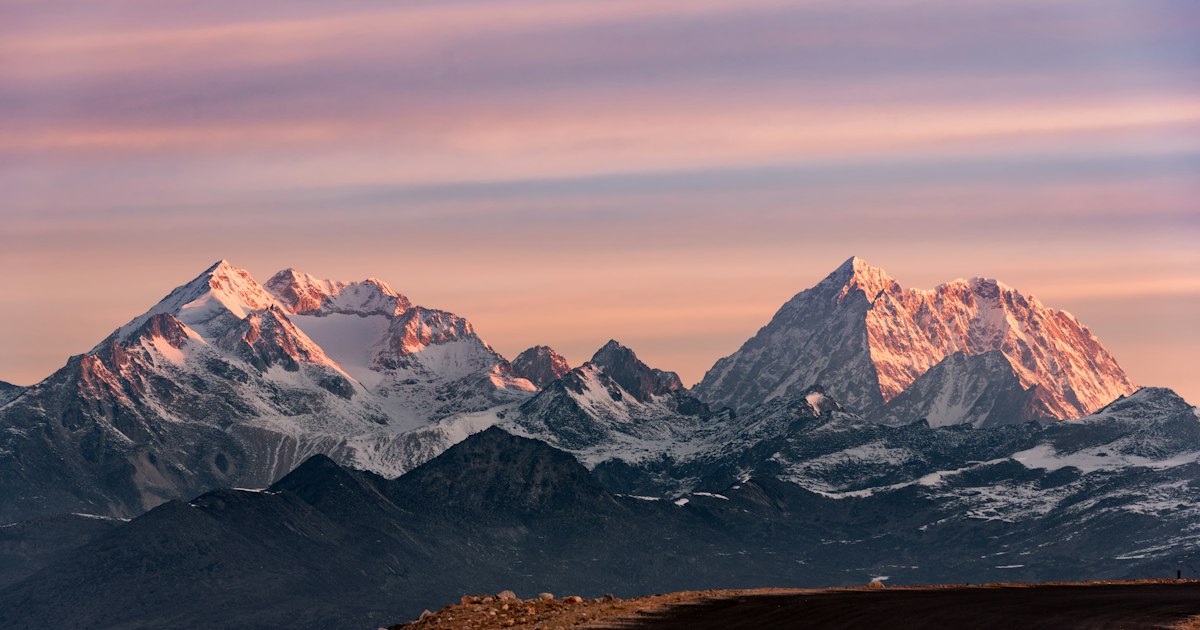
The name Annapurna gets used loosely, so it helps to be precise. Annapurna is a massif, a cluster of connected peaks rather than a single mountain, running roughly 55 kilometres east to west. It anchors a much larger region of trails, valleys, and villages that trekkers refer to simply as "the Annapurnas."
The high point is Annapurna I at 8,091 metres, the world's tenth highest mountain, according to Guinness World Records. It carries a heavier reputation than most summits its height, and there is a reason for that, which the next section covers.
The whole area sits inside the Annapurna Conservation Area, which at 7,629 square kilometres is the largest protected area in Nepal, managed by the National Trust for Nature Conservation. That single fact shapes almost everything about trekking here: the permits you buy, the marked trails, the teahouses, and the mix of forest, farmland, and high desert you walk through.
The Major Peaks You Will See
Part of what makes the Annapurna region so photogenic is the density of big peaks packed into a small area. From a single ridge you can often count several of them. Here are the ones that matter most to a trekker, with their heights.
- Annapurna I: 8,091 metres. The main summit and the reason the massif carries its name. Most trekkers see it best from the Base Camp sanctuary.
- Annapurna II: 7,937 metres. The eastern anchor of the range, prominent from the early Circuit villages.
- Annapurna III: 7,555 metres. A steep, elegant pyramid visible from several viewpoints.
- Annapurna IV: 7,525 metres. Sits close to Annapurna II and is often seen alongside it.
- Gangapurna: 7,455 metres. Famous for the ice face and glacial lake above Manang on the Circuit.
- Annapurna South: 7,219 metres. One of the walls that hems in Annapurna Base Camp.
- Machhapuchhre (Fishtail): 6,993 metres. The sacred, twin-summited peak that dominates the view from Pokhara. It has never been officially summited and remains closed to climbing out of respect for its status.
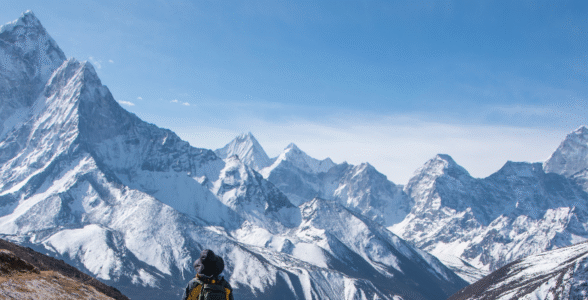
The heights matter for a practical reason. These are not distant on the horizon the way big peaks often are. From the Base Camp amphitheatre or the top of Poon Hill, they rise almost straight up in front of you, which is why the region rewards even short, low-altitude walks.
Why Annapurna I Has a Fearsome Reputation
Annapurna I holds a specific place in mountaineering history. It was the first 8,000-metre peak ever climbed, reached by a French team led by Maurice Herzog on 3 June 1950, three years before Everest.
It also carries a sobering statistic. Guinness World Records lists Annapurna I as the deadliest of the 8,000-metre peaks, with a fatality rate of 13.42 percent, based on 75 deaths against 559 ascents recorded by the Himalayan Database as of early 2025. That danger belongs to expedition mountaineers attempting the summit, not to trekkers.
This distinction is worth holding onto if you are nervous. Walking to Annapurna Base Camp or over the Circuit puts you near these peaks, not on them. The trails top out well below the death zone, and the real challenges you face are altitude, weather, and stamina, not technical climbing. Patience matters more than athletic ability here.
The Three Iconic Annapurna Treks
Most people who come to the Annapurnas do one of three walks. They differ enormously in length and altitude, so choosing well is the single most important decision you make.
Annapurna Base Camp Trek
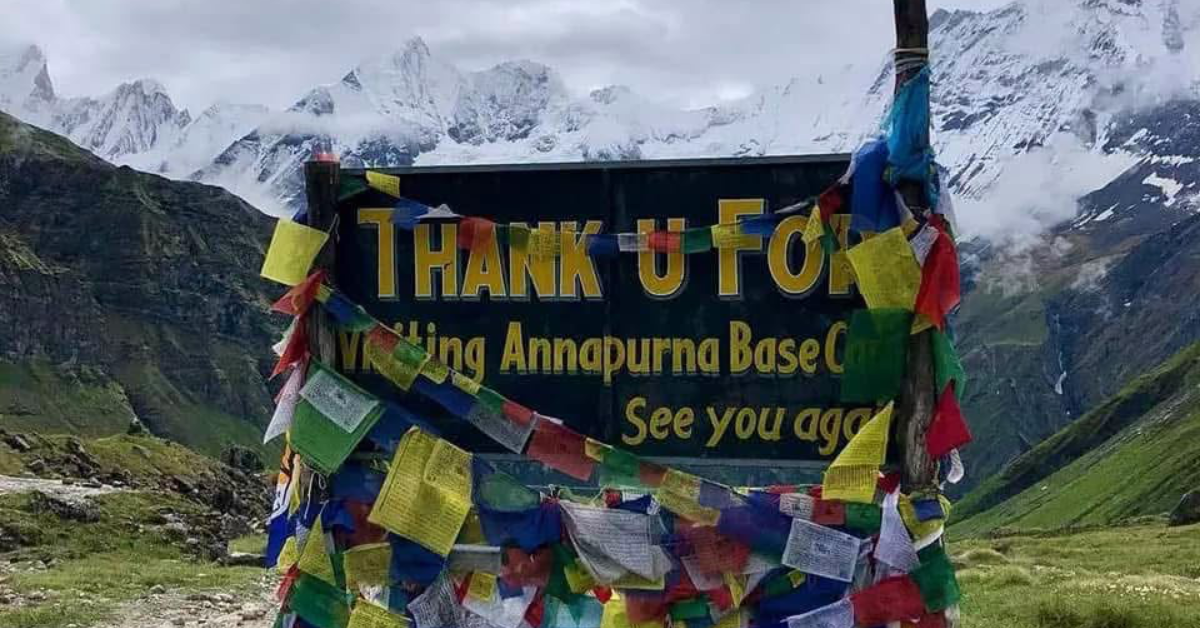
The Base Camp trek, often shortened to ABC, is the classic. It climbs through terraced farmland and rhododendron forest into a natural amphitheatre ringed by peaks, ending at Annapurna Base Camp at 4,130 metres. The final approach is one of the most enclosed, dramatic settings in Nepal, with Annapurna South, Machhapuchhre, and Annapurna I towering on nearly every side.
Most itineraries run 7 to 12 days depending on where you start and how you acclimatise. It is teahouse trekking throughout, meaning you sleep and eat in family-run lodges rather than camping. This is the route to pick if you want to stand among the giants without committing to a long expedition.
Annapurna Circuit Trek
The Circuit is the epic. It loops around the entire massif, crossing from the green, monsoon-fed southern valleys into the dry, Tibetan-influenced highlands of Manang and Mustang. The high point is Thorong La pass at 5,416 metres, one of the highest trekking passes in the world.
Full itineraries typically run 12 to 18 days, though road construction now lets some trekkers shorten the lower sections by vehicle. The reward for the length is variety: you pass through several distinct climate zones, ethnic communities, and landscapes in a single trek. It demands proper acclimatisation, and the pass day is long and cold, often six to nine hours of walking.
Ghorepani Poon Hill Trek
The short one. The Poon Hill loop reaches a viewpoint at 3,210 metres, famous for a sunrise panorama that spreads across the Annapurna and Dhaulagiri ranges. It usually takes 4 to 5 days and rarely goes high enough to raise serious altitude concerns.
Poon Hill is the honest answer for anyone short on time, travelling with children, or unsure whether long-distance trekking suits them. It delivers a genuine high-mountain sunrise without the commitment of the bigger routes, and it can be combined with a Base Camp trek if you have more days.
Landscapes, Villages, and the Panoramas Between
What sets the Annapurnas apart from other big trekking regions is how much changes underfoot. On the Circuit especially, you start in humid subtropical valleys thick with rice terraces and banana trees, then climb into pine forest, then into a wind-scoured high desert that feels closer to Tibet than to Kathmandu. Few treks anywhere pack this range into a single walk.
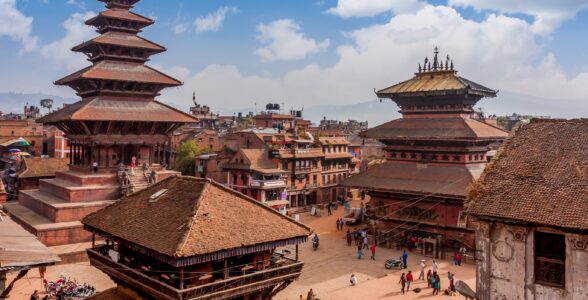
The villages carry that variety too. Lower down you pass Gurung and Magar communities whose sons have long served in Gurkha regiments. Higher up, in Manang and beyond, the culture turns Buddhist, with mani walls, prayer flags, and gompas that reflect centuries of trade and pilgrimage across the Himalaya. Villages like Ghandruk, with its stone houses and mountain backdrop, and Manang, sitting in the rain shadow at over 3,500 metres, are destinations in their own right.
The panoramas come in two kinds. There are the close, enclosing views, where peaks rise almost vertically from the trail, as at Base Camp. And there are the wide, distant ones, like the dawn from Poon Hill, where a whole horizon of summits catches the first light at once. Both are worth planning your days around, since mountain weather often means the clearest views come at sunrise before cloud builds through the afternoon.
When to Visit for the Best Annapurna Views
Timing decides whether you see the mountains or a wall of grey. The Annapurna region has two clear trekking seasons, and they are the difference between a great trip and a frustrating one.
Autumn, September to November, is the prime window. The monsoon has washed the dust from the air, the skies settle into long stretches of clear weather, and visibility is at its best. This is the busiest season for exactly that reason. Trails and teahouses fill up, so booking ahead helps.
Spring, March to May, is the strong second choice. The weather is stable and warming, and the rhododendron forests on the Base Camp and Poon Hill routes burst into red and pink bloom, which is a genuine spectacle in its own right. Haze can build later in spring, so earlier is often clearer.
Winter, December to February, is quiet and cold, with the risk of snow closing high passes like Thorong La, though lower treks such as Poon Hill remain doable. The monsoon months of June to August bring rain, leeches, and cloud that hides the peaks for days at a time, so most trekkers avoid them. For a fuller breakdown, our season-by-season guide to trekking in Nepal walks through each month in detail.
How Hard Are the Treks, and How Long?
There is no single answer to "how difficult is Annapurna," because the three main routes sit at very different levels. Match the trek to your honest fitness and your available days rather than to ambition.
- Ghorepani Poon Hill: easy to moderate, 4 to 5 days. Days involve a few hours of walking with some steep stone staircases. The top elevation of 3,210 metres is low enough that altitude is rarely a problem. Suitable for reasonably fit first-timers and families.
- Annapurna Base Camp: moderate, 7 to 12 days. Sustained days of uphill and downhill, reaching 4,130 metres. Altitude becomes a real consideration on the upper section, so a sensible pace matters. A good first big trek.
- Annapurna Circuit: moderate to strenuous, 12 to 18 days. The length, the daily distances, and above all the 5,416-metre Thorong La pass make this the hardest of the three. Proper acclimatisation days in Manang are not optional. Best for trekkers with some multi-day experience or plenty of preparation time.
Two things influence difficulty more than raw fitness. The first is altitude: everyone slows above 3,500 metres, and rushing the climb is the most common cause of trouble. The second is descent, which punishes knees on the long stone staircases, so trekking poles earn their keep.
Beyond the Big Three: Quieter Annapurna Routes
The three classic treks carry most of the traffic, but the region has several less crowded alternatives worth knowing about, especially if you want the scenery without the autumn crowds.
- Mardi Himal: A short, steep ridge trek that climbs to a high camp beneath Machhapuchhre at around 4,500 metres. It takes roughly 4 to 6 days and stays quieter than the neighbouring Base Camp trail, with close views of the Fishtail summit.
- Tilicho Lake: A demanding side trip off the Circuit to one of the highest large lakes in the world, sitting near 4,900 metres. It adds two to three days and a genuinely exposed traverse, so it suits confident trekkers rather than beginners.
- Nar Phu Valley: A restricted-area detour into two remote, Tibetan-influenced villages north of Manang. It requires a special permit on top of the standard ones and delivers a culture and landscape that few trekkers ever see.
- Khopra Ridge: A newer route that branches off the Poon Hill area to a ridge lodge with wide Dhaulagiri and Annapurna South views. It works as a quieter alternative to the busy Poon Hill sunrise.
None of these should be a first Himalayan trek, but they answer a common wish: the Annapurna scenery with fewer people on the trail. A guide who knows the region can steer you toward the one that matches your experience.
Acclimatisation and Altitude: The Part That Actually Decides Your Trek
More trekkers turn back from altitude than from tired legs. Above roughly 3,000 metres, the thinner air means your body needs time to adjust, and the single most reliable rule is to climb high and sleep low, gaining sleeping elevation slowly.
The early signs of acute mountain sickness are worth memorising: headache, nausea, dizziness, loss of appetite, and trouble sleeping. These are common and usually mild, but they are also the warning stage. If symptoms worsen despite rest, the only dependable treatment is to descend. No view is worth pushing through severe altitude sickness.
A few habits reduce the risk on the higher routes:
- Build in acclimatisation days. On the Circuit, most itineraries spend an extra night in Manang around 3,500 metres before pushing to the pass. Do not skip it to save a day.
- Drink more water than feels natural. Dehydration mimics and worsens altitude symptoms, so three to four litres a day is a sensible target.
- Walk at a conversational pace. If you cannot speak in full sentences, you are going too fast for the altitude.
- Avoid alcohol and sleeping pills at height. Both interfere with breathing and adjustment.
This is where the Thorong La crossing on the Circuit demands the most respect. At 5,416 metres it is high enough that even fit trekkers feel the thin air, and the pass day starts before dawn to clear the top before afternoon wind. Pacing and acclimatisation, not raw strength, get people across.
A Practical Annapurna Packing Checklist
Teahouse trekking means you do not carry camping gear, but layering and foot care make or break the experience. Pack for a range that runs from warm valley afternoons to sub-zero mornings on the higher routes.
- Layered clothing: A moisture-wicking base layer, an insulating fleece or down mid-layer, and a waterproof, windproof outer shell. Mornings and high camps get cold even in peak season.
- Broken-in boots: Waterproof, ankle-supporting boots you have already walked in. New boots on the trail are the fastest route to blisters.
- Trekking poles: Genuinely useful on the long stone descents that punish knees on the Base Camp and Poon Hill routes.
- Warm sleeping bag: Rated to around minus 10 Celsius for the higher treks, as teahouse blankets vary.
- Sun protection: High-factor sunscreen, lip balm, and category-four sunglasses. Sun at altitude is far stronger than at sea level, and snow reflects it.
- A basic first-aid and blister kit: Plus any personal medication and a means of purifying water, since buying bottled water higher up is both costly and an environmental problem.
- Cash in small notes: For teahouse extras, since upper villages take no cards.
Keep your pack honest. Porters carry a limit, and every extra kilogram is felt on the climb. If in doubt, leave it in storage in Pokhara or Kathmandu.
Responsible Trekking in the Conservation Area
Because the entire region sits inside a conservation area, how you trek has a real effect. The trails pass through communities and ecosystems that depend on the mountains, and a few choices keep your visit a net positive.
Carry out what you carry in, and refill a bottle rather than buying single-use plastic, which is a growing problem on the busier trails. Stick to marked paths to limit erosion, and ask before photographing people, homes, or religious sites. In the Buddhist highlands, walk clockwise around mani walls and stupas, keeping them on your right, which is the local custom and costs you nothing to observe.
Hiring local guides and porters, staying in family-run teahouses, and spending in village shops keeps trekking money in the communities that maintain the trails. Mission Nepal Holidays builds its trips around local employment and responsible practice, which is worth asking any operator about before you book.
Permits, Guides, and Practical Logistics
The Annapurna region is well organised, but there are rules you cannot skip. Every trekker needs an Annapurna Conservation Area Permit, issued by the National Trust for Nature Conservation, whose fees fund the trail maintenance, checkpoints, and conservation work across those 7,629 square kilometres. You buy it before you set out, and checkpoints along the trail verify it.
Since 2023, Nepal has also required a licensed guide for the trekking routes in this region, which is checked at the same posts. That change ended solo independent trekking on these trails. In practice it means most travellers now arrange a guide, and often a porter, through an operator before arriving.
A few more practicals worth knowing:
- Access: Most treks begin from Pokhara, a short flight or six-hour drive from Kathmandu. Road heads reach further up the valleys than they used to, which shortens some itineraries.
- Accommodation: Teahouses line the main routes, so you rarely need a tent. Rooms are simple, and hot showers and charging often cost extra higher up.
- Cash: ATMs run out around Pokhara and the lower villages. Carry enough Nepali rupees for the whole trek, as upper villages are cash only.
- Acclimatisation: Build in rest days on the higher routes and know the early signs of altitude sickness. Descending is always the safe response.
Rules and fees change, so confirm the current requirements when you book rather than relying on a figure from last year.
Trekking the Annapurnas with Mission Nepal Holidays
Because a licensed guide is now required and the routes vary so much in difficulty, most travellers do these treks with an operator, and this is where Mission Nepal Holidays fits. Based in Kathmandu, the company runs guided Annapurna trips across all three classic routes, handling the permits, the logistics, and the on-trail support that the current rules make necessary.
The practical value of a guided trip here is not hand-holding. It is having someone who reads the weather and the altitude, adjusts the pace when a member of the group is struggling, and knows which teahouses to aim for on a long pass day. For the Circuit in particular, where the Thorong La crossing is genuinely demanding, that judgement is worth having. Mission Nepal's guides are multilingual and work the region regularly, which matters when plans need to change mid-trek.
The company also arranges Annapurna trips as part of wider Himalayan itineraries, so travellers who want to combine Nepal with a journey into Tibet or Bhutan can do so without juggling separate operators. Trip lengths run from short Poon Hill loops to the full Circuit, and itineraries are tailored rather than fixed, which helps when you are matching a route to your fitness and your dates.
Choosing Your Annapurna Trek
The honest way to decide is to be clear about two numbers: how many days you have, and how high you are willing to go. Four or five days points to Poon Hill. A week to twelve days, and a wish to stand right among the peaks, points to Base Camp. Two weeks or more, and an appetite for a high pass and changing landscapes, points to the Circuit.
Whichever you choose, plan it for autumn or spring, buy your permit, and travel with a guide as the current rules require. If you are ready to start pinning down dates and a route that fits your fitness, reach out to Mission Nepal Holidays to build an Annapurna itinerary around the days you actually have.
Frequently asked questions
Where are the Annapurna Himalayas in Nepal?
They sit in north-central Nepal, roughly between the city of Pokhara to the south and the Tibetan border to the north, inside the Annapurna Conservation Area.
Which Annapurna trek is best for a first-timer?
The Ghorepani Poon Hill trek is the gentlest introduction, and Annapurna Base Camp is the classic next step. Both are well supported by teahouses.
Do I need a permit to trek in the Annapurna region?
Yes. Every trekker needs an Annapurna Conservation Area Permit, and since 2023 a licensed guide is required for the trekking routes.
How high is Annapurna Base Camp?
Annapurna Base Camp sits at 4,130 metres, ringed by peaks on almost every side inside a natural amphitheatre known as the Sanctuary.
When are the Annapurna views clearest?
Autumn, from late September through November, brings the most stable skies. Spring, from March to May, is second best and adds rhododendron blooms.