
Bhutan Adventure Holidays: Treks & Cultural Tours
Activities Highlights
Key takeaways
- Every international visitor to Bhutan pays a Sustainable Development Fee of US$100 per person per night, plus a one-time US$40 visa fee, and must travel with a licensed guide.
- The Druk Path Trek (5-6 days, topping out around 4,200m) and the Jomolhari Trek (7-8 days) are the two treks most first-timers should compare first.
- Spring (March to May) and autumn (September to November) give the clearest mountain views and line up with the biggest festivals, Paro Tshechu and Thimphu Tshechu.
- Tiger's Nest monastery sits at 3,120 meters, roughly 900 meters above the Paro valley floor, and takes a 4 to 5 hour round-trip hike to reach.
- Bhutan is the world's only carbon-negative country, with a constitutional rule that at least 60 percent of the land stay under forest for all time.
A Bhutan adventure holiday puts you on high trekking trails between fortress-monasteries and cliff-clinging temples, all inside a country that limits visitor numbers on purpose. If you are weighing providers and trying to picture what a trip actually involves, this guide covers the two treks worth comparing first, the cultural sites you will build your days around, and the money and paperwork that every plan has to account for.
Bhutan does not run on volume. You cannot wander in on a whim, and you cannot trek alone. That structure is exactly what keeps the trails quiet and the valleys intact, and it shapes how you should plan. Here is what a well-organized Bhutan adventure holiday actually looks like, from the first permit to the last festival dance.
Why Bhutan Belongs on a Himalayan Bucket List
Most travelers arrive with a mental image built from a handful of photos: a white monastery pinned to a cliff, monks in deep red robes, prayer flags strung across a pass. All of that is real. What surprises people is how the whole country is organized around keeping it that way.
Bhutan is the world's only carbon-negative country. Its forests absorb far more carbon than the nation emits, and the constitution requires that at least 60 percent of the land stay under forest cover for all time. More than half the country sits inside protected areas. When you trek here, you are walking through land that policy actively defends, not land that tourism is quietly eroding.
That is the practical difference from busier Himalayan routes. Where the classic Nepal trails can feel crowded in peak season, Bhutan's daily fee and guide requirement keep foot traffic low. You trade the freedom to go it cheaply and alone for trails that stay genuinely quiet. For a lot of travelers, that trade is the whole point.
If you are still deciding between ranges, it helps to see how Bhutan compares to its neighbors. Nepal offers more routes and lower costs, and you can read about its options in this roundup of Nepal's top guided treks. Bhutan offers fewer, quieter routes and a tighter cultural weave. Many people who love the Himalaya end up doing both.
Signature Trek One: The Druk Path
If you want one trek that captures Bhutan without asking for expedition-level fitness, start with the Druk Path. It links Paro and Thimphu, the two towns most itineraries already pass through, so it slots neatly into a wider trip.
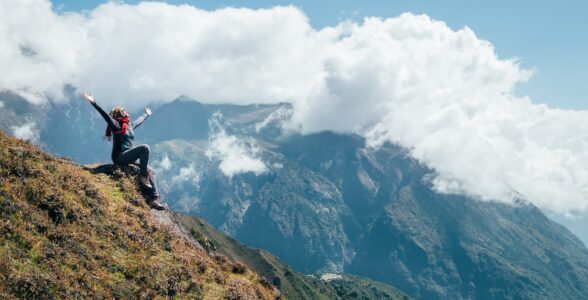
The route runs roughly 5 to 6 days and covers somewhere between 48 and 56 kilometers depending on the exact line your operator takes. You start around 2,350 meters in Paro and climb to a high point near 4,200 meters at Labana La. That is high enough to demand real acclimatization but well short of anything technical. Patience matters more than athletic ability here.
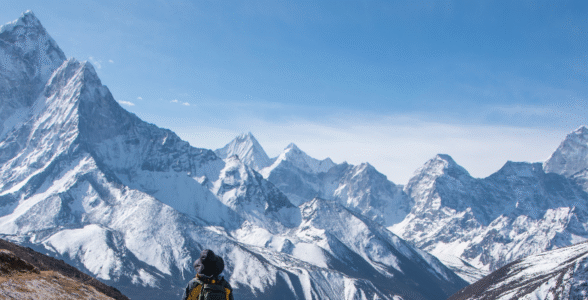
The trail's signature is its lakes. Jimilangtsho, at about 3,870 meters, is known for its large trout, and you pass a string of others like Janye Tsho and Simkotra Tsho as you cross the ridges. On clear days the horizon opens onto the high Himalaya, including the sacred peaks along the northern border.
Best for: first-time trekkers, travelers short on days, anyone combining a trek with cultural sightseeing.
Best season: March to June, and September to November, when the passes are clear and the lakes reflect the sky.
What to expect daily: six to nine hours of walking on some stages, cold nights under canvas, and a full support crew handling camp, cooking, and route-finding.
Signature Trek Two: Jomolhari
When people want more mountain and more remoteness, they move up to the Jomolhari Trek. Its reward is a base-camp view of Mount Jomolhari, one of Bhutan's most revered peaks, which rises to roughly 7,326 meters on the border with Tibet.
The classic route now runs about 7 to 8 days. Road building has shortened the original two-week itinerary, and a compressed loop version of 4 to 5 days also exists for tighter schedules. You camp at Jangothang base camp, around 4,040 meters, directly beneath the mountain's face. The high points of the walk cross passes approaching 4,900 meters, so the altitude is a genuine factor and the acclimatization schedule is not optional.
The trek threads through Jigme Dorji National Park, which means yak herders' camps, blue sheep on the slopes, and, if you are lucky and quiet, the tracks of larger wildlife. It is harder than the Druk Path in every way that counts: higher, longer, colder, and more committing.
Best for: trekkers with prior high-altitude experience who want a marquee peak view.
Best season: April to June, and late September to November.
Honest note: exact duration and route vary by operator and by current road access, so confirm the day count when you book rather than assuming a fixed number.
Cultural Highlight: The Dzongs
You do not need to trek a single step to understand why people fall for Bhutan. The dzongs do that on their own. These are massive fortress-monasteries, half administrative center and half temple, that anchor every major valley and still function as living seats of both government and faith.
Punakha Dzong is the one most visitors remember. Built in 1637, it stands where the Pho Chhu and Mo Chhu rivers meet, and it served as Bhutan's capital until 1955. The first king of Bhutan was crowned inside it in 1907. Unusually, it holds three courtyards where most dzongs have two, and in spring the jacaranda trees around it bloom purple against whitewashed walls.
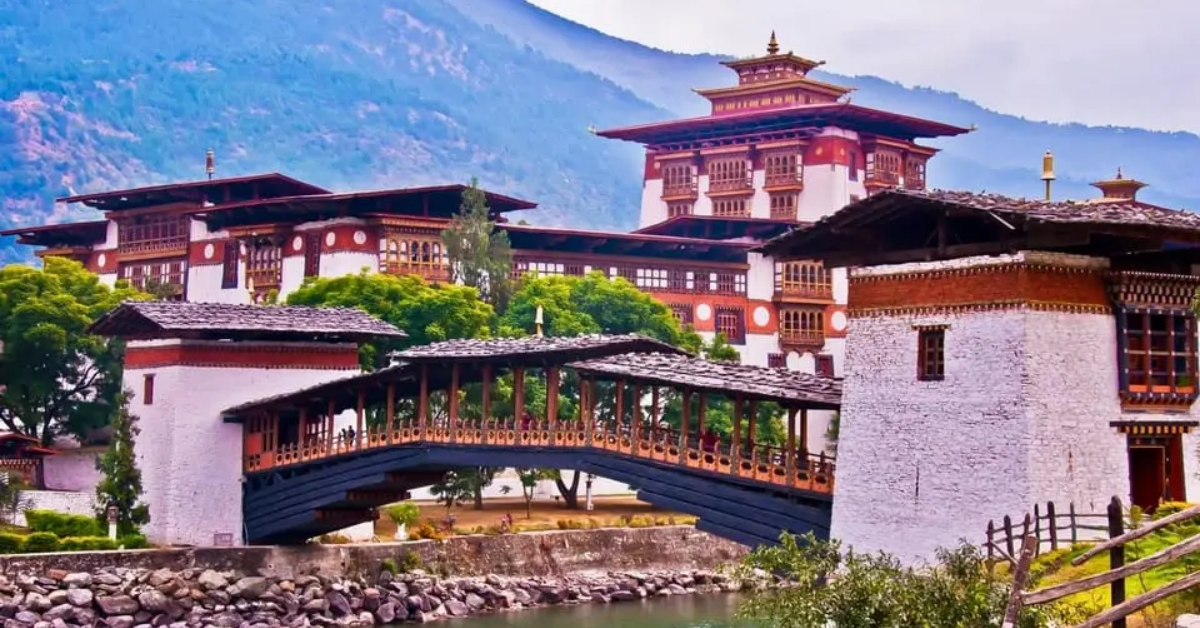
Paro's Rinpung Dzong, built in 1646, carries a name that translates to "Fortress on a Heap of Jewels." It houses the district's monastic body and government offices above the Paro Chhu river, and its long covered footbridge is one of the most photographed spots in the country.
None of Bhutan's sites carry a formal UNESCO World Heritage inscription yet, though five dzongs, including Punakha, Paro, and Trongsa, sit on the country's UNESCO Tentative List. The lack of a plaque changes nothing about the experience. These are working buildings where monks still study and officials still work, not open-air museums.
Cultural Highlight: Tiger's Nest
Paro Taktsang, the Tiger's Nest, is the image that sells Bhutan and, remarkably, the reality lives up to it. The monastery clings to a granite cliff at 3,120 meters, about 900 meters above the Paro valley floor, and there is no way to reach it except on foot.
The site's spiritual weight goes back to the 8th century, when Guru Rinpoche is said to have meditated in the caves here, arriving, in the legend, on the back of a flying tigress. The buildings you see today were completed in 1692, rebuilt after a fire in 1998 and restored by 2005. Faith and stubborn engineering hold it to the rock.
Reaching it is a challenging 4 to 5 hour round-trip hike that climbs steadily through pine and rhododendron forest, past a waterfall, then up a final flight of stone stairs cut into the cliff. It is not a technical climb, but the altitude and the sustained ascent make it a real effort. Most itineraries schedule it near the end of a trip, once you have acclimatized. Go early in the morning to beat both the heat and the crowds.
Cultural Highlight: Festivals
If your dates are flexible, plan around a tshechu. These are the great religious festivals held in dzong courtyards, where masked dancers perform sacred cham dances that retell Buddhist teachings, and whole communities turn out in their finest woven kira and gho.
Two stand out for visitors. Paro Tshechu falls in spring, typically late March or early April, and Thimphu Tshechu falls in autumn, usually September or October. Both draw huge local crowds and, at Paro, often end with the dawn unfurling of a giant appliqued thangka so large it covers a wall of the dzong.
The dates move every year because they follow the Bhutanese lunar calendar, so you cannot pencil them in far ahead from memory. Fix your trip dates to the festival, not the other way round, and confirm the exact days with your operator once the calendar is set. A festival adds nothing to your fitness demands and a great deal to your understanding of the place.
What a Guided Bhutan Adventure Holiday Includes
Because independent travel is not permitted, a Bhutan trip comes as an organized package, and it helps to know what that package normally contains so you can compare providers honestly.
A well-run Bhutan adventure holiday typically bundles:
- A licensed English-speaking guide for the full trip, required by law for treks and for entering dzongs and monasteries.
- Private transport with a driver between valleys, since public options are limited and distances on mountain roads are slow.
- Accommodation, usually hotels or lodges in towns and full camping support on treks, including tents, cook, and porters or pack animals.
- All meals on trek and most meals on cultural days.
- Permits and paperwork for restricted areas and monuments, handled on your behalf.
- A planned acclimatization schedule built into the trekking itinerary rather than bolted on.
What sits outside the package is usually your international flights, the Sustainable Development Fee, the visa fee, travel insurance, and personal gear. Mission Nepal Holidays builds tailored Bhutan itineraries along these lines, combining a signature trek with festival timing and dzong visits so the trip holds together as one arc rather than a checklist of separate days.
The value of a guide here is not hand-holding. It is context. A dance in a dzong courtyard means very little without someone to tell you which deity is being invoked and why, and a mountain view means more when your guide names the peak and the border it marks.
Visa, Tariff and the Cost of Entry
This is the part that surprises first-timers, so plan for it early. Two separate charges apply to almost every international visitor, and they are set by the government, not by your operator.
The first is the Sustainable Development Fee. It is US$100 per adult per night, confirmed on Bhutan's official tourism site, with reduced rates for children and free entry for those under six. This fee funds free healthcare and education for Bhutanese citizens and the country's conservation work, which is how a small nation sustains its carbon-negative status.
The second is the visa itself. There is a one-time, non-refundable visa application fee of US$40, applied for online before you travel. There is no visa on arrival, and you need clearance before you board your flight. You can apply yourself, but you still need a licensed guide once you land, so most travelers let their operator handle the application as part of the booking.
Add those two together and you can see why Bhutan is a considered trip rather than a spontaneous one. For a week on the ground, the fee alone runs several hundred dollars per person before your package cost. Budget for it from the start so it does not distort your comparison between providers.
Best Travel Seasons and When to Go
Two windows do most of the work in Bhutan, and choosing between them shapes everything from the views to the crowds.
Spring, March to May, brings rhododendron and magnolia in bloom, warming days, and the Paro festival. Skies are generally clear early in the day, with some afternoon haze as the season warms. This is prime time for both treks and for the classic Tiger's Nest photograph.
Autumn, September to November, is the most popular window. The monsoon has washed the air clean, so mountain views are at their sharpest, temperatures are comfortable, and the Thimphu festival falls in this stretch. It is also the busiest, so lodges and guides book out first.
Summer, June to August, is monsoon season: green, quiet, and cheaper, but wet, with clouds hiding the high peaks and trails turning to mud. Winter, December to February, is cold and clear at lower altitudes but closes the high passes, so the serious treks are off the table while valley sightseeing stays open. If mountain views are your priority, aim for the shoulders of spring and autumn and accept the company of other travelers.
Booking a Tailored Bhutan Trip
The right way to plan a Bhutan adventure holiday is backwards, from the fixed points outward. Start with the immovable dates: a festival if you want one, and the season your chosen trek needs. Everything else bends around those.
A sensible planning sequence looks like this:
- Pick your trek. Druk Path for a first Himalayan trek or a tight schedule, Jomolhari if you have altitude experience and want the big peak.
- Set your season and check festival dates, since the lunar calendar moves them each year.
- Confirm the day count and route, which vary by operator and current road access, so ask directly rather than assuming.
- Budget for the fees, the US$100 nightly SDF and the US$40 visa, on top of the package.
- Book the guide and permits together, which is simplest done through a single operator who handles the visa application for you.
Mission Nepal Holidays runs tailored Bhutan itineraries built exactly this way, with multilingual guides and support crews who handle the permits, camping, and acclimatization so you can concentrate on the trail and the temples. Because trips are shaped around your dates and fitness rather than a fixed departure calendar, a family cultural tour and a hard Jomolhari trek can be planned with the same care.
Final Thoughts
Bhutan asks more of you upfront than most destinations. You pay a daily fee, you book a guide, and you plan around a calendar you cannot fully control. What you get back is a Himalayan country that has chosen to stay quiet, forested, and deeply itself, where a trek and a festival and a cliffside monastery can all fit inside a single, well-guided week.
The next concrete step is to decide your window. Look at the spring and autumn festival dates for the year you want to travel, pick the one that fits your calendar, and ask an operator to build a trek and dzong itinerary around it. Once that anchor date is set, the rest of a Bhutan adventure holiday falls into place. Talk to Mission Nepal Holidays when you are ready to turn a date into a plan.
Frequently asked questions
How much does a Bhutan adventure holiday cost per day?
Beyond your trip package, every adult pays a Sustainable Development Fee of US$100 per night to the government, plus a one-time US$40 visa fee. Your trek or tour price sits on top of that.
Can I trek in Bhutan without a guide?
No. Bhutan requires international visitors to travel with a licensed guide for treks and for visiting dzongs and monasteries, even if you apply for the visa yourself.
Which is the best short trek in Bhutan for a first-timer?
The Druk Path Trek is the usual first choice. It runs 5 to 6 days between Paro and Thimphu, tops out around 4,200 meters, and passes high lakes without needing technical skills.
When is the best time to visit Bhutan?
Spring (March to May) and autumn (September to November) offer the clearest skies and most reliable trekking weather, and they coincide with the Paro and Thimphu festivals.
Do I need to be very fit to visit Bhutan?
For cultural tours, no. For the signature treks you need steady endurance for six to eight hours of walking a day at altitude, but patience matters more than athletic ability.