
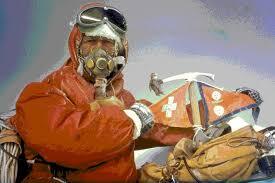
The First Lhotse Expedition: The Historic 1956 Swiss Ascent

Activities Highlights
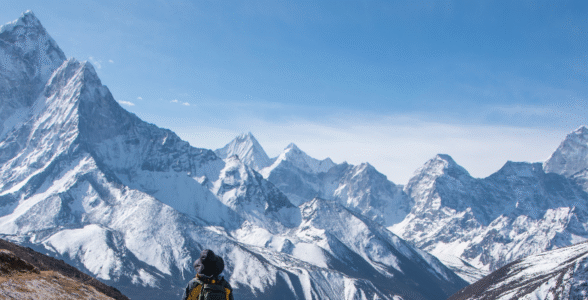
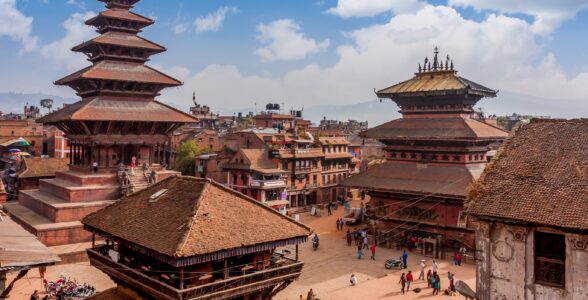
In the early 1950s, the spirit of exploration still burned brightly across the Himalayas. Although Mount Everest had been conquered by Hillary and Tenzing in 1953, the neighboring giant Lhotse—rising to 8,516 meters—remained untouched. Determined to continue their scientific and mountaineering mission, the Swiss Foundation for Alpine Research, with Ernst Reiss and Fritz Luchsinger, launched what would become the legendary 1956 First Lhotse Expedition.
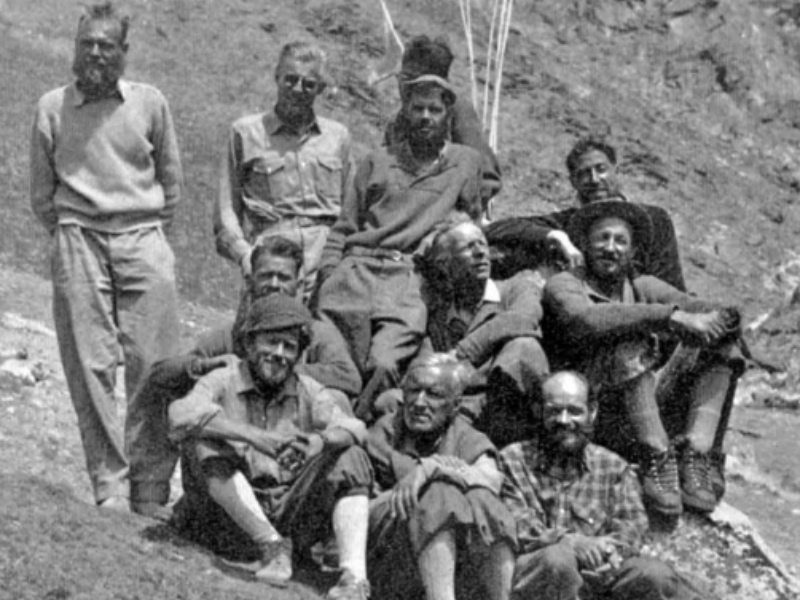
After obtaining permission from the Nepalese Government, the Swiss team quickly assembled a group of experienced mountaineers and skilled Sherpas who were deeply familiar with the high-altitude terrain of the Himalayas—extensive planning and months of preparation led to the team’s departure in early March 1956.
The Journey to the Himalayas
The members of the Swiss Expedition to Lhotse traveled to Nepal through various routes, gathering at the frontier town of Jaynagar. Accompanied by 22 Sherpas from Darjeeling—led by their Sirdar, Pasang Dawa Lama—they began their long journey toward the mountains. Twenty-two ox-drawn carts carried nearly 10 tons of expedition equipment through the Ganges Valley to Chisapani, where they were joined by 350 porters from Solukhumbu.
As the caravan advanced, rivers were crossed using simple dug-out canoes, and the winding trails of the Himalayan foothills were gradually replaced by steep ridges. By the time the team reached Namche Bazaar, at around 12,000 feet, it became clear that the true ascent had only just begun.
Life on the Trail and at Base Camp
The route from Namche to Thyangboche Monastery was rich in scenery and culture. The expedition members passed through lush rhododendron forests, terraced farmlands, and small villages, where they were greeted warmly by the locals. Their liaison officer, Prachand Man Singh, helped bridge language and cultural gaps, creating a spirit of goodwill between the mountaineers and the Nepalese people.
Upon reaching the Khumbu Glacier, the team established Base Camp at 17,700 feet on April 7, 1956. After weeks of marching, this new camp soon resembled a small alpine village. The Swiss climbers and Sherpas adjusted to the thin air, while glaciologist Fritz Müller began scientific observations on ice movement and weather conditions. The doctor, Edi Leuthold, set up a small dispensary, ensuring everyone’s health at the high altitude.
Climbing Through the Khumbu Icefall
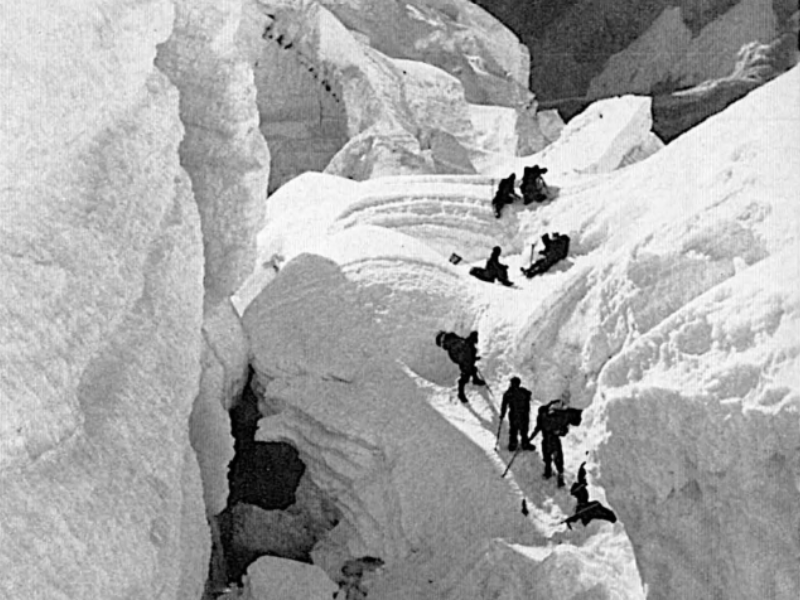
Early reconnaissance of the Khumbu Icefall was conducted by Ernst Reiss and Ernst Schmied. The glacier, wedged between Nuptse and Everest, was a chaotic maze of seracs and deep crevasses. Despite dangerous conditions, a safe route was soon forged, allowing for the establishment of Camp I at approximately 19,000 feet.
Every day, Sherpas carried heavy loads of food, fuel, and tents through treacherous terrain. Wooden bridges and aluminum ladders were built across widening crevasses, and fixed ropes were placed to secure the ascent. The icefall demanded constant maintenance, as melting and shifting ice continually reshaped the landscape.
Building Higher Camps
By late April, the team had successfully built Camps II and III, with Camp III serving as an advanced base at 21,000 feet in the Western Cwm. Progress was steady, and in early May, Camp IV was established on the first terrace of the Lhotse Glacier at around 23,000 feet. From there, the steep Lhotse face loomed ahead.
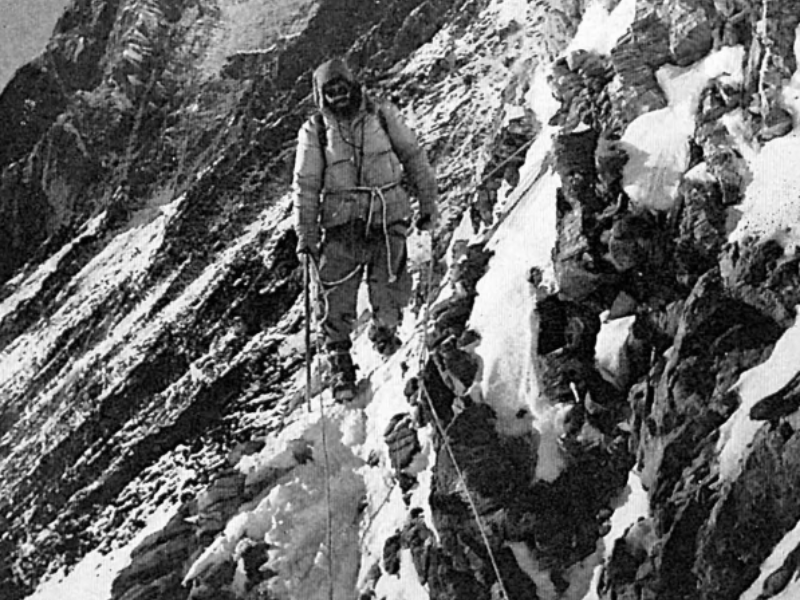
Cutting steps in the hard ice and placing over 1,000 feet of fixed ropes, the Swiss climbers inched upward. Camp V was established at 24,500 feet, followed soon after by Camp VI near 26,000 feet. The expedition had reached its critical stage.
The First Ascent of Lhotse
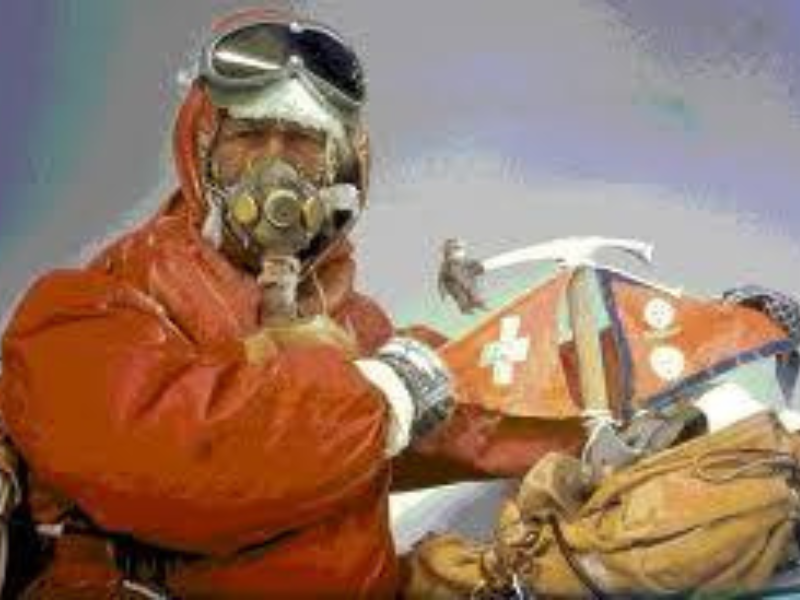
On May 18, 1956, climbers Ernst Reiss and Fritz Luchsinger began their final assault from Camp VI. Battling biting winds and freezing temperatures, they climbed through a steep snow couloir that led directly to the summit ridge. At last, they reached the top of Lhotse, standing at 27,890 feet (8,516 m) — the fourth-highest mountain in the world.
Although the summit was too sharp and windy to stand upright, the climbers drove their ice axes into the snow and celebrated their victory. This marked the first ascent of Lhotse, a monumental achievement in mountaineering history.
Legacy of the 1956 Swiss Expedition
Following their triumph on Lhotse, the team regrouped and also achieved success on Everest’s South Col route, reaffirming Switzerland’s place in Himalayan exploration. By the end of May, all members returned safely to Base Camp, where congratulatory messages from Sir John Hunt, Edmund Hillary, and Tenzing Norgay were received via BBC broadcast.
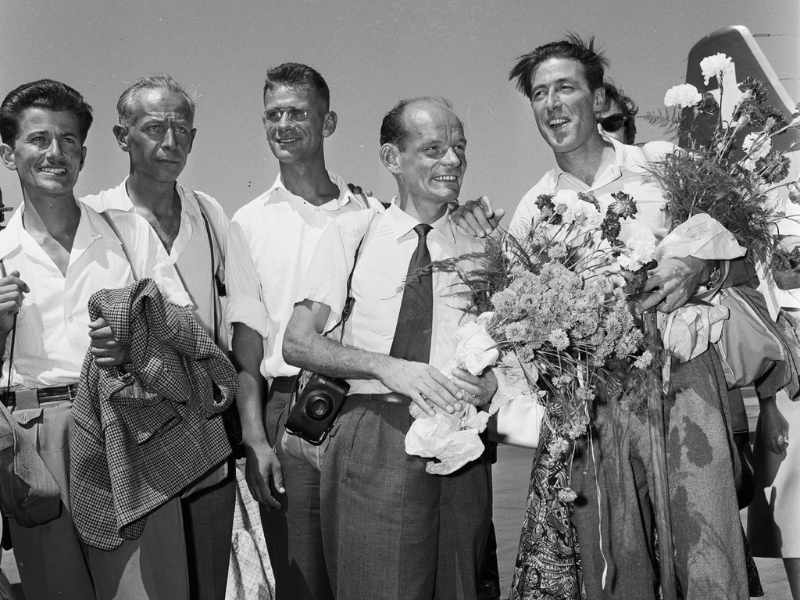
Upon returning to Kathmandu, the Swiss climbers were warmly welcomed and celebrated by local and international mountaineering communities. The 1956 Swiss Expedition to Lhotse not only made history by conquering one of the world’s most formidable peaks but also contributed valuable scientific and geographical data about the Khumbu region.
Even today, this journey stands as a symbol of courage, teamwork, and the unyielding human spirit that drives mountaineers to explore the highest places on Earth.
Conclusion
The First Lhotse Expedition of 1956 remains one of the most remarkable achievements in Himalayan climbing. Through perseverance, preparation, and unity between Swiss climbers and Sherpa guides, the summit of Lhotse was reached for the first time. This ascent continues to inspire generations of explorers and reminds us that in the thin air of the world’s highest mountains, human determination can still reach extraordinary heights.