
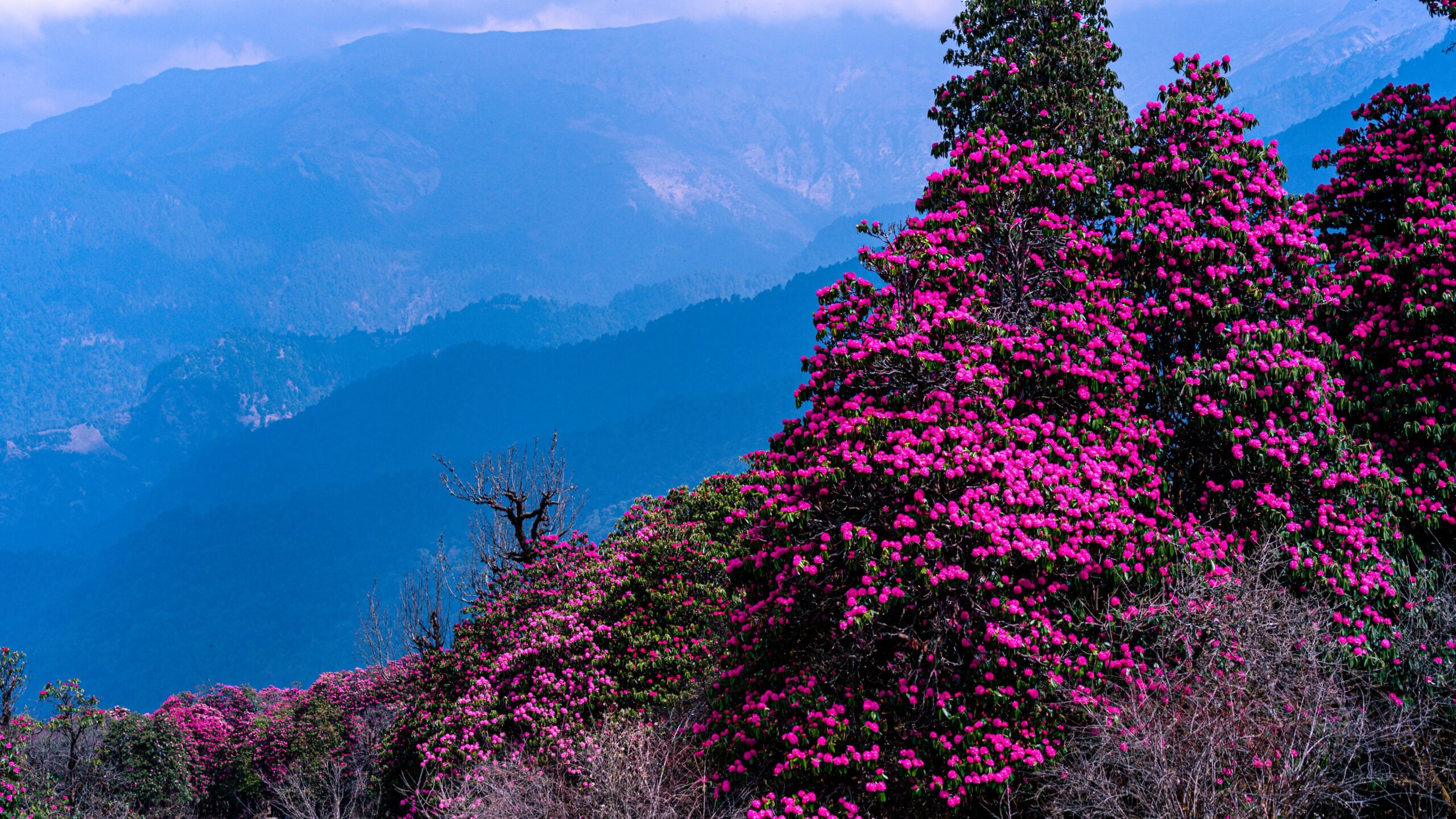




Nepal is a country blessed with extraordinary natural beauty, and among its many botanical treasures, the rhododendron stands out as one of the most iconic. Known locally as Lali Gurans, the rhododendron is not only admired for its vibrant colors but is also deeply connected to Nepal’s culture, ecology, and national identity. In fact, it holds the honor of being the national flower of Nepal.
What Is a Rhododendron?
Rhododendrons are flowering plants that belong to the heath family (Ericaceae). They are mostly evergreen shrubs or small trees, known for their large, showy flowers and thick green leaves. These plants thrive in cool, mountainous regions with moist soil and fresh air—conditions that Nepal’s Himalayan landscape provides perfectly.
Diversity of Rhododendrons in Nepal
Nepal is one of the richest countries in the world when it comes to rhododendron diversity. More than 30 species of rhododendrons are found across the country. The most common and widely recognized species is Rhododendron arboreum, which is famous for its bright red flowers.
Rhododendrons grow at elevations ranging from 1,500 meters to over 4,000 meters above sea level. They are commonly seen in regions such as:
-
Langtang National Park
-
Annapurna Conservation Area
-
Sagarmatha (Everest) region
-
Manaslu region
During spring, these areas transform into colorful forests filled with red, pink, and white blossoms.
National Flower: Lali Gurans
Lali Gurans symbolizes beauty, bravery, and the natural richness of Nepal. Because it blooms in harsh mountainous conditions, it is often seen as a symbol of strength and resilience. The flower is also featured in Nepali art, songs, literature, and celebrations.
Cultural and Traditional Importance
Rhododendrons are not only admired for their appearance but are also used in daily life by local communities:
-
Food: The petals of some species are used to make pickles, juices, and local drinks.
-
Traditional medicine: Certain parts of the plant are believed to help with digestion and inflammation when used carefully.
-
Festivals and decorations: The flowers are sometimes used during cultural events and ceremonies.
Ecological Importance
Rhododendron forests play a crucial role in Nepal’s ecosystem. They help:
-
Prevent soil erosion on steep mountain slopes
-
Maintain biodiversity by supporting birds, insects, and small animals
-
Preserve forest moisture and overall environmental balance
Many pollinators, such as bees and butterflies, depend on rhododendron flowers for nectar.
Conservation and Protection
Despite their importance, rhododendron forests face threats from deforestation, overharvesting, and climate change. Conservation efforts by the government and local communities aim to protect these forests through national parks, conservation areas, and awareness programs. Sustainable tourism and responsible forest use are key to preserving rhododendrons for future generations.
Rhododendrons and Tourism
Every year, thousands of trekkers and nature lovers visit Nepal during spring to witness rhododendron blooms. Trails lined with colorful flowers make trekking experiences even more memorable. This natural beauty also supports eco-tourism and local livelihoods.
Conclusion
The rhododendron is much more than a flower in Nepal—it is a national symbol, a cultural treasure, and an ecological guardian of the Himalayas. With its stunning beauty, rich diversity, and deep-rooted significance, Lali Gurans truly represents the spirit of Nepal. Protecting and appreciating this remarkable plant helps preserve the natural heritage of the country for generations to come.