
Kailash Mansarovar Yatra from USA: Tours & Tips

Activities Highlights
Key takeaways
- US travelers reach Kailash by flying into Kathmandu, then entering Tibet as part of a permitted group tour, since independent travel in Tibet is not allowed.
- You need a Nepal tourist visa (available on arrival) plus a China Tibet Travel Permit that only a licensed agency can arrange in advance.
- The CDC notes altitude illness risk begins around a sleeping altitude of 2,450 m (8,000 ft); the Kailash kora crosses Dolma La at roughly 5,630 m.
- Book 3 to 6 months out. Permit paperwork, fixed Chinese group-visa dates, and limited seasonal departures all reward early planning.
If you are flying from the United States, the Kailash Mansarovar Yatra is a group journey you arrange months in advance. You fly into Kathmandu, join a permitted tour into Tibet, and let a licensed agency handle the permits you cannot get on your own.
This guide answers the practical questions a US traveler actually faces. Here is what the Kailash Mansarovar Yatra from the USA involves: how to route your flights, which permits and visas you need, what the tour packages cover, how to handle the altitude, and when to book so the paperwork lines up.
What Is the Kailash Mansarovar Yatra, Briefly?
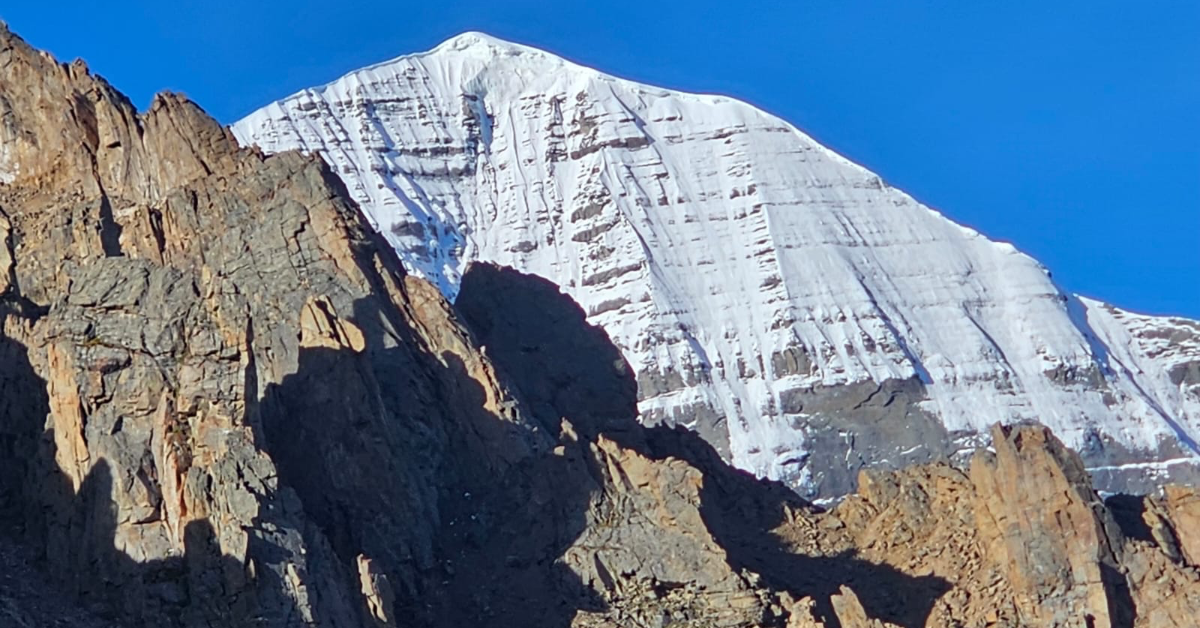
The yatra is a pilgrimage to Mount Kailash (roughly 6,638 meters, or 21,778 feet) and nearby Lake Mansarovar in far western Tibet. Kailash is sacred to Hindus, Buddhists, Jains, and followers of the Bon tradition. The spiritual heart of the trip is the kora, a circumambulation of the mountain on foot.
The outer kora runs about 52 kilometers and is usually walked over three days. It is a walk rather than a climb. Nobody summits Kailash; the mountain is never ascended out of respect. Pilgrims circle it instead, crossing the high Dolma La Pass at roughly 5,630 meters on the second day.
For deeper background on the mountain itself, the route, and its religious meaning, there is plenty of reference material on the kora and its sacred sites. This article stays focused on the logistics of getting there from the USA.
Quick-Fact Box for US Travelers
Here are the numbers most people want up front before they read further. Treat them as planning anchors, and confirm the exact details with your operator when you book, since permit rules and departure dates shift year to year.
- Total trip length: roughly 14 to 18 days door to door from the USA, including flights and acclimatization.
- Mount Kailash elevation: about 6,638 m (21,778 ft); you do not climb it.
- Lake Mansarovar elevation: roughly 4,590 m (about 15,060 ft).
- Highest point you cross: Dolma La Pass, roughly 5,630 m (about 18,470 ft).
- Kora distance: about 52 km over three walking days.
- Visas and permits: a Nepal tourist visa plus China Tibet permits arranged by your agency.
- Best season: May through September; May to mid-June and September are usually most settled.
- Fitness: good general stamina and the patience to walk slowly at altitude; no climbing skills needed.
Altitude is the single biggest variable here. The U.S. Centers for Disease Control and Prevention notes that any unacclimatized traveler who sleeps at an altitude of 2,450 meters (8,000 feet) or higher is at risk for altitude illness (CDC Yellow Book, High-Altitude Travel and Altitude Illness, 2024). On this trip you sleep well above that for days, so acclimatization drives the whole itinerary.
How Do You Plan a Kailash Mansarovar Yatra from the USA?
Almost every US pilgrim routes through Kathmandu, Nepal, which is the practical gateway for the yatra. There are no direct flights from the USA to Nepal, so you connect through a major hub in the Gulf, East Asia, or Europe. Expect roughly 18 to 24 hours of total travel time depending on your connection.
From the US East Coast, common one-stop routings go through Doha, Istanbul, or a Gulf hub into Kathmandu. From the West Coast, connections through East Asian hubs or the Gulf tend to work best. Flying into Kathmandu rather than straight to Lhasa matters: it gives you an acclimatization buffer and lets your agency finalize your Tibet permits on the ground.
Build in slack. A single missed connection can unravel a fixed-date group departure into Tibet, because the Chinese group visa and permits are issued for specific dates and specific people. Arriving in Kathmandu a day or two early is cheap insurance.
Should You Fly In Early?
Yes. Plan to land in Kathmandu at least one full day before your tour starts. You will want time to recover from jet lag, meet your guide, hand over your passport for permit processing, and sort any last-minute gear. Kathmandu sits at about 1,400 meters, a gentle first step up before the Tibetan plateau.
If you have the time, spend an extra day sightseeing. Kathmandu's temples and markets are worth seeing while your permits are being arranged, and the Boudhanath and Pashupatinath sites set a fitting tone before a pilgrimage.
What Are the Best Departure Points and Connections?
Kathmandu is the best departure point for US travelers, and from there your tour either drives overland to the Tibet border or flies to Lhasa before continuing west to Kailash. The overland route is the classic yatra approach; the fly-in route trades some scenery for speed and gentler acclimatization staging.
The overland journey crosses into Tibet at the Gyirong (Kerung) border, then climbs steadily across the plateau toward the Kailash region in the remote Ngari prefecture. This is a long drive over several days, which doubles as acclimatization. The scenery, high passes, turquoise lakes, and open plateau, is part of the experience.
Some packages instead fly Kathmandu to Lhasa, spend a day or two in Lhasa near 3,650 meters, then drive west. Lhasa adds cultural depth and a staged altitude gain, but it lengthens and raises the cost of the trip. If you are weighing the broader regional choice, it helps to compare what Nepal, Tibet, and Bhutan each offer before committing to a route.
A few US travelers approach from the Indian side via the government-run route, but for most overseas pilgrims the Nepal-Tibet corridor through Kathmandu is simpler to book and more flexible on dates.
What Do Yatra Tour Packages Include for Overseas Pilgrims?
A proper Kailash Mansarovar Yatra tour package for overseas pilgrims bundles the permits, transport, guide, and lodging so you are not assembling the trip piece by piece from abroad. Because independent travel in Tibet is not permitted, this bundling reflects how the region actually works for foreign visitors.
A complete package from a Kathmandu operator like Mission Nepal Holidays typically covers:
- All Tibet permits: the Tibet Travel Permit, the Alien Travel Permit, and the military permit required for the restricted Ngari region.
- The Chinese group visa: arranged in Kathmandu for your specific group and dates.
- Ground transport: a dedicated vehicle across the plateau, plus a support truck on the kora section in many itineraries.
- An English-speaking Tibetan guide and Nepali tour leader.
- Accommodation: hotels in Kathmandu and Lhasa, and basic guesthouses or tented camps near Kailash and Mansarovar.
- Meals on the Tibet leg, usually with a cook on remote stretches.
- Yaks or porters available to carry loads across Dolma La.
What packages usually exclude: international flights to Kathmandu, your Nepal visa fee, travel insurance, personal gear, and tips. Lodging near Kailash is genuinely basic, so set expectations accordingly. For a full picture of where the money goes, read our Kailash Mansarovar Yatra cost breakdown.
Which Visas and Permits Do You Actually Need?
You need two separate things: a Nepal tourist visa to enter Nepal, and a set of China permits to enter Tibet. The Nepal visa is easy and on you. The Tibet permits are harder and handled entirely by your agency.
US passport holders can get a Nepal tourist visa on arrival at Kathmandu airport. The fee structure is tiered by length of stay: roughly USD 30 for 15 days, USD 50 for 30 days, and USD 125 for 90 days, all multiple-entry. Fees change periodically, so verify current rates on the Nepal Department of Immigration site before you fly. Bring clean US dollar notes and a passport photo to speed up the counter.
The Tibet side is where the group-tour rule bites. Foreign tourists cannot obtain Tibet permits individually or travel the region without a licensed guide. Your operator submits your passport scans weeks ahead, secures the Tibet Travel Permit and the additional Ngari-area permits, and arranges the Chinese group visa in Kathmandu. That is why your passport must reach the agency on schedule and why date changes are painful once permits are in motion.
A Note on Travel Advisories
The U.S. State Department currently rates China, which includes Tibet, at Level 2, "Exercise Increased Caution" (U.S. Department of State, China Travel Advisory). That is the same level assigned to many popular European destinations. The practical takeaway for Tibet specifically is that consular access is limited and the region can close to foreigners on short notice around sensitive dates, which is another reason to book through an operator who tracks those closures.
How Should Long-Haul Travelers Handle Health and Altitude?
Altitude is the real challenge of this trip, and long-haul travelers arrive already tired, which makes careful acclimatization non-negotiable. The itinerary is built to climb slowly for a reason. Rushing it is the most common way pilgrims end up unwell or unable to finish the kora.
The CDC's guidance is a useful yardstick. Once above 3,000 meters, it advises moving your sleeping altitude by no more than 500 meters per day and adding an extra rest day for acclimatization. The same CDC guidance notes that an effective acetazolamide prophylaxis dose is 125 mg every 12 hours, started the day before ascent and continued for the first two days at altitude. Talk to a travel-medicine clinic before you go; acetazolamide is a prescription medication and not right for everyone.
Practical health steps for the long-haul pilgrim:
- See a travel clinic 4 to 8 weeks out to discuss altitude medication, routine vaccinations, and any personal risk factors.
- Hydrate hard and skip alcohol on the plateau.
- Know the symptoms of acute mountain sickness: headache, nausea, dizziness, poor sleep. The fix is to stop ascending and, if symptoms worsen, descend.
- Carry a personal medical kit with your prescriptions, since pharmacies near Kailash are essentially nonexistent.
Why Travel Insurance Is Not Optional Here
Buy a policy that explicitly covers high-altitude trekking to at least 5,700 meters and, critically, emergency evacuation. You will be days from a hospital on rough roads. A medical problem near Kailash can mean a long overland evacuation, so confirm the altitude ceiling and evacuation terms in writing. Patience matters more than athletic ability here, and a conservative itinerary with a good insurance policy is what gets most people safely around the mountain.
What Should Your Booking Timeline Look Like?
Book 3 to 6 months ahead. The limiting factors are permit processing, fixed Chinese group-visa dates, and a short season with limited departures, so the popular May and September windows fill early. A rushed booking risks missing the permit cutoff entirely.
A workable timeline for a US traveler:
- 6 months out: pick your dates and season, choose an operator, and reserve your spot. Start saving for international flights.
- 4 to 5 months out: book long-haul flights into Kathmandu with a built-in buffer day. Begin a fitness routine focused on hiking with a daypack.
- 2 to 3 months out: see a travel-medicine clinic, buy high-altitude travel insurance, and send your operator the clear passport scans they need for permits.
- 1 month out: finalize gear, confirm the itinerary and inclusions, and reconfirm your Kathmandu arrival with the agency.
- Arrival: reach Kathmandu early, hand over your passport for the group visa, and meet your guide.
Fitness-wise, you do not need to be an athlete. Aim to walk comfortably for six to nine hours a day on uneven ground. Build that with regular hikes, loaded daypack carries, and cardio in the months before you go.
What Should Go on Your Preparation Checklist?
Pack for cold, sun, wind, and basic conditions, because weather on the plateau swings sharply and facilities near Kailash are minimal. Layering is the governing principle: it can be warm in the sun and below freezing at the Dolma La crossing in the same day.
Essentials to pack:
- Layered clothing: a warm down jacket, fleece, thermal base layers, and a waterproof shell.
- Broken-in hiking boots and warm socks; the kora is three days on your feet.
- Sun protection: high-SPF sunscreen, lip balm, a brimmed hat, and strong UV sunglasses, since UV is intense at altitude.
- A warm sleeping bag rated for below-freezing nights.
- A personal first-aid and medication kit, including any altitude medication your doctor prescribes.
- A headlamp, power bank, and universal adapter; charging is unreliable out west.
- Cash in small US dollar or Chinese yuan notes; cards are useless near Kailash.
- Copies of your passport and permits, kept separate from the originals.
A general Nepal trekking packing list adapts well to this trip; the high-altitude, cold-weather items apply directly to the Tibet leg, with extra attention to warmth for the Dolma La crossing.
How Hard Is the Yatra, Really?
The yatra is physically demanding mostly because of altitude and distance, not technical difficulty. There is no climbing, no ropes, no exposure to speak of. What tests people is walking long days above 5,000 meters, where the thin air makes an ordinary path feel steep.
The hardest single day is the Dolma La crossing: a long climb to roughly 5,630 meters, then a knee-testing descent. Guides schedule a pre-dawn start, and many pilgrims hire a yak or porter for that stage. Go slow, breathe deliberately, and eat even when your appetite fades. People in their sixties and seventies complete the kora every season by pacing themselves; raw fitness helps less than steady, patient walking.
If this trip is one entry on a longer Himalayan wish list, it sits comfortably alongside Everest Base Camp and the Annapurna Circuit as a bucket-list journey, though its pace and purpose are quieter than either.
Common Mistakes US Pilgrims Make
Most problems on this trip trace back to a handful of avoidable errors. Knowing them in advance is half the solution.
- Booking too late. Permits and seasonal departures have hard cutoffs. A last-minute booking often simply cannot be done.
- Underestimating altitude. Treating the kora as "just walking" and skipping acclimatization days is how people get turned back at Dolma La.
- Skipping the Kathmandu buffer. Flying in the same day your tour starts leaves no margin for a delayed connection or lost bag.
- Buying the wrong insurance. A standard policy that caps altitude coverage or omits evacuation is worse than useless out here.
- Overpacking soft comforts, underpacking warmth. Nights near Kailash are genuinely cold, and there is no store to fix a gap in your kit.
- Expecting hotel-grade lodging near Kailash. Guesthouses there are basic. Go in expecting simplicity and you will be fine.
Final Thoughts
The clearest next step is to pin down your season and start a conversation with an operator about dates, because the permit timeline, not your fitness, is usually the thing that decides whether this year works. Decide between the May-June and September windows, check the trip against your work and family calendar, and get your passport scans ready.
Once your dates are set, the rest falls into place: flights with a buffer, a travel-clinic visit, the right insurance, and a slow, patient itinerary around the mountain. When you are ready to turn a plan into a confirmed departure, Mission Nepal Holidays can arrange the permits, guide, and ground logistics for your Kailash Mansarovar Yatra from the USA.
Frequently asked questions
Can US citizens do the Kailash Mansarovar Yatra on their own?
No. Foreign travelers cannot enter Tibet independently. You must join a permitted group tour arranged by a licensed agency, which handles the Tibet Travel Permit and guide. A private group of one is allowed if you book it that way.
How many days does the yatra take from the USA?
Plan on roughly 14 to 18 days door to door. That typically covers long-haul flights, 1 to 2 acclimatization days in Kathmandu, the overland or fly-in journey into Tibet, the 3-day kora, and the return.
What permits do I need for the Kailash Mansarovar Yatra?
A Nepal tourist visa (on arrival at Kathmandu) and a set of China permits for Tibet: the Tibet Travel Permit, an Alien Travel Permit, and a military permit for the restricted Ngari region. Your agency arranges the China permits.
Is the Kailash kora dangerous for first-timers?
It is strenuous but walkable for reasonably fit people who acclimatize properly. The main risk is altitude, not technical terrain. Dolma La sits near 5,630 m, so slow ascent and a conservative itinerary matter more than athletic ability.
When is the best time to go?
May through September, with May to mid-June and September generally the most settled. Monsoon rain peaks in July and August. The Saga Dawa festival in late May or June is popular but crowded.