
Chinese Tibetan Mastiff: Guardian of the Himalayas

Activities Highlights


Key takeaways
- The Chinese Tibetan Mastiff is an ancient livestock guardian bred to protect nomad camps and monasteries across the high Tibetan plateau.
- Males stand at least 66 cm at the shoulder and large individuals can reach 90 kg, with a thick double coat built for extreme cold.
- The breed carries a wolf-derived EPAS1 gene variant that helps it survive the low oxygen of high altitude.
- A 2011 to 2014 Chinese status-symbol bubble pushed some sale prices into the millions before the market collapsed to a few thousand dollars.
- Travelers most often see Tibetan Mastiffs guarding nomad tents, village homes, and monastery courtyards across Tibet and the high Himalaya.
If you have been reading about Tibet and keep running into photographs of an enormous, lion-maned dog standing guard against a wall of snow peaks, you are looking at the Chinese Tibetan Mastiff. It is an ancient livestock guardian from the high plateau, bred over centuries to protect nomad camps and monasteries from wolves, snow leopards, and thieves, and it remains one of the most recognizable animals of the Himalaya.
This guide answers the two questions most people arrive with: what this dog actually is, and where a traveler might genuinely meet one. Here is the origin of the breed, its size and temperament, the work it still does, the meaning it carries in Tibetan life, and the realistic places you will come across it on a journey through the region.
Why Travelers Call It the "Chinese" Tibetan Mastiff
The name causes a little confusion, so it is worth clearing up first. The Chinese Tibetan Mastiff and the Tibetan Mastiff are the same breed. There is no separate Chinese variety.
The "Chinese" label attached itself mostly in the last two decades, when the dog became a famous luxury status symbol among wealthy buyers on the Chinese mainland. Breeders in Qinghai, Zhejiang, and beyond raised and sold the dogs at scale, and the breed's name traveled with that market. The animal's actual homeland, though, is the Tibetan plateau, the high grasslands and valleys that spread across the Tibet Autonomous Region and the surrounding Himalayan borderlands of Nepal, Bhutan, and northern India. When you search for the "Chinese" version, you are really searching for the plateau dog.
Origins of the Tibetan Mastiff on the Plateau
The Tibetan Mastiff is old. How old is genuinely hard to pin down, because the dog predates reliable written records in the region, and much of its story lives in oral tradition and the practical needs of plateau life rather than in a studbook. What we can say with confidence is that it developed as a working guardian in one of the harshest inhabited environments on earth, at elevations where thin air, brutal cold, and large predators shaped every animal that survived there.
That environment did something unusual to the breed's biology. A genetic study published in the journal Molecular Biology and Evolution found that the Tibetan Mastiff carries an adaptation in the EPAS1 gene, which governs the body's response to low oxygen. The researchers traced this variant to interbreeding with the Tibetan gray wolf, concluding that the dog picked up its high-altitude toolkit through introgression from the local wolf population.
The parallel with the people of the plateau is striking. Tibetans carry their own high-altitude variant of the same EPAS1 gene, inherited from an archaic human population. The dog and the herder, in other words, solved the same oxygen problem along separate evolutionary paths, and both ended up leaning on the same gene to do it. That shared adaptation is part of why the Tibetan Mastiff belongs so completely to this landscape and struggles, generally, to thrive at sea level in the way it does at 4,000 meters.
Traits, Temperament, and That Famous Size
The first thing anyone notices is the scale. According to the breed standard published by The Royal Kennel Club, a male stands at least 66 cm (26 inches) at the shoulder and a female at least 61 cm (24 inches). The standard describes a large, powerfully built dog, well boned and muscled, "never light but always agile," with a body slightly longer than it is tall in a ratio of roughly 10 to 9.
Weight is where the numbers climb. A typical large male runs somewhere between 40 and 70 kg. Exceptional individuals go well beyond that: the golden-haired dog at the center of a record 2014 sale in Zhejiang province was reported to stand 80 cm tall and weigh 90 kg, roughly 200 pounds. Draped over that frame is the coat that completes the picture, a thick double layer with a dense mane around the neck and shoulders that gives the males their lion-like silhouette and keeps the dog warm through plateau winters that would kill most breeds.
Temperament matters more than size for anyone who might meet one. These are not casual companion dogs. Centuries of guarding work bred them to be:
- Territorial and reserved with strangers. A Tibetan Mastiff bonds closely with its own family and flock and treats everyone else as a question to be answered. It is naturally suspicious, which is the whole point of the job.
- Nocturnal by habit. Traditionally the dog dozes through the day and comes alive at night, when wolves and leopards move. A camp Tibetan Mastiff is often at its most alert and most vocal after dark.
- Independent and strong-willed. Bred to make its own decisions out on the grassland without a handler at its side, the breed is famously stubborn. It thinks for itself, which is a virtue in a guardian and a challenge in a pet.
- Powerfully protective. The instinct to defend territory is deep and immediate. It is not aggression for its own sake, but it means an unfamiliar person walking into a dog's territory can trigger a serious response.
Built for Altitude: How the Breed Survives the Cold
The Tibetan Mastiff is a case study in cold-weather engineering. The double coat is the obvious part: a coarse, weather-shedding outer layer over a dense wool undercoat that thickens dramatically in winter and sheds out in a single heavy "blow" as the weather warms. The mane, the feathered tail carried curled over the back, and the furred feet all serve the same purpose, trapping heat in an environment where night temperatures on the plateau routinely fall far below freezing.
Beneath the coat sits the EPAS1 adaptation described earlier. In practical terms, the variant appears to moderate the body's production of hemoglobin at altitude. Many lowland mammals respond to thin air by over-producing red blood cells, which thickens the blood and raises the risk of clots and strokes. The plateau-adapted version tempers that response, which is part of how the dog can work hard at elevations that leave visiting humans gasping. This is also why the breed is so tied to its homeland. A dog built for 4,000 meters is carrying equipment it does not need in a warm lowland city, and overheating is a real concern when the breed is kept outside its native climate.
Guarding Nomad Camps and Monasteries
The Tibetan Mastiff earns its keep as a livestock guardian, and the job defines the dog. On the high grasslands, nomad families move with their herds of yak, sheep, and goats, pitching the black yak-hair tents that have sheltered plateau herders for generations. Wolves and snow leopards follow the herds. The mastiff is the line between them.
A working dog is typically staked or left loose at the edge of camp, positioned to see and smell anything approaching across open ground. Its deep, carrying bark is a deterrent in itself, audible across a valley and enough to turn most predators aside before any confrontation. When a pack of dogs works a camp together, they can hold off threats that a single animal could not. The herders rely on this completely. For a family whose wealth is measured in animals, a good guardian dog is not a luxury. It is insurance.
The second traditional posting is the monastery. Tibetan Buddhist monasteries have long kept mastiffs as gate guardians, watching the courtyards and outbuildings and announcing arrivals. You still see them today, chained in a shaded corner of a monastery compound or lying across a doorway with the proprietary calm of an animal that knows exactly whose ground this is. If you visit the great monasteries of Tibet, or the gompas scattered through the high valleys of Nepal on routes like the remote Manaslu Circuit, there is a fair chance a mastiff will register your arrival before any monk does.
Cultural Symbolism in Tibet
In Tibetan life the mastiff is more than a tool. It carries a thread of meaning that runs through folklore, religion, and status.
Local tradition holds the dog in real esteem, and stories cast it as a loyal, almost noble protector. There is a widespread belief, repeated across Himalayan communities, that a Tibetan Mastiff may hold the reincarnated spirit of a monk or a nun who did not quite reach enlightenment and returned in this guardian form. Whether or not a given family takes that literally, it colors the way the dogs are treated: with a respect that goes beyond their working value. A dog that guards a monastery, in particular, sits close to the sacred.
The mastiff also became a marker of prestige, and that is where its story collided with the modern Chinese economy. The deep cultural regard for the breed, combined with its rarity and imposing presence, made it the perfect object for a status-symbol boom among newly wealthy buyers. A dog that had spent a thousand years as a herder's insurance policy was suddenly a trophy. To understand how the breed fits into the broader world it comes from, it helps to understand the people and traditions of Tibet, because the dog's meaning only makes sense inside that culture.
The Luxury Bubble and Its Collapse
For a few years the Tibetan Mastiff became one of the most expensive dogs on the planet, and the episode is worth understanding because it reshaped the breed's recent history.
The boom ran roughly from 2011 to 2014. In 2011 a mastiff named Big Splash reportedly sold for well over a million US dollars, with news coverage at the time noting the dog was less than a year old and already weighed around 180 pounds. The peak came in 2014. At a luxury dog fair in Zhejiang province, a pair of mastiff puppies sold for a combined 18 million yuan, about 3 million US dollars, with the golden-haired twin alone going for 12 million yuan and the red-haired one for 6 million. Those figures, and the golden dog's reported 80 cm, 90 kg dimensions, were documented by the Christian Science Monitor.
Then the market fell apart. As the status fad faded and the economy shifted, prices collapsed. Reporting on the aftermath described once-prized dogs changing hands for a few thousand dollars, breeders across Tibetan regions shutting down, and unwanted animals abandoned or worse. The crash was as dramatic as the climb. For the breed itself, the whole cycle was a cautionary tale about what happens when a working animal is uprooted from its purpose and turned into a speculative asset.
Where Travelers May Encounter Them
If you want to see a Tibetan Mastiff in its real context rather than in a photograph, the plateau and the high Himalaya are where to go. A few realistic settings:
- Nomad camps on the high grasslands. The classic encounter. Crossing the open country of Tibet, you will pass the black yak-hair tents of herding families, and a mastiff will usually be posted at the edge of camp. Keep your distance. These are working dogs doing their job, and the job is to treat you as a threat.
- Village courtyards and farmsteads. In Tibetan villages and in the Tibetan-influenced valleys of northern Nepal, families keep mastiffs behind walls and gates. You will hear them before you see them.
- Monastery compounds. As noted, gompas across Tibet and the Himalaya keep guardian dogs. Approaching a chained mastiff for a close photograph is a genuinely bad idea, however calm it looks.
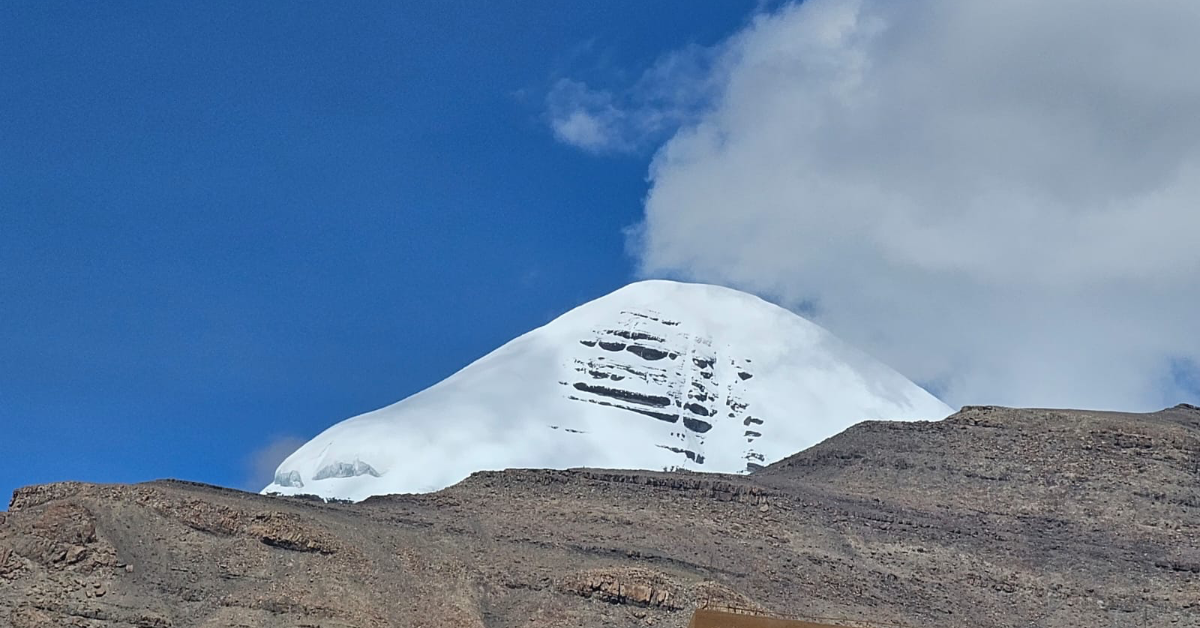
- Along high trekking and tour routes. Trails that pass through inhabited high country bring you near working dogs almost incidentally. The grasslands around sacred sites such as Mount Kailash are classic mastiff country, as are the trailside settlements on long Nepalese routes.
A sensible rule holds everywhere: never approach a Tibetan Mastiff near a camp, home, or monastery, do not run if one comes toward you, and let a local guide manage the encounter. These dogs read confidence and territory, not friendliness, and the right move is almost always to give them room and move on calmly.
Coat Colors and the Two Traditional Types
Spend any time around the breed and you will notice the coat comes in a defined palette rather than endless variation. The most common colors are solid black, black-and-tan with the familiar warm markings over the eyes and on the legs, and a range of golds from pale sand to deep red. Some dogs show a splash of white on the chest or feet. The red and golden dogs tend to command the most attention, and it was a golden-haired animal that anchored the record 2014 sale, which is no accident: color drove a great deal of the status-market pricing.
Tibetan herders have long recognized rough working types within the breed as well, usually described in two groups. One is a heavier, more massive dog with a broad head and abundant coat, the kind that fills a photograph. The other is a somewhat lighter, leggier animal, better suited to covering ground and patrolling a wider territory. The distinction is practical rather than official, and plenty of dogs sit somewhere in between, but it reflects the fact that the breed was shaped by work rather than by a show ring. A family choosing a guardian cared about whether the dog could do the job through a plateau winter, not about conforming to a written standard.
The coat carries a real maintenance cost that surprises people who fall for the look. The dense undercoat sheds heavily once a year, and during that period a single dog can produce an astonishing volume of loose wool. In its native setting this is simply part of the seasonal rhythm. For anyone imagining the breed outside the plateau, it is one more reminder that this is an animal engineered for a specific climate and a specific task.
From the Plateau to the Wider World
The Tibetan Mastiff is far better known globally today than it was a century ago, and the path it took off the plateau is part of the modern story. Individual dogs trickled into Europe through the 1800s, reportedly including animals presented as gifts to British royalty, and small numbers reached the West over the following decades. Serious breeding populations abroad are a relatively recent development, and formal recognition by Western kennel clubs came later still: the American Kennel Club, for instance, admitted the breed to its working group in 2006.
That late arrival matters for travelers in a specific way. Because the breed never passed through generations of selection for life as a house pet, the dogs you meet on the plateau are closer to the original working animal than almost any giant breed you will have encountered at home. A Tibetan Mastiff in a Lhasa monastery courtyard is not a softened, show-bred descendant of a guardian. It is, functionally, still the guardian. That authenticity is a large part of what makes seeing one in its own country worthwhile, and it is also why the usual rules for greeting a friendly dog do not apply here.
The breed's typical lifespan, often cited at around 10 to 12 years, is also notable for an animal of this size, since many giant breeds live shorter lives. On the plateau, a working dog that reaches old age has usually spent most of it doing a single job in a single place, which is its own kind of continuity with a way of life that has changed less than most.
How the Tibetan Mastiff Compares to Other Giant Breeds
Travelers often ask how the mastiff stacks up against the big dogs they know from home. The useful distinction is between size and job. A Great Dane can stand taller, reaching 76 cm or more, and some lowland mastiff breeds outweigh the Tibetan Mastiff on the scale. What sets the Tibetan breed apart is the combination of a guardian temperament, a cold-climate coat, and genuine high-altitude adaptation, a package no other giant breed carries in the same way.
Compared with a German Shepherd, a common working-dog benchmark at perhaps 60 to 65 cm and 30 to 40 kg, the Tibetan Mastiff is substantially heavier and far more independent. The Shepherd is bred to take direction from a handler. The mastiff is bred to work alone, at night, at altitude, making its own calls about what is and is not a threat. That independence is the trait that makes it magnificent on a plateau and difficult in a city apartment, and it is the reason the breed has never become a mainstream family pet in the way its looks might suggest.
Encountering Tibetan Culture on a Mission Nepal Tour
The mastiff is a thread you can pull to reach the whole fabric of plateau life, the nomads, the herds, the monasteries, and the Buddhist worldview that treats a guard dog as a possible returning soul. Seeing the dog in that setting, rather than as a curiosity, is what makes the encounter worth having.
That context is exactly what a well-guided journey provides. Mission Nepal Holidays runs cultural tours and pilgrimage routes across Tibet, Nepal, and Bhutan with multilingual guides who can read a situation, including a bristling mastiff at the edge of a camp, and explain what you are actually looking at. On a small-group Tibet tour you travel through the grasslands and monastery towns where the breed still works, with someone alongside who knows both the animal and the etiquette. That is the difference between glimpsing a famous dog and understanding the culture that made it.
Final Thoughts
The Chinese Tibetan Mastiff is best understood not as an expensive trophy or an internet curiosity but as what it has always been: a working guardian shaped by a thousand years of plateau life, carrying a wolf's gene for thin air and a herder's trust on its broad shoulders. The millions-of-dollars headlines were a brief human fashion. The dog at the edge of the yak-hair tent, watching the dark for wolves, is the real animal.
If the breed is part of what draws you to the Himalaya, treat it as a reason to go properly, with a guide who can take you through the country where these dogs still earn their keep. Start by talking to Mission Nepal Holidays about a cultural journey through Tibet and the high Himalaya, and plan to meet the plateau on its own terms.
Frequently asked questions
Is the Chinese Tibetan Mastiff the same as the Tibetan Mastiff?
Yes. They are the same breed. The word Chinese is often added in searches because the breed became a famous status symbol in China, but its roots are on the Tibetan plateau.
How big does a Tibetan Mastiff get?
Males stand at least 66 cm (26 inches) at the shoulder and females at least 61 cm (24 inches). Large males can weigh 40 to 70 kg, and exceptional individuals have reached around 90 kg.
Are Tibetan Mastiffs dangerous to travelers?
They are serious guard dogs that take their work seriously, so you should never approach one near a camp or monastery. Keep your distance, do not run, and let your guide handle any encounter.
Why did Tibetan Mastiffs sell for millions in China?
Between roughly 2011 and 2014 they became a luxury status symbol among wealthy buyers. One pair reportedly sold for 18 million yuan, about 3 million US dollars, before the fad collapsed.
Can I see a Tibetan Mastiff on a trip to Tibet or Nepal?
Yes. You are most likely to encounter them guarding nomad tents on the high grasslands, in village courtyards, and around monasteries. A guided tour is the safest way to see them in context.