Buddhism in the Himalayas: A Spiritual Journey Through the Mountains

Activities Highlights

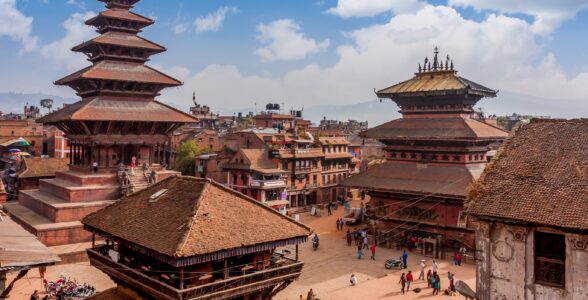
The Himalayas are not only the world’s highest mountain range, but also one of its most important spiritual landscapes. For centuries, Buddhism has shaped the culture, art, and daily life of people living across the Himalayan region. From peaceful monasteries perched on cliffs to colorful prayer flags fluttering in the wind, Buddhism in the Himalayas represents a deep connection between nature and spirituality.
The Buddhist Imprint on Mountain Geography
Buddhism arrived in the Himalayan region in waves, beginning as early as the 3rd century BCE when Emperor Ashoka sent missionaries throughout Asia. However, the religion truly took root in the 7th and 8th centuries CE, particularly through the influence of Indian masters like Padmasambhava, who brought Vajrayana Buddhism to Tibet and surrounding regions.
The Himalayas became home to distinct forms of Buddhist practice. Tibetan Buddhism, with its rich tapestry of tantric practices, monastic scholarship, and devotional rituals, came to dominate the landscape. In Nepal’s Kathmandu Valley, an older form of Vajrayana Buddhism coexisted with Hinduism, creating a unique syncretic culture. In Bhutan, the Drukpa Kagyu school established itself as the state religion. Ladakh, Sikkim, and parts of Arunachal Pradesh each developed their own Buddhist characteristics while maintaining connections to broader Tibetan traditions.
Sacred Sites and Pilgrimage Routes
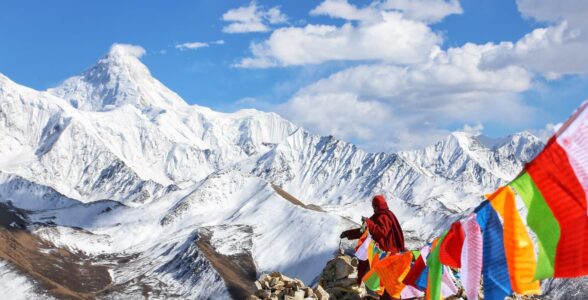
The mountains themselves became objects of veneration. Mount Kailash in Tibet, though technically just north of the main Himalayan range, holds profound significance for Buddhists (as well as Hindus, Jains, and followers of Bon). Pilgrims circumambulate this sacred peak, believing that completing the kora purifies negative karma.
Throughout the Himalayas, caves where great masters meditated became pilgrimage destinations. Milarepa, the 11th-century Tibetan yogi and poet, spent years in isolated mountain caves, and many of these sites remain active places of practice. The Guru Rinpoche caves scattered across the region mark places where Padmasambhava is said to have meditated and subdued local spirits, converting them to protectors of the dharma.
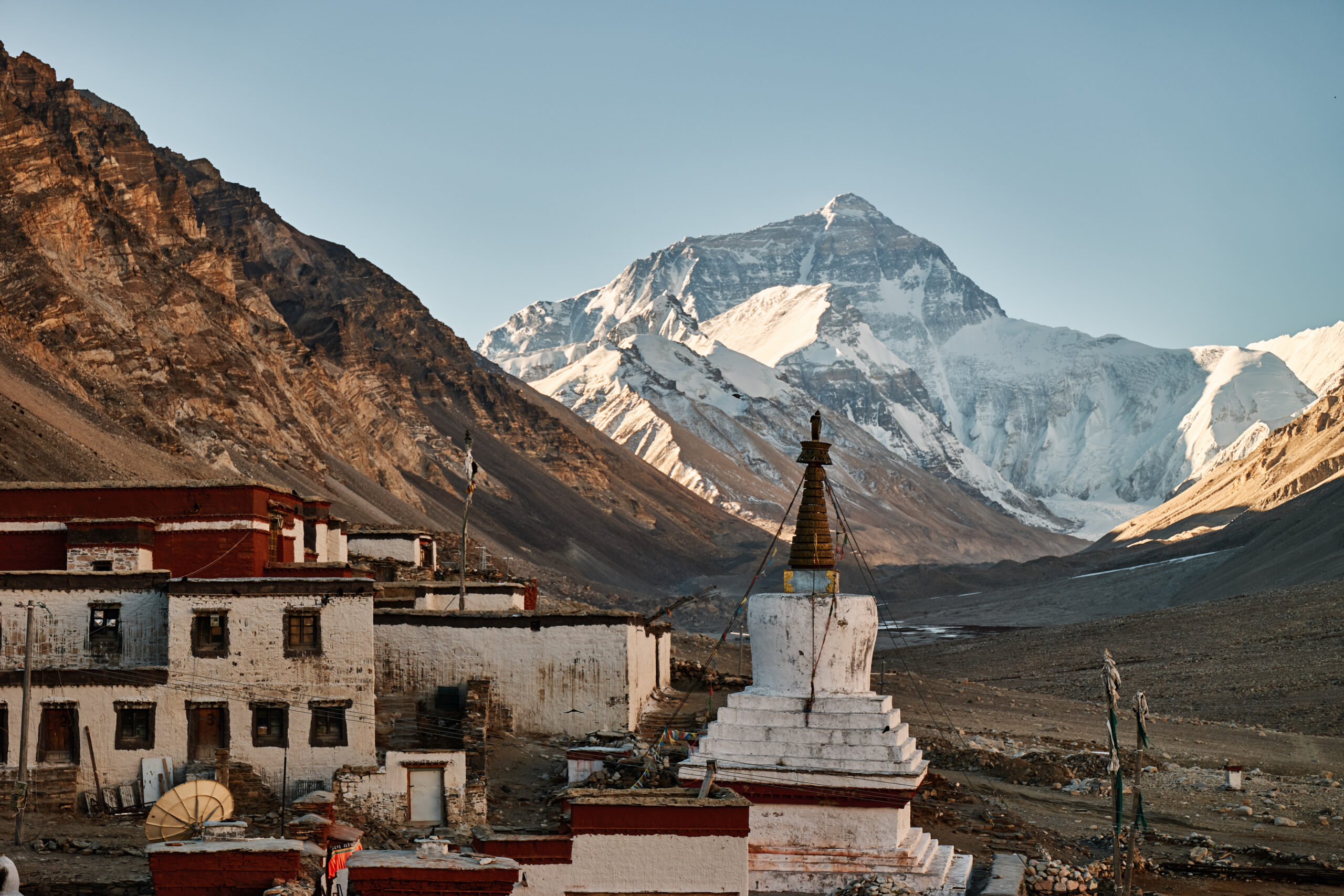
Monasteries cling to cliffsides and nestle in mountain valleys. Taktsang Monastery, the “Tiger’s Nest” in Bhutan, hangs precariously on a cliff face 3,000 feet above the Paro Valley. Hemis Monastery in Ladakh, Rumtek in Sikkim, and Tengboche in the Everest region of Nepal all serve as both spiritual centers and way stations for pilgrims traversing these high-altitude routes.
Monastic Life at Altitude
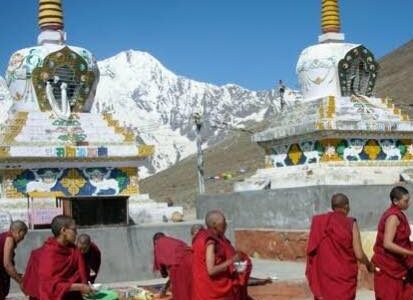
Life in Himalayan Buddhist monasteries follows rhythms shaped by both ancient tradition and harsh mountain conditions. Monks and nuns rise before dawn for prayers and meditation, their chants echoing through stone halls warmed by butter lamps. The day structures itself around periods of study, debate, ritual practice, and communal work.
These monasteries preserved not only religious practices but also arts, literature, medicine, and philosophy. Monastic libraries safeguarded texts that survived nowhere else. When political upheavals threatened these traditions, particularly during the mid-20th century, many masters and monastics fled across Himalayan passes, carrying what manuscripts they could and establishing new centers of learning in exile.
The educational system in larger monasteries remains rigorous. Young monks might spend decades studying Buddhist philosophy, logic, and debate before earning advanced degrees like the Geshe title in the Gelug tradition. This scholarly tradition coexists with contemplative practices—some monks enter three-year retreats, while others specialize in ritual arts, creating intricate sand mandalas or performing elaborate ceremonies.
The Mountains as Spiritual Metaphor
Himalayan Buddhism draws profound meaning from the mountain landscape itself. The ascent to high passes mirrors the spiritual journey toward enlightenment—difficult, requiring perseverance, but offering expansive views unavailable from the valleys. The clarity of mountain air symbolizes the clarity of mind sought through meditation. The impermanence written in melting snow and shifting weather reflects Buddhism’s fundamental teaching of anicca, the transient nature of all phenomena.
Many masters chose to practice in mountain solitude, following the Buddha’s own example of seeking enlightenment away from worldly distractions. The physical challenges of high altitude—thin air, extreme cold, isolation—became tools for developing mental strength and spiritual insight. This tradition of mountain retreat continues today, with practitioners spending months or years in small hermitages accessible only by foot.
A Living Tradition
Buddhism in the Himalayas remains a living tradition rather than a museum piece. The mountains continue to shape practice and understanding, offering what they have always offered: a challenging landscape that reveals something essential about existence, change, and the possibility of awakening. From the prayer flags snapping in high-altitude winds to the deep-throated horns announcing monastery rituals, from debate courtyards where young monks sharpen their understanding to caves where solitary practitioners sit in meditation, Himalayan Buddhism endures as a vital spiritual tradition rooted in one of Earth’s most dramatic landscapes.
For those who journey through these mountains—whether as pilgrims, practitioners, or simply travelers—the region offers something rarely found in the modern world: a place where the spiritual dimension of human existence remains visible, tangible, and actively cultivated against a backdrop of sublime natural beauty.