
Best Nepal Trekking Tours: Top Guided Adventures 2026

Activities Highlights
Key takeaways
- The four routes most first-time and returning trekkers book are Everest Base Camp, the Annapurna Circuit, the Langtang Valley and the Manaslu Circuit, each suited to a different fitness level and timeframe.
- Since 2023, Nepal requires a licensed guide on its major trekking routes, so a guided package is now the standard way to trek the classic trails, not an upgrade.
- A complete guided Nepal trekking tour usually bundles permits, a licensed guide, teahouse lodging, most meals on the trail and airport transfers, so compare inclusions line by line rather than headline price.
- Choose your trek by matching honest fitness and available days to the route's highest pass, not by which mountain has the biggest name.
- Spring (March to May) and autumn (September to November) are the two reliable trekking windows, and both are also the busiest, so book early.
If you are comparing Nepal trekking tours and trying to work out which one is actually right for you, the short answer is that four routes carry most travelers: Everest Base Camp, the Annapurna Circuit, the Langtang Valley and the Manaslu Circuit. Each one asks something different of your body, your calendar and your budget, and the trick is matching the trek to those three things honestly rather than picking the most famous mountain.
This guide walks through the strongest guided options for 2026, what a proper package includes, and how to choose and book without guesswork. Mission Nepal Holidays runs all four of these routes with licensed guides out of Kathmandu, so where a section describes something a good operator should handle for you, we will say plainly what that looks like in practice.
Why Nepal Draws Trekkers From Everywhere
Nepal packs eight of the world's fourteen peaks above 8,000 meters into a country smaller than many single US states, and the trails that thread between them are the reason people fly halfway around the planet. The appeal is not only the altitude. It is the way a single day can carry you from subtropical rhododendron forest to a glacial moraine, past villages where the culture shifts from Hindu to Tibetan Buddhist as you climb.
The country has recovered strongly as a travel destination. Nepal welcomed over 1.14 million international tourists in 2024, roughly 96 percent of its pre-pandemic peak, according to figures reported from the Nepal government's tourism data (The Annapurna Express). A large share of those visitors come specifically to walk, and the infrastructure that supports them, teahouses, established trails and a professional guiding industry, is more developed than in almost any comparable mountain region.
What that means for you as a traveler is simple. You do not need to be an expedition mountaineer to walk to the foot of the highest mountains on Earth. You need reasonable fitness, a sensible plan for altitude, and a guide who knows the ground.
Mission Nepal's Best-Selling Guided Treks at a Glance
Before the route-by-route detail, here is how the flagship trips compare on the three things that decide most bookings: how long they take, how high they go, and who they suit.
- Everest Base Camp Trek. Roughly 12 to 14 days. Tops out at Kala Patthar, the classic viewpoint above base camp. The most requested trek for first-time high-altitude walkers who want the iconic name.
- Annapurna Circuit Trek. Roughly 12 to 18 days depending on how much you shorten it by road. Crosses the highest pass of the four. Best for people who want variety of landscape and culture over a single summit view.
- Langtang Valley Trek. Roughly 7 to 10 days. The shortest and gentlest of the four, close to Kathmandu, ideal for first-timers or anyone short on days.
- Manaslu Circuit Trek. Roughly 12 to 18 days. A restricted-area route that requires a guide and a group, quieter than Everest or Annapurna, suited to trekkers who have done one big trek already.
Every one of these runs with a licensed guide, arranged permits and teahouse lodging as standard. The rest of this guide unpacks what sits behind each of those lines.
Everest Base Camp: The One Everyone Knows
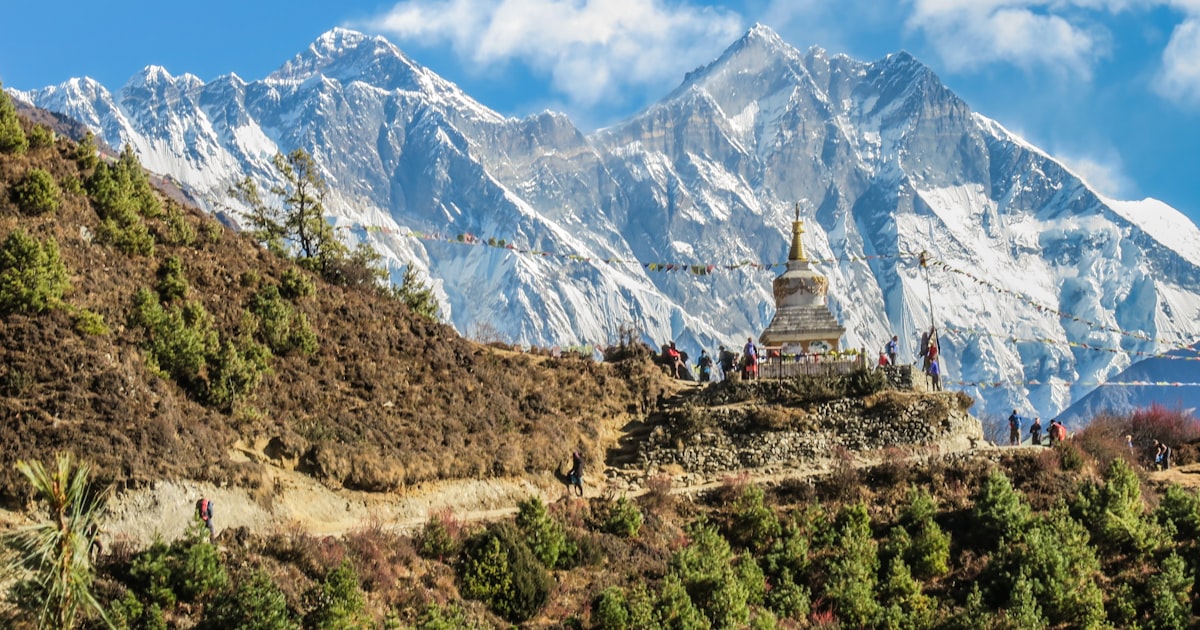
Everest Base Camp is the trek people picture when they think of Nepal. You fly into the mountain airstrip at Lukla, then walk north through Sherpa villages, over swinging suspension bridges above the Dudh Koshi river, and up toward the amphitheatre of peaks around Everest itself.
Base camp sits at 5,364 meters (Wikipedia). Base camp itself does not actually give you a clean view of Everest, because closer peaks block the summit, so the real reward is the dawn climb to Kala Patthar at around 5,545 meters, where the whole face opens up. That single detail catches a lot of first-timers by surprise, and a good itinerary builds in the Kala Patthar morning rather than treating base camp as the finish line.
The difficulty here is altitude, not terrain. The walking is steady rather than technical, but the thin air makes acclimatization days non-negotiable. A well-run Everest package spreads the ascent over enough nights, with rest days at Namche Bazaar and Dingboche, so your body has time to adjust. If you are weighing a faster option, the Everest Base Camp Heli Trek walks up and flies back by helicopter, which trims days off the return without skipping the acclimatization on the way up.
Annapurna Circuit: The Great All-Rounder
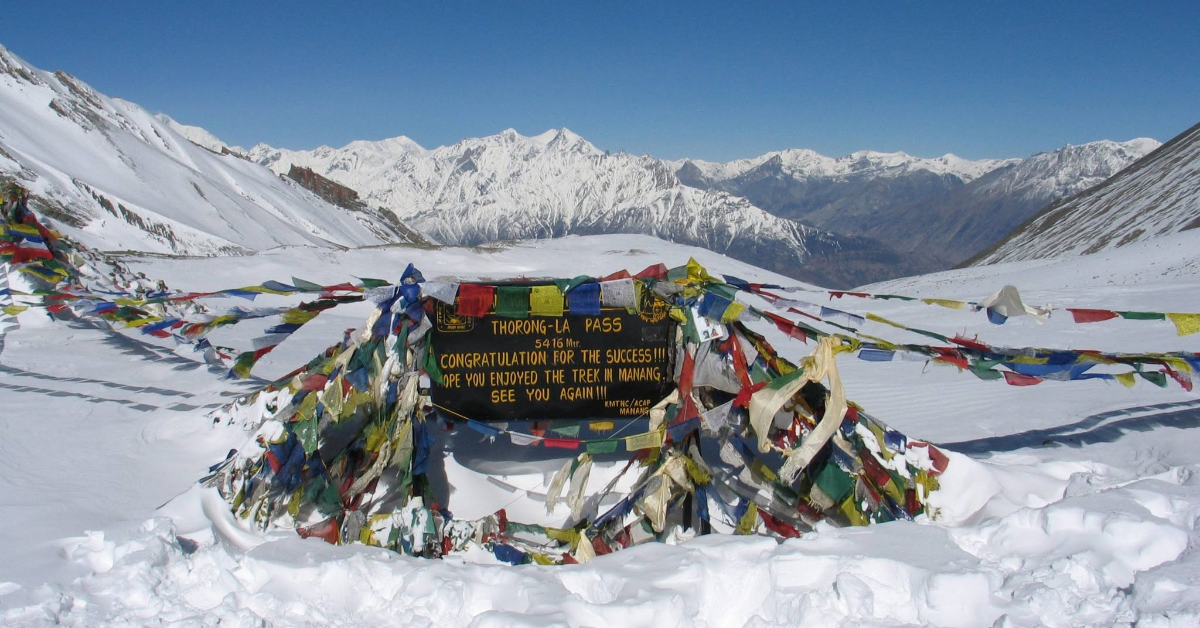
If Everest is about a single destination, the Annapurna Circuit is about the journey. The route loops around the Annapurna massif, and its signature challenge is the crossing of Thorong La, the highest pass on the trek at 5,416 meters. That is slightly higher than Everest Base Camp, and the pass day is long: an early start, a steady climb into the cold, then a knee-testing descent toward the temple town of Muktinath.
The Annapurna region is the most visited trekking area in Nepal, and foreign trekker arrivals there have climbed back to record highs as travel to the country has recovered. Road construction has changed the circuit over the years, so most operators now use jeep transfers to skip the least interesting road-walking sections, which brings the full loop down to a manageable window without losing the high, wild middle of the route.
What makes the circuit special is the range it covers in a single trip: paddy terraces and waterfalls at the start, high desert plateau near Manang, the sacred pilgrimage site at Muktinath, and the deep Kali Gandaki gorge on the way down. For travelers who want landscape and culture in one trek, this is the standout.
Langtang Valley: The Short Trek That Punches Above Its Length
Langtang is the trek to book when you have a week rather than a fortnight, or when you want a gentler first experience of the Himalaya. The trailhead is a drive from Kathmandu rather than a flight, which removes the weather-delay risk that comes with the Lukla airstrip on the Everest route.
The valley climbs through forest and yak pasture to Kyanjin Gompa, with the option to walk up to viewpoints like Kyanjin Ri for a wide sweep of surrounding peaks, all without a high pass to cross. It is genuinely doable for a fit beginner in seven to ten days.
Langtang carries a deeper significance too. The valley was hit hard by the 2015 earthquake, and the villages you pass through today have been rebuilt by their communities. Trekking here puts your spending directly into local teahouses and lodges, which is a concrete way to make your trip support the people who live along the trail. If responsible tourism matters to you, this route makes the connection between where you walk and where your money goes about as clear as it gets.
Manaslu Circuit: The Quiet Alternative for Repeat Trekkers
Manaslu is for the trekker who has done Everest or Annapurna and wants something with fewer crowds. It circles the world's eighth-highest mountain and crosses the Larkya La pass at roughly 5,100 meters, on a long, demanding day that usually starts before dawn.
The route sits in a restricted area, which changes how you have to trek it. Nepal requires you to travel with a licensed guide and in a group of at least two trekkers, and to carry a special restricted-area permit on top of the usual conservation permits. That rules out true solo trekking here, so a guided package is not just convenient on Manaslu, it is the only legal way to walk it.
The payoff for that extra paperwork is solitude. You get Tibetan-influenced villages, spinning prayer wheels and long views of Manaslu itself, on a trail that carries a fraction of the foot traffic you would meet on the Everest route in peak season.
What a Guided Nepal Trekking Tour Actually Includes
"Guided tour" covers a wide range of quality, so this is where comparing packages line by line matters more than comparing headline prices. A complete guided Nepal trekking tour from a reputable operator like Mission Nepal Holidays typically bundles the following.
- A licensed, insured guide. Since 2023, Nepal has required foreign trekkers to walk the major routes with a licensed guide rather than fully independently. A good guide handles route decisions, monitors your group for altitude symptoms and manages the small daily logistics that would otherwise eat your energy.
- All trekking permits. Depending on the route, this means national park or conservation area entry, the trekker information card, and any restricted-area permit for trails like Manaslu. Your operator files these for you, which saves a day of queuing in Kathmandu.
- Teahouse accommodation. Simple lodges along the trail, booked ahead so you are not hunting for a bed in high season. Expect a basic room with shared facilities on most routes, comfortable but not luxurious.
- Most meals on the trail. Usually breakfast, lunch and dinner during the trekking days, chosen from teahouse menus built around the reliable staple of dal bhat, the lentil-and-rice plate that fuels the whole region.
- Domestic transfers. Airport pickups, the flight to Lukla for Everest, or the road transfers for Annapurna, Langtang and Manaslu.
- A safety framework. This is the part travelers underweight. It covers acclimatization scheduling, a first-aid-trained guide, and a clear plan for descent or helicopter evacuation if altitude sickness sets in.
That last point deserves its own attention, because it is where a serious operator earns its fee.
Safety and Altitude: The Part That Matters Most
Every one of these treks crosses altitude high enough that acute mountain sickness is a real risk, and it does not respect fitness. Strong, young trekkers get it as often as anyone. The symptoms start as headache, nausea and poor sleep, and the treatment that works is rest, or in serious cases, descent.
This is why itinerary design matters more than raw toughness. When people ascend too fast to skip acclimatization, rates of altitude illness can approach 50 percent, according to the CDC's Yellow Book guidance on high-altitude travel. A responsible package climbs at a rate your body can adjust to, with built-in acclimatization days rather than a forced march to the finish. The old climbers' rule of thumb, climb high and sleep low, is baked into good Nepal itineraries for a reason.
A guide trained to spot early symptoms is the single most useful safety asset you can have, because the person suffering from altitude is often the last to notice how impaired they are. Before you book, ask any operator two direct questions: how many acclimatization nights are in the itinerary, and what the evacuation plan is if someone falls ill high on the trail. The answers tell you a lot about how seriously they take the risk.
How to Choose the Right Trek for Your Fitness and Timeframe
Pick your trek by matching three honest numbers: the days you have, the fitness you actually hold today, and the highest altitude you are willing to reach.
If you have about a week. Langtang Valley or the Ghorepani Poon Hill trek in the Annapurna foothills are the sensible choices. Both reach fine viewpoints without a high pass, and both forgive a moderate fitness base.
If you have around two weeks. Everest Base Camp is the classic pick, and a realistic first big trek if you prepare for the altitude. It asks for steady endurance rather than speed, and the daily walking sits in the five-to-seven-hour range.
If you have two to three weeks and one big trek behind you. The Annapurna Circuit or the Manaslu Circuit open up. Both cross a serious high pass and reward the extra time with a fuller arc of landscape and culture.
On fitness, the honest test is not how fast you are but how long you can keep going. If you can walk uphill for five to seven hours on consecutive days without a rest week in between, you have the base for most classic routes. Build that endurance in the months before you fly with regular hill walks carrying a light pack. Patience with the altitude matters more than athletic ability, and no amount of gym fitness substitutes for giving your body time to adjust.
Timing is the other lever. Spring, roughly March to May, and autumn, roughly September to November, are the two reliable windows, offering the most stable weather and the clearest mountain views. They are also the busiest, so if you want quieter trails, the shoulder edges of those seasons, or a lower-traffic route like Manaslu, are worth considering.
How to Book a Guided Nepal Trekking Tour
Booking a Nepal trek is more straightforward than the logistics suggest, provided you work through it in order.
- Fix your dates and route. Start from the days you can genuinely take off, then choose the route that fits, using the matching in the previous section. Lock this before anything else, because it drives permits, flights and lodging.
- Choose a licensed operator. Look for a company registered in Nepal with licensed guides, clear inclusions and a transparent acclimatization schedule. Mission Nepal Holidays, for example, runs all four flagship routes with multilingual guides out of Kathmandu, which removes the guesswork of assembling permits and lodging yourself.
- Confirm exactly what is included. Get the inclusions in writing: permits, guide, lodging, meals, transfers and the safety plan. Two packages at similar prices can differ sharply once you compare what each actually covers.
- Sort your paperwork. Most nationalities can get a Nepal tourist visa on arrival at Kathmandu airport or in advance, and you will want travel insurance that explicitly covers high-altitude trekking and helicopter evacuation. Check your government's travel advice for current entry requirements before you fly.
- Book early for peak season. Spring and autumn lodges and Lukla flights fill months ahead. If your dates are fixed to those windows, reserve well in advance rather than hoping for last-minute space.
- Prepare your body and kit. Begin hill training a couple of months out, and work from a proper trekking equipment checklist so you arrive with broken-in boots and layered clothing rather than buying everything in Kathmandu at the last minute.
Handled in that sequence, the whole process is manageable, and a good operator carries most of the load from step two onward.
Final Thoughts
The best Nepal trekking tour for 2026 is the one that matches your real days, your real fitness and the altitude you are ready to reach, not the one with the most famous name attached. Langtang if you have a week, Everest Base Camp if you have a fortnight and want the icon, Annapurna or Manaslu if you have more time and one big trek already behind you.
Your concrete next step is to count the consecutive days you can actually take off in the spring or autumn window, because that single number narrows the choice faster than anything else. Once you have it, reach out to Mission Nepal Holidays with those dates and the team can match you to the route and itinerary that fits.
Frequently asked questions
Do I need a guide to trek in Nepal?
On the major routes, yes. Since 2023, Nepal requires a licensed guide for solo foreign trekkers on its national park and conservation area trails, and restricted areas like Manaslu have always required both a guide and a group. A guided package is now the standard way to walk the classic trails.
What is the best trek in Nepal for a first-timer?
The Langtang Valley and Ghorepani Poon Hill treks are the gentlest introductions, reaching high viewpoints without a demanding pass. Everest Base Camp and the Annapurna Circuit are both realistic first big treks if you have two weeks and prepare for the altitude.
How many days do I need for a Nepal trekking tour?
Plan five to seven days for a short trek like Poon Hill or lower Langtang, roughly twelve to fourteen days for Everest Base Camp, and up to eighteen days for the full Annapurna or Manaslu circuits, plus a buffer day for weather.
When is the best time to trek in Nepal?
Spring, from March to May, and autumn, from September to November, offer the most stable weather and clearest mountain views. Both are peak season, so lodges and flights fill early and booking ahead matters.
How fit do I need to be to trek in Nepal?
You need steady endurance rather than athletic speed. If you can walk five to seven hours a day on hills for several consecutive days, you can complete most classic routes. Patience with altitude matters more than raw fitness.