
Trekking Everest Base Camp Nepal: Costs & Itinerary

Activities Highlights
Key takeaways
- A standard Everest Base Camp trek runs 12 to 14 days from Kathmandu, including a Kathmandu-Lukla flight and two rest days for acclimatization.
- Budget roughly USD 1,400 to USD 2,500 per person for a guided package, plus permits: the Sagarmatha National Park entry fee is NPR 3,000 for foreigners.
- Base camp sits near 5,364 meters, and the CDC advises gaining no more than 500 meters of sleeping altitude per night above 3,000 meters.
- Autumn (September to November) and spring (March to May) offer the clearest views and the most stable weather for the trek.
You can reach Everest Base Camp in about 12 to 14 days from Kathmandu, and a well-run guided trip generally costs between USD 1,400 and USD 2,500 per person before your international flights. If you are reading this because you are weighing operators and trying to work out what the trek actually involves, this guide gives you the itinerary day by day, the real costs behind the package price, and the training and timing that decide whether you stand at base camp feeling strong or struggle to get there at all.
Trekking Everest Base Camp Nepal is a walking route, not a climb. There is no rope work, no ice axe, no summit. What makes it hard is height. Base camp sits near 5,364 meters, and the thin air, not the distance, is what turns a fit person cautious. Patience matters more than athletic ability here, and the way you plan the trip has more to do with your success than the shape you arrive in.
What the Everest Base Camp Trek Actually Is
The classic route follows the Khumbu valley from the airstrip at Lukla up to the foot of the Khumbu Icefall, where expedition teams pitch their tents each spring. You sleep in teahouses, small family-run lodges, not tents, and you walk roughly five to seven hours a day on well-trodden stone paths.
The trek covers around 130 kilometers round trip. That number sounds modest, and on flat ground it would be. At altitude, with daily climbs and descents through Sherpa villages, rhododendron forest, and glacial moraine, it earns its reputation. Most people describe the difficulty as moderate in fitness terms but demanding in patience, because the schedule is built around letting your body adjust rather than covering ground quickly.
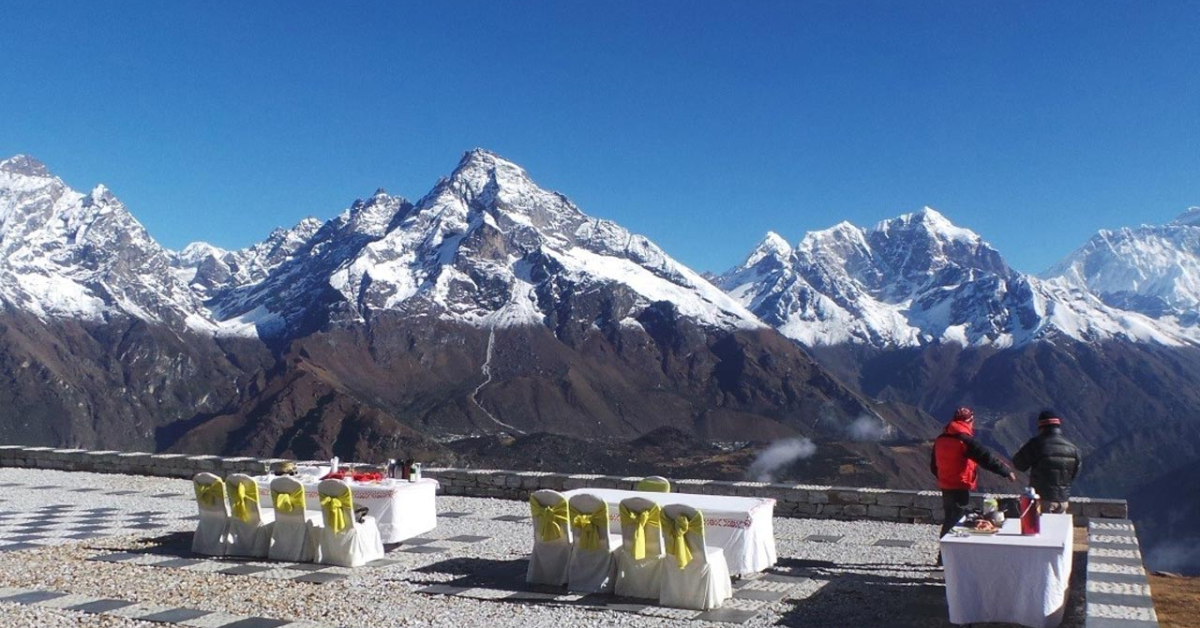
You will pass through Namche Bazaar, the trading hub of the Khumbu at 3,440 meters, and Tengboche, home to the region's most important Buddhist monastery. The final push to base camp itself is a day of loose glacial rock, and the reward at the top is less a view of Everest's summit (which is hidden from base camp) than the raw scale of the icefall and the surrounding peaks.
Full EBC Trek Itinerary From Kathmandu
Here is a standard 14-day plan, which is the version Mission Nepal Holidays runs most often. Exact days vary by operator and weather, so confirm the schedule when you book.
Day 1: Arrive in Kathmandu (1,400 m). Airport pickup, permit paperwork, and a gear check. Your guide will look over your kit and flag anything missing.
Day 2: Kathmandu sightseeing and briefing. A buffer day in case your inbound flight is delayed, plus time to rent or buy last items in Thamel.
Day 3: Fly to Lukla (2,846 m), trek to Phakding (2,610 m). The mountain flight lands at Tenzing-Hillary Airport, and you drop gently to Phakding, roughly three hours of easy walking to settle your legs.
Day 4: Trek to Namche Bazaar (3,440 m). A long climb through pine forest with your first glimpse of Everest on a clear day. Six to seven hours.
Day 5: Acclimatization day in Namche. You do not rest flat. You hike high and sleep low, climbing to a viewpoint around 3,800 meters and returning. This is the single most important day for adjusting.
Day 6: Trek to Tengboche (3,860 m). A descent to the river, then a steady climb to the monastery. Time your arrival for the afternoon prayer service if you can.
Day 7: Trek to Dingboche (4,410 m). The forest thins and the landscape opens into alpine scrub. Five to six hours.
Day 8: Second acclimatization day in Dingboche. Another hike-high, sleep-low day, usually up toward Nangkartshang at around 5,000 meters.
Day 9: Trek to Lobuche (4,940 m). A short but tiring stage past the memorials at Thukla Pass, which honor climbers lost on Everest.
Day 10: Trek to Gorak Shep (5,164 m), continue to Everest Base Camp (5,364 m). The big day. You reach base camp, then return to sleep at Gorak Shep. Eight to nine hours in total.
Day 11: Climb Kala Patthar (around 5,545 m), descend to Pheriche (4,240 m). A pre-dawn climb for the classic sunrise view of Everest's summit, then a long descent that your lungs will thank you for.
Day 12: Trek to Namche Bazaar. Retracing your steps, now much easier as you shed altitude.
Day 13: Trek to Lukla. The final walking day, and traditionally a night to celebrate with the crew.
Day 14: Fly to Kathmandu. Weather permitting. Keep a spare day in your travel plans in case the flight is grounded.
If you want a shorter or a longer version, Mission Nepal Holidays can compress this into 12 days for experienced walkers or extend it with a Gokyo Lakes loop for those who want more time above 4,000 meters.
Typical Costs: Permits, Flights, Guides and Teahouses
The package price you are quoted bundles several fixed costs. Understanding them helps you compare operators honestly and spot where a suspiciously cheap quote is cutting corners.
Permits. Two are required on this route. The Sagarmatha National Park entry permit costs NPR 3,000 per foreign visitor, a figure published by the Nepal Tourism Board. The second is the Khumbu Pasang Lhamu Rural Municipality permit, collected locally, which runs in a similar range and is best paid on arrival. Together the permits typically add up to the rough equivalent of USD 50 to USD 60.
The Lukla flight. The round-trip mountain flight between Kathmandu and Lukla is a major line item, generally costing somewhere between USD 180 and USD 350 depending on season and demand. In peak months operators sometimes route flights via Ramechhap, a four-hour drive from Kathmandu, to ease congestion, so check which departure your itinerary uses.
Guides and porters. A licensed guide and, if you hire one, a porter to carry your main bag are wages you should never squeeze. Fair pay for the people who keep you safe at altitude is part of responsible trekking, and it is built into a reputable package.
Teahouses and meals. Lodging is inexpensive, but food and drink climb in price as you go higher, since everything is carried up by porter or yak. Expect to spend USD 25 to USD 40 a day on meals, charging, hot showers, and bottled or treated water if these are not included in your package.
Add it up and a fully guided trip generally lands between USD 1,400 and USD 2,500 per person, excluding international airfare, travel insurance, and tips. Solo self-organized trekking can cost less, but Nepal now requires a licensed guide on most routes, so the savings are smaller than they once were.
Fitness, Training and Acclimatization Plan
You do not need to be an athlete. You need endurance, healthy lungs, and the discipline to walk slowly. The people who struggle most are often the fittest, because they push too hard on the first days and outrun their acclimatization.
Start training roughly eight to twelve weeks out. Build a base of long walks, ideally on hills, carrying a daypack of five to eight kilograms. Aim to be comfortable walking six hours across back-to-back days, since that is the real demand of the trek. Add stair climbing or hill repeats to prepare your legs for sustained ascent, and some light strength work for your core and knees, which take a beating on the long descents.
Acclimatization is where the trek is won or lost. Your body needs time to produce more red blood cells and adjust to less oxygen. The itinerary above builds in two rest days for exactly this reason. The CDC's guidance for high-altitude travel recommends ascending no more than 500 meters in sleeping altitude per night once you are above 3,000 meters, and adding an extra acclimatization night for every 1,000 meters of sleeping altitude gained. A good itinerary respects this. A rushed one ignores it.
Watch for the early signs of acute mountain sickness: headache, nausea, dizziness, and poor sleep. Mild symptoms are common and usually pass with rest. The rule that saves lives is simple. If symptoms worsen, you go down, and you do not go higher until they clear. Your guide is trained to make this call, which is one more reason not to trek this route alone.
Packing and Gear Essentials
Layering is the whole philosophy of Himalayan trekking. Mornings start below freezing, midday sun can feel hot, and evenings in the teahouse are cold again. You dress for all three.
The essentials break down into a few groups:
- Footwear. Broken-in waterproof trekking boots and several pairs of wool or synthetic socks. Blisters end more treks than altitude does.
- Layers. A moisture-wicking base layer, an insulating fleece or down mid-layer, and a windproof, waterproof outer shell. A warm down jacket for the higher camps is non-negotiable.
- Sleep system. A sleeping bag rated to around minus 15 Celsius. Teahouse blankets are thin at altitude.
- Sun and cold protection. Category 4 sunglasses, high-factor sunscreen, a warm hat, a sun hat, and gloves. The sun at altitude is fierce even when the air is cold.
- Health and hydration. A personal first-aid kit, water purification tablets or a filter, and any personal medication. Discuss altitude medication with your doctor before you travel.
- Extras. A headlamp, a power bank, and trekking poles, which spare your knees on the descents.
You can rent bulkier items like down jackets and sleeping bags in Kathmandu, which saves luggage weight on your flight in. Mission Nepal Holidays sends every trekker a full checklist to pack against, so nothing essential gets left behind.
Best Months to Trek to Base Camp
Two windows stand out, and both come down to stable weather and clear mountain views.
Autumn, September to November, is the most popular season. The monsoon has cleared the air and washed the dust from the sky, leaving crisp visibility. October in particular is prized for its steady weather and sharp views. The trade-off is crowds and busy teahouses, so book early.
Spring, March to May, is the second prime window. Temperatures warm steadily, the rhododendron forests lower down burst into bloom, and this is the climbing season, so base camp buzzes with expedition activity. Higher haze can build later in the season, but the trail is alive.
Winter, December to February, is quiet and starkly beautiful, but bitterly cold, and heavy snow can close high passes and ground flights. The monsoon, June to August, brings rain, leeches, cloud that hides the peaks, and frequent flight delays. Most trekkers avoid both.
Nepal's mountains draw serious numbers in the good seasons. The country welcomed 1,147,567 international visitors in 2024, according to figures reported by The Annapurna Express, a 13.1 percent rise on the year before, so the popular trails in October and April are genuinely busy. Booking your teahouses and flights ahead matters more in peak season than at any other time.
Common Mistakes First-Time Trekkers Make
A few avoidable errors account for most of the misery on this trail.
- Ascending too fast. Skipping acclimatization days to save time is the surest way to get altitude sick and end your trek early.
- Overpacking. A heavy bag punishes you every hour. Pack layers, not spares of everything.
- Underestimating the Lukla flight. Weather delays are routine. Build one or two buffer days into your travel plans so a grounded flight does not cost you your onward connection.
- Skimping on insurance. Your travel policy must cover trekking to 6,000 meters and helicopter evacuation. Standard policies often do not.
- Dehydration. Thin, dry air pulls moisture from you fast. Drink three to four liters a day, more than feels natural.
Trekking Responsibly in the Khumbu
The Khumbu is a living Sherpa homeland with deep Buddhist roots, not a backdrop. Small courtesies go a long way. Walk clockwise around mani stones and stupas, keeping them on your right. Ask before photographing people or inside monasteries. Carry out what you carry in, since waste management at altitude is genuinely difficult.
Supporting local lodges, buying local, and paying your crew fairly all keep tourism money in the valley that hosts you. Mission Nepal Holidays works with Khumbu-based guides and porters and follows fair-wage practice, which is part of what a responsible operator should mean when they use the word.
Reserving Your EBC Trek With Mission Nepal
The practical next step is to settle your dates around one of the two prime seasons and get your permits and Lukla flights locked in early, because both sell out in October and April. From there, a licensed guide who knows the Khumbu handles the logistics that are hard to manage from abroad: permit paperwork, teahouse bookings that fill up in peak weeks, and the daily judgment calls about pace and altitude that keep you safe.
Mission Nepal Holidays runs guided Everest Base Camp departures in both spring and autumn, with the option to shorten the itinerary for experienced walkers or extend it with a Gokyo Lakes loop. If you have a rough window in mind, reach out with your dates and your fitness background, and the team will map a schedule and a fair, itemized cost around them. The mountain has been there a long time. Give yourself the time and the support to reach it well.
Frequently asked questions
How many days do you need to trek to Everest Base Camp?
Most itineraries run 12 to 14 days from Kathmandu, including the flight to Lukla, the walk up and back, and two acclimatization days. Adding a Gokyo detour extends it to around 16 to 18 days.
How much does the Everest Base Camp trek cost?
A guided package typically costs USD 1,400 to USD 2,500 per person depending on group size, season and inclusions. Permits, the Lukla flight, guide and porter wages, and teahouse meals make up most of the total.
Do you need a guide to trek to Everest Base Camp?
Nepal now requires trekkers to use a licensed guide on most routes. A guide also handles permits, teahouse bookings, and altitude monitoring, which matters more than it sounds at 5,000 meters.
Is the Everest Base Camp trek dangerous?
The main risk is altitude sickness, not technical terrain. The trail is a walking route with no climbing, but the height demands a slow, patient ascent and careful acclimatization.